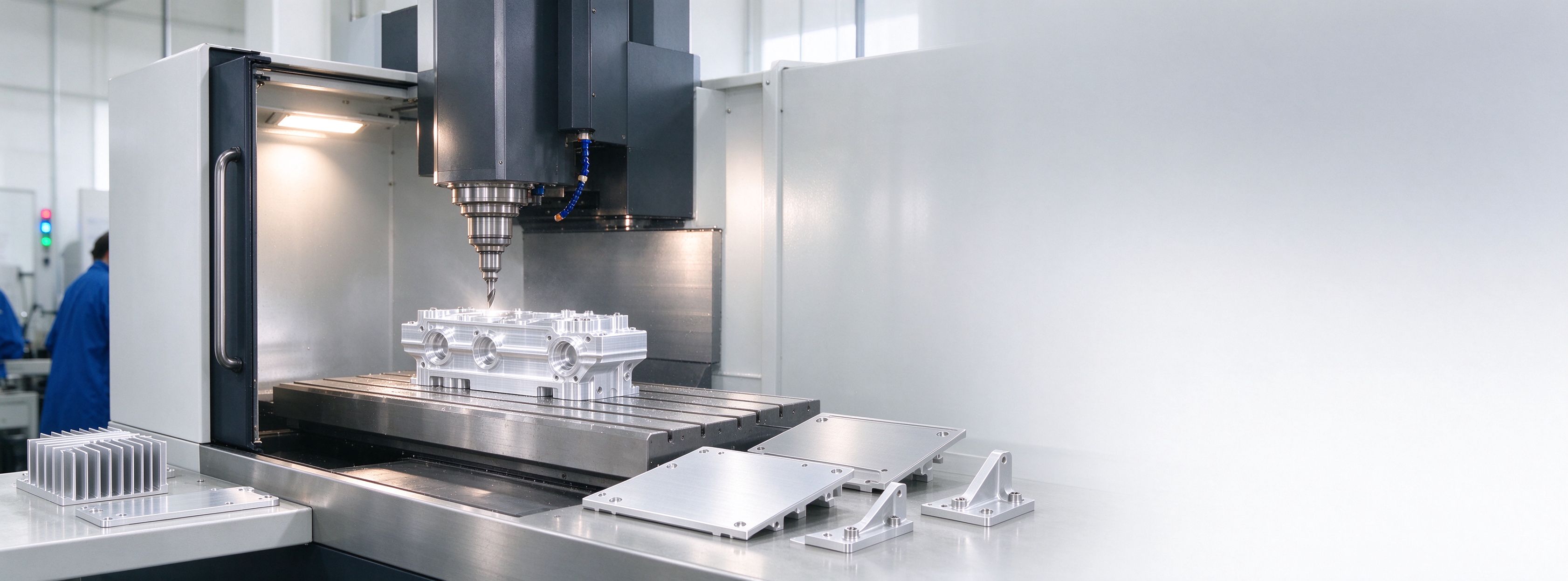
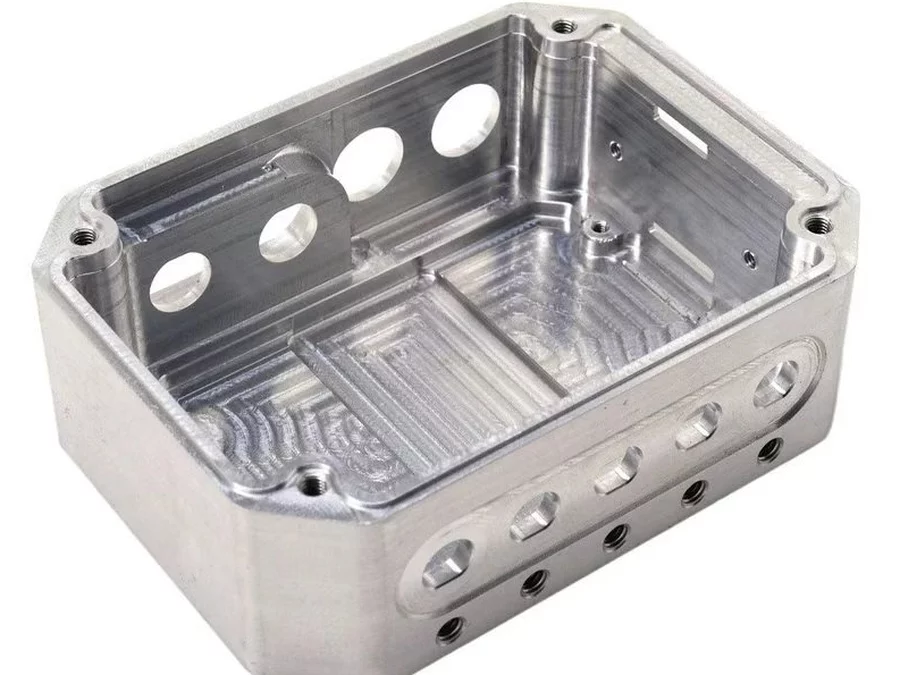
CNC machining centre: vertical machining center cutting an aluminium housing
Insight
Faster OEM Turnaround: How 5-Axis CNC Compresses Lead Times

How 5-Axis CNC Machining Reduces Lead Times for OEM Components

  • How 5-Axis CNC Machining Reduces Lead Times for OEM Components Eren
  • 27th August 2026

How 5-Axis CNC Machining Accelerates Lead Times for Complex OEM Components

In today’s competitive industrial world, getting high-precision parts to market fast can decide if a product line succeeds or fails. Makers of automotive fluid transfer connectors, UAV structural frames, or high-end electroacoustic enclosures all deal with one issue. Complex geometry CNC machining often leads to long manufacturing lead times. Older 3-axis and 4-axis setups create delays because they need multiple re-fixturing steps, tricky alignment work, and lots of manual help.

To avoid these issues, many global buyers now choose 5-axis CNC machining. This approach cuts multiple axes at once in a single setup. 5-axis machining for complex parts removes extra fixture changes and improves accuracy. It also cuts total turnaround times from weeks to days. Rejin CNC acts as a reliable 5-axis CNC machining manufacturer. The company applies precise multi-axis tools and full in-house production. This helps global OEM brands convert complex CNC-machined parts and CAD blueprints into ready metal components with solid speed and accuracy.

The Engineering Bottleneck: Why Traditional Machining Delays OEM Production Schedules

When evaluating complex OEM metal parts with compound angles, deep pockets, or freeform organic curves, conventional 3-axis or 4-axis CNC machine tools quickly reach their practical limitations. Understanding how to reduce CNC machining lead time requires analyzing these systemic delays, which is essential for engineering and procurement teams aiming to optimize supply chain efficiency and achieve faster time to market.
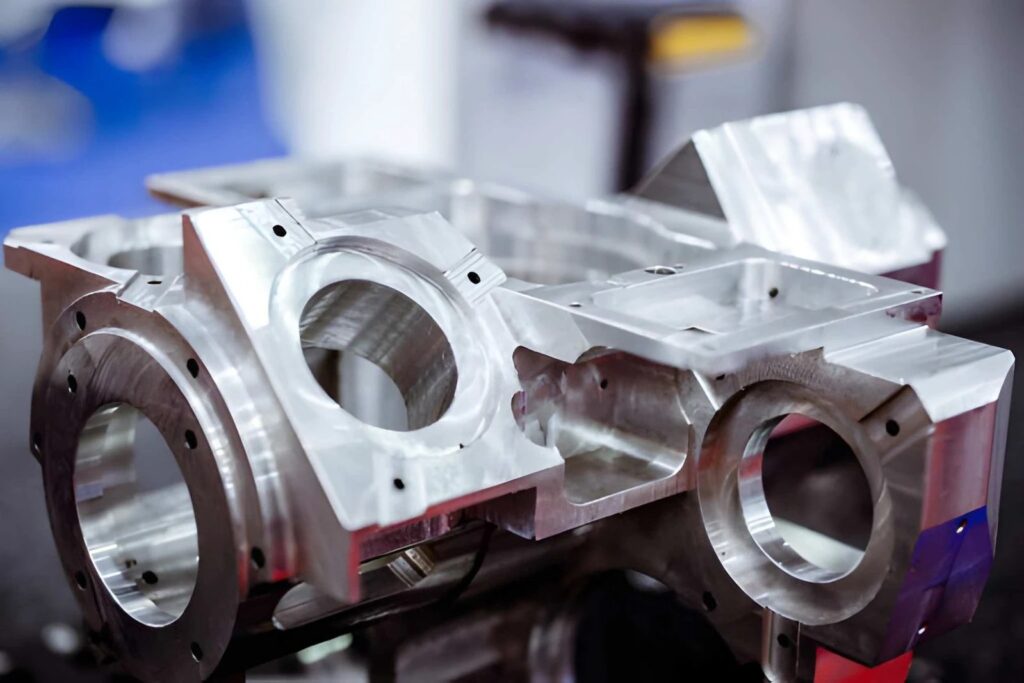
Traditional CNC machining causes delays, errors, and higher costs

The Cumulative Error and Labor Overhead of Multiple Re-Fixturing

When machining a 6-sided complex component on a 3-axis mill, operators must manually unclamp, re-orient, and re-clamp the workpiece for almost every individual face.

  • Tolerance Stack-Up Risks: Constant re-fixturing and manual repositioning introduce potential datum alignment errors, making it extremely difficult to maintain tight position tolerances across features (e.g., keeping concentricity within ±0.005 mm).
  • Increased Labor Overhead: Machine operators spend more time aligning fixtures and measuring test cuts than the spindle spends actively removing material, driving up unit labor costs.
  • Higher Scrap Rates: Repeated manual clamping increases the probability of human error, leading to higher defect rates during prototype and early production runs.

Production Bottlenecks in Multi-Stage Manufacturing Workflows

Conventional multi-setup processing fragments the shop floor workflow and complicates production scheduling across multi-part orders, increasing overall CNC machining lead time.

  • Queue Time Accumulation: Parts wait in line between different machining stages, adding days or even weeks of idle time to the total project schedule.
  • Dedicated Tooling Dependencies: Manufacturing complex OEM metal parts often demands custom-designed vice jaws or complex tombstone fixtures, requiring upfront toolmaking lead time before part production can even begin.
  • Inconsistent Batch Quality: Managing multiple setups across distinct machines makes maintaining dimensional uniformity challenging over medium-to-large production volumes.

Single-Setup Precision: The Core Mechanism of 5-Axis Lead Time Reduction

Simultaneous 5-axis CNC machining transforms the mechanics of OEM CNC machining by adding two rotational axes (typically A and C) to the standard linear X, Y, and Z axes. This allows the cutting tool to approach the workpiece from virtually any orientation in a single continuous operation.
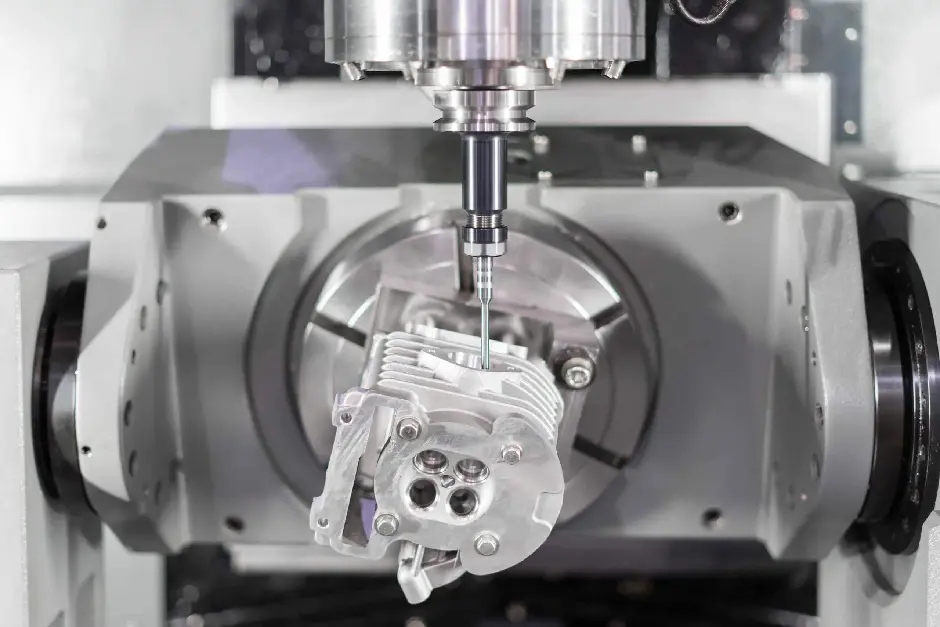
5-axis CNC machining reduces setups and improves precision

Eliminating Fixture Swaps via Simultaneous Multi-Axis Motion

The most significant time-saving advantage of 5-axis technology is its single-setup CNC machining capability, which processes multi-faceted geometry without manual intervention to reduce CNC setups.

  • Complete Geometry Execution: Complex angled holes, undercut channels, and compound bevels are machined in one continuous program sequence.
  • Elimination of Datum Shifts: Because the workpiece never leaves its primary workholding chuck, datum references remain absolute, easily maintaining tight dimensional tolerances down to ±0.005mm for complex CNC machined parts.
  • Rapid Transition to Secondary Processes: Eliminating intermediate setup verifications allows finished raw parts to move directly to in-house surface finishing, delivering true fast turnaround CNC machining.

Optimized Tool Paths and Surface Finish Excellence

5-axis motion does more than cut setups. It improves the actual cutting action. This shortens spindle times and improves surface quality for fast-turnaround CNC machining.

  • Shorter Tooling Lengths: The tilting table or spindle head lets the machine use shorter end mills. These stay rigid and cut down on vibration and chatter.
  • Higher Cutting Speeds: Better rigidity supports faster feeds and heavier chip loads. Parts keep their accuracy.
  • Superior Surface Texture: The tool tilts as it moves. This keeps the best angle on curves. It produces finishes under Ra 0.8 µm right from the machine. Less hand polishing is needed.

Strategic Decision Framework: Selecting Processes and Scaling OEM Production

Picking the right manufacturing route means looking at part shape, tight tolerance needs, material type, and total batch size. OEMs have to balance early tooling costs with per-unit price and delivery speed goals.
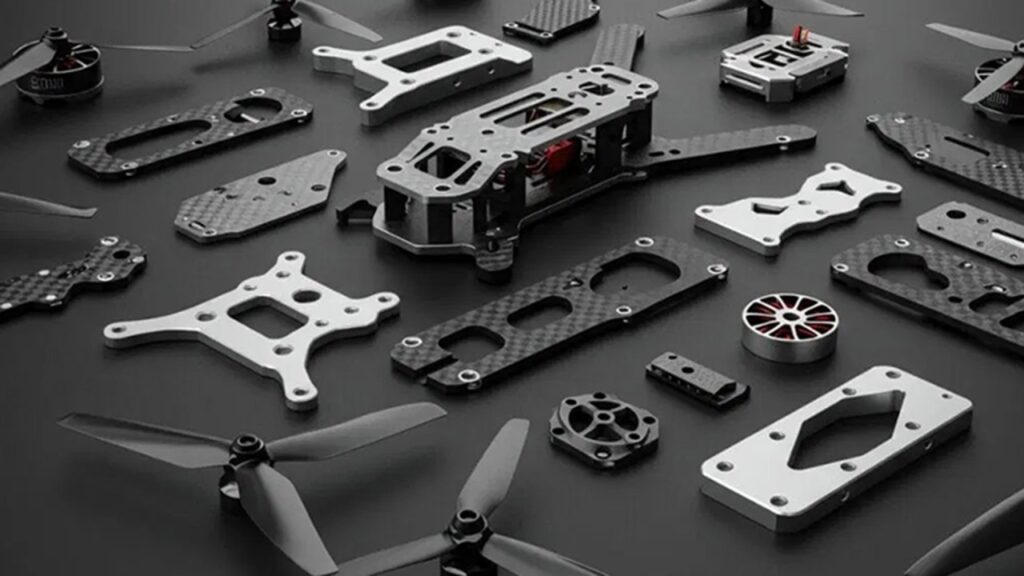
5-Axis CNC Machining for Complex UAV Structural Housings

CNC Machining vs. Metal Stamping and Casting Trade-Offs

Engineers often compare subtractive OEM CNC machining, high-speed metal stamping, or investment casting when shifting from prototypes to volume runs.

  • Volume Crossover Points: Small to medium batches, typically 1 to 3,000 units, make 5-axis machining for complex parts the cheaper choice because there are no hard-tooling costs. Once yearly demand goes over 10,000 to 50,000 units for thin-sheet parts, precision metal stamping becomes worth it even with initial die costs of $5,000–$20,000 or higher.
  • Geometric Limits: Thick-walled, curved 3D housings or internal fluid channels with tight tolerances cannot be stamped. This leaves complex geometry CNC machining as the main method.
  • Prototyping Agility: Changing a CAD model for rapid CNC prototyping takes minutes in CAM software. Adjusting a stamping die or casting mold can push timelines back by weeks and slow faster time to market.

Practical OEM Case Study: Aerospace & UAV Structural Housings

A European UAV manufacturer required complex, lightweight camera gimbal structural housings machined from solid AL7075-T6 aluminum. The part featured thin wall structures (1.2 mm), compound mounting faces, and strict weight distribution targets.

Metric Comparison Previous 3-Axis Method Rejin 5-Axis CNC Solution
Required Machining Setups 5 Separate Fixture Setups 1 Single 5-Axis Setup
Prototyping Lead Time 14 Working Days 4 Working Days
Dimensional Pass Rate 91.5% (Scrap due to tilt drift) 99.6% (Consistent concentricity)
Production Unit Time 115 Minutes / Piece 38 Minutes / Piece

Using high-speed 5-axis machining centers (such as Mazak and DMG MORI platforms), Rejin CNC completed rapid CNC prototyping and produced a pilot run of 200 complex CNC-machined parts within 5 days, accelerating the customer’s flight-testing schedule by nearly three weeks and achieving significantly faster time to market.

Partnering with Rejin CNC for High-Precision OEM Manufacturing

Founded by veteran engineer Zhang Yi and backed by over two decades of precision manufacturing expertise, Rejin CNC operates as a premier 5-axis CNC machining manufacturer with a fully vertically integrated supply chain in Dongguan, China. Operating over 200 high-precision CNC machining centers, automated anodizing lines, and sheet metal workshops, we provide comprehensive OEM CNC machining solutions for clients in 150+ countries.
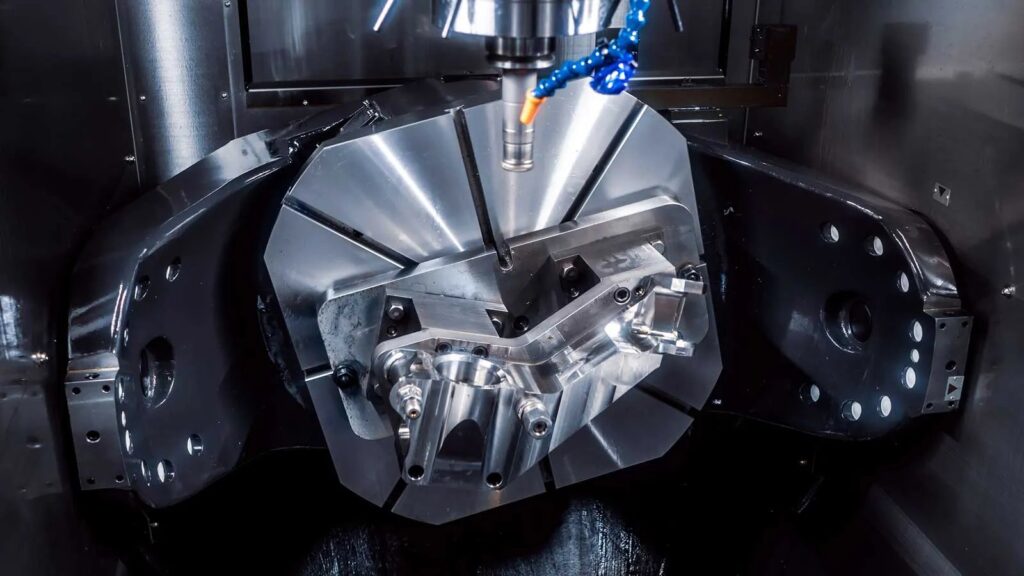
High-precision OEM CNC machining with integrated quality control and finishing

Advanced Equipment Capabilities and Quality Assurance Standards

We maintain strict quality control standards to deliver consistent quality across all production batches of complex OEM metal parts.

  • Tier-1 Equipment Fleet: Our facility runs 3-axis, 4-axis, and 5-axis CNC machining centers from brands such as Mazak and DMG MORI. We also keep high-precision CNC turning lathes on site.
  • Certifications & Compliance: Our operations hold IATF 16949 for automotive quality management along with ISO 9001:2015. These standards support complete batch traceability and steady process control.
  • Metrology Verification: Every critical dimension goes through checks on high-precision Coordinate Measuring Machines (CMM), optical profile projectors, and thread plug gauges. Full First Article Inspection Reports (FAIR) and material certificates come with each delivery.

Integrated DFM Support and Rapid Turnaround Cycles

Rejin CNC bridges the gap between engineering design and cost-effective mass production to significantly reduce CNC machining lead time.

  • 24-Hour DFM Feedback: Submit your STEP/IGES/PDF drawings and receive a detailed manufacturability review within 24 hours. The review flags potential clearance issues, deep pocket risks, or wall-thickness concerns before machining starts.
  • Flexible Order Scaling: We support project growth across all stages from rapid CNC prototyping (no MOQ restrictions, 3–5 day lead time) to low-volume trials and scalable monthly batch deliveries exceeding 100,000 units.
  • One-Stop In-House Finishing: CNC milling, turning, anodizing, sandblasting, laser engraving, and electroplating run under one management system. This approach removes third-party logistics delays, cuts down on CNC setups, and keeps total quality control over finished components.

Ready to cut your component lead times and streamline your custom hardware manufacturing? Contact Rejin CNC today at info@rejincnc.com or upload your CAD files directly to receive a comprehensive DFM analysis and competitive quote within 24 hours.

FAQ

Q: What types of complex geometry strictly require 5-axis CNC machining over 3-axis mills? 

A: Parts with continuous curved surfaces, like turbine impellers or organic aerospace brackets, need 5-axis machining for complex parts. Deep angled pockets, compound hole patterns, and multi-sided undercuts also call for it. The tool stays perpendicular to the surface. This avoids extra custom fixtures and risky re-fixturing.

Q: How does 5-axis CNC machining help reduce total production costs for OEM orders? 

A: Hourly rates for 5-axis CNC machining run higher than 3-axis mills. Yet total costs often drop for complex OEM metal parts. It skips custom fixture work. Single-setup CNC machining cuts setups and manual labor by up to 80%. Cycle times shorten, and scrap from realignment errors falls.

Q: What standard tolerances can Rejin CNC achieve for high-precision OEM components? 

A: Our standard OEM CNC machining tolerance ranges from ±0.005 mm to ±0.02 mm. Critical features on complex CNC-machined parts reach ±0.005 mm. This depends on part geometry, material like aluminum, stainless steel, or titanium, and thermal needs.

Q: What is the typical lead time for a custom 5-axis CNC rapid prototype versus volume orders? 

A: Simple to medium geometry CNC machining projects get rapid CNC prototyping parts in 3 to 5 business days after CAD and DFM approval. This supports fast-turnaround CNC machining. Low to medium volumes of 500 to 2,000 pieces ship in 2 to 3 weeks. Post-processing and finishing affect the schedule and help with faster time to market.
Tags:

Table of Contents

Frequently Asked Questions

The ordering process is simple: 1.Submit your design files 2.Select materials and manufacturing processes 3.Receive quotation 4.Confirm the order 5.Production and delivery
We provide a wide range of services, including CNC Machining Services, Sheet Metal Fabrication, Surface Finishing Solutions, and DFM Analysis Support.
We offer multiple CNC machining materials, such as Copper (Cu), Iron (Fe), Aluminum (Al), Stainless Steel, and Engineering Plastics.
We accept credit card, PayPal, and T/T Bank Transfer.
Yes. You can track your order via our online tracking system or contact our support team through Customer Support Team.
Our CNC machining delivers high precision, typically with a tolerance up to ±0.005mm, depending on the material and complexity of the part.
Yes. We offer design and engineering assistance to bring your ideas to life. Our team can help with product design, prototyping, and optimization.
RELATED PRODUCTS

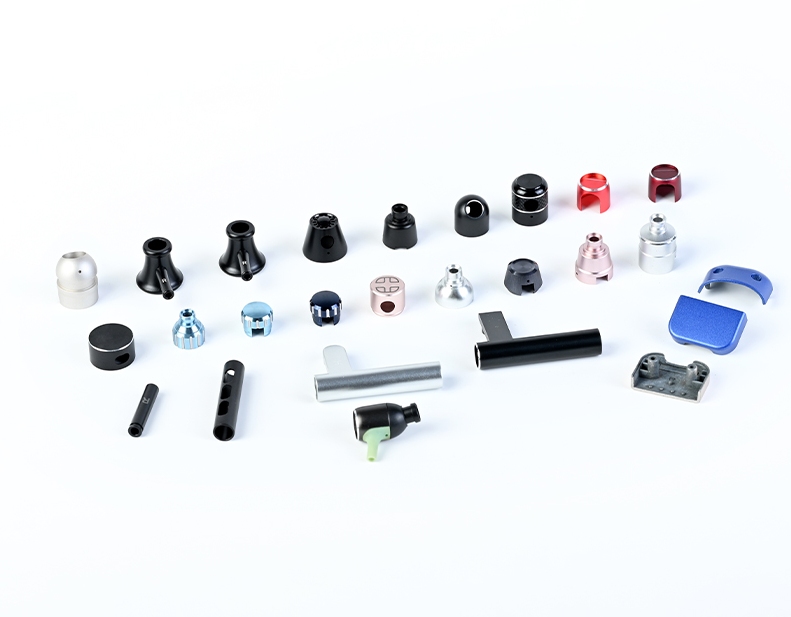
Parts We Machine Every Day

View More
SIMPLE PROCESS

What Happens After You Click Send?

1
Inquiry Received

Your message lands directly with our senior engineers — instantly acknowledged.

2
Engineer Review

We study your requirements and propose a workable solution with material & process options.

3
Quote Within 24h

Detailed quotation with specs, options and lead time — no hidden fees.

4
Sample & Production

Approve the sample, then we mass-produce with full QC and on-time shipping.

Request a Quote

Custom Quote Within 24 Hours

    Full Name *

    Business Email *

    Phone / WhatsApp *

    Company Name

    Upload Drawing / Sketch (Optional)

    No file selected

    Project Details

    Your CAD files are kept strictly confidential. Quotation within 24 hours.

    Send us an Email WhatsApp Instant Chat Get a Free Quote