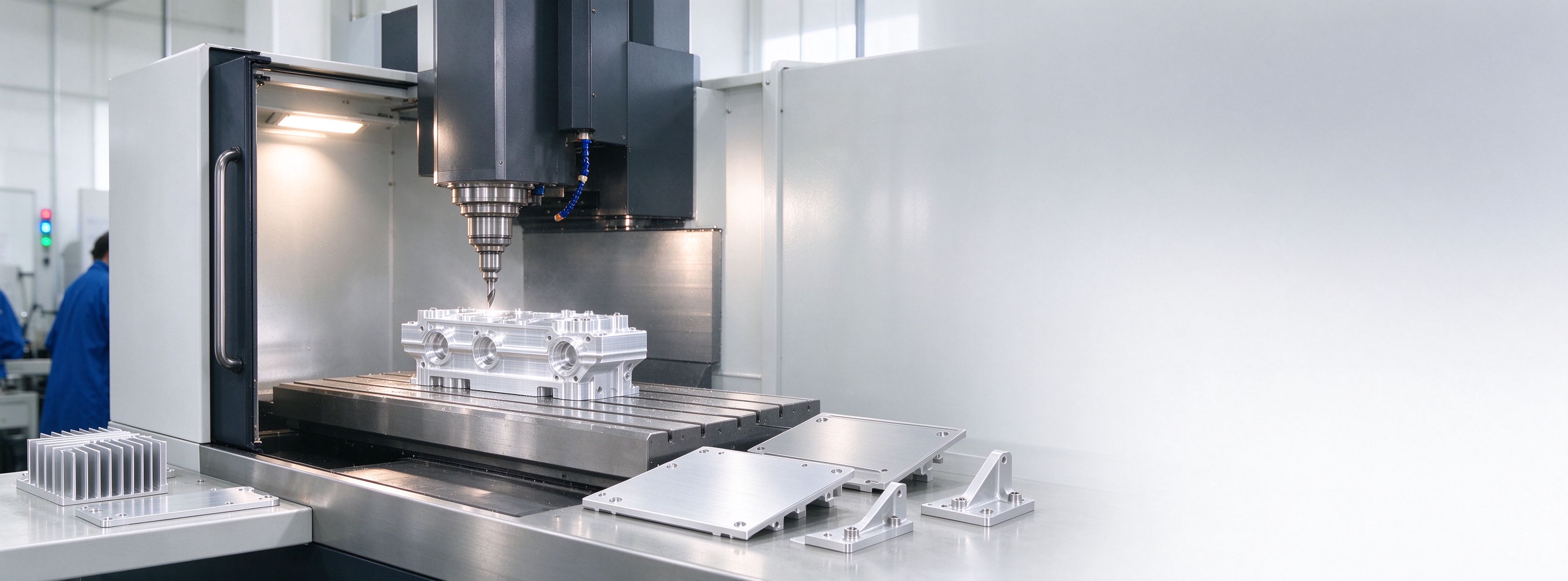
CNC machining centre: vertical machining center cutting an aluminium housing
Insight
One Setup, Complete Shafts: The Turn-Mill CNC Advantage

Machining know-how, process notes and industry updates from our CNC production floor.

Turn-Mill CNC Technology for Industrial Shaft Manufacturing

  • Turn-Mill CNC Technology for Industrial Shaft Manufacturing Eren
  • 21st August 2026

Turn-Mill CNC Technology for High-Efficiency Industrial Shaft Manufacturing

Industrial machinery, automotive drivelines, aerospace actuators, and robotics rely on precision shafts that require unprecedented levels of dimensional accuracy, structural integrity, and production efficiency. Modern engineering designs increasingly feature complex geometries—such as eccentric journals, cross-drilled oil passages, spline teeth, and keyways—on a single shaft component, driving the industry toward advanced CNC shaft manufacturing solutions.

Evolution from Conventional Turning to Turn-Mill Integration

Transitioning from traditional multi-machine production lines to integrated multi-tasking centers represents a pivotal advancement in precision shaft machining.

Overview of Conventional Shaft Machining Challenges

In the past, making a complex industrial shaft meant moving the part through several machines one after another. A starting bar would be rough turned on a standard CNC lathe, then keyways milled on a vertical machining center, radial holes drilled on a separate machine, and finally ground on a cylindrical grinder to hit the required tolerances. This old approach led to several issues in industrial shaft manufacturing.

  • Cumulative Fixturing Errors: Repeated clamping on different machines caused positioning errors. This made it hard to hold shaft concentricity and shaft runout within tight limits.
  • Inflated In-Process Inventory (WIP): Work-in-process parts piled up between stations. That added wait times, used more floor space, and stretched out the machining cycle time.
  • Increased Handling Risk: Moving finished parts between setups raised the chance of scratches or dents on the surfaces.

Introduction of Rejin CNC and Modern Capability Upgrade

To fix these problems, Rejin CNC added 5-axis CNC machining and turn-mill centers to its main OEM manufacturing work. The company holds ISO 9001:2015 and IATF 16949 certifications. Rejin CNC runs a complete in-house facility in Dongguan, China. With modern multi-tasking machines for CNC shaft machining and automated anodizing plus surface finishing lines, it provides full manufacturing solutions. These cover rapid prototyping through to high-volume shaft machining for buyers in over 150 countries.

Core Operational Advantages: Simultaneous Turning, Milling, and Threading

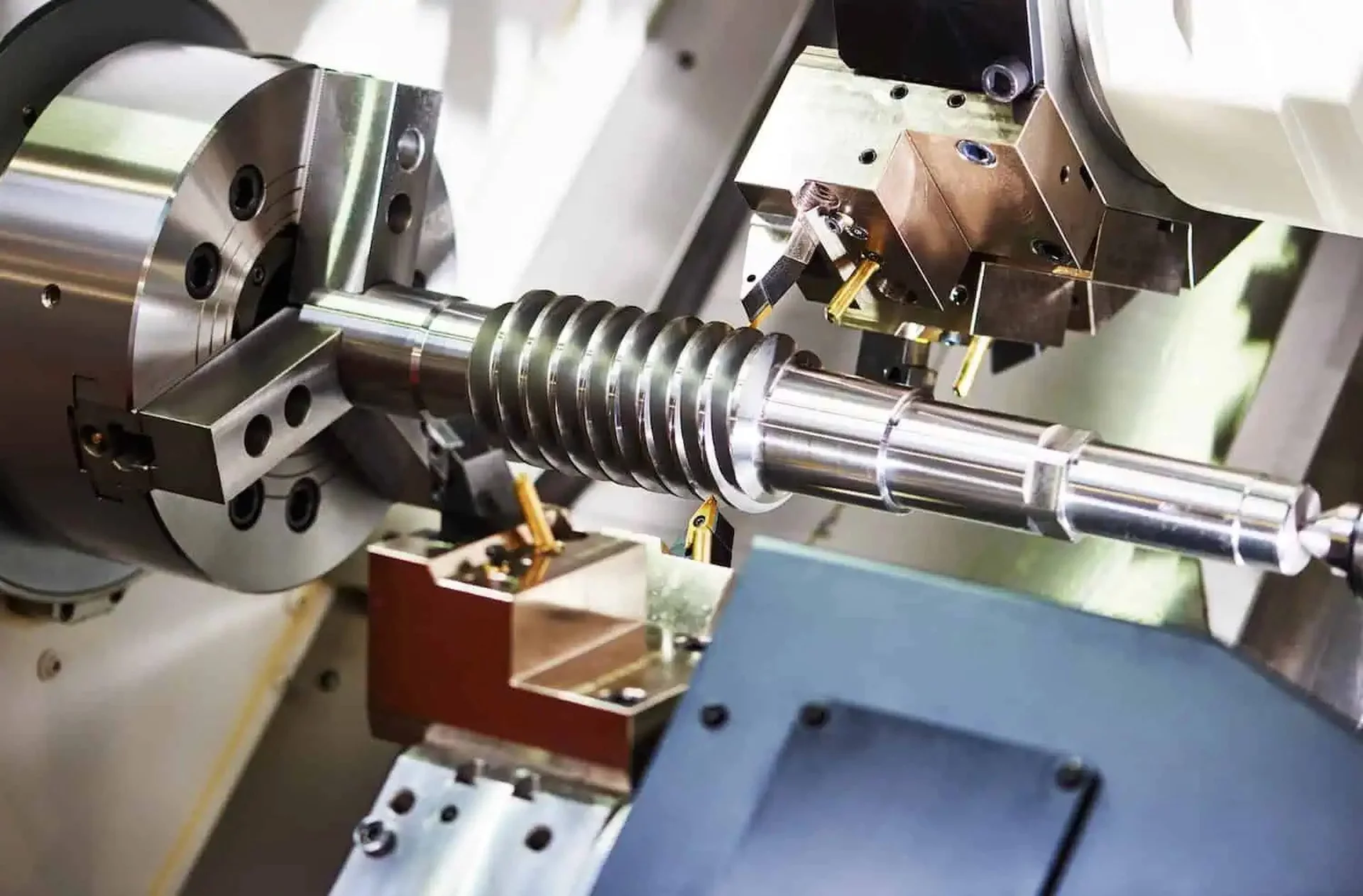
Modern turn-mill CNC machining combines the rotational cutting dynamics of a high-speed lathe with the multi-axis milling capability of a machining center.
Simultaneous turning, milling, and threading for complex shafts

Process Consolidation via Live Tooling Integration

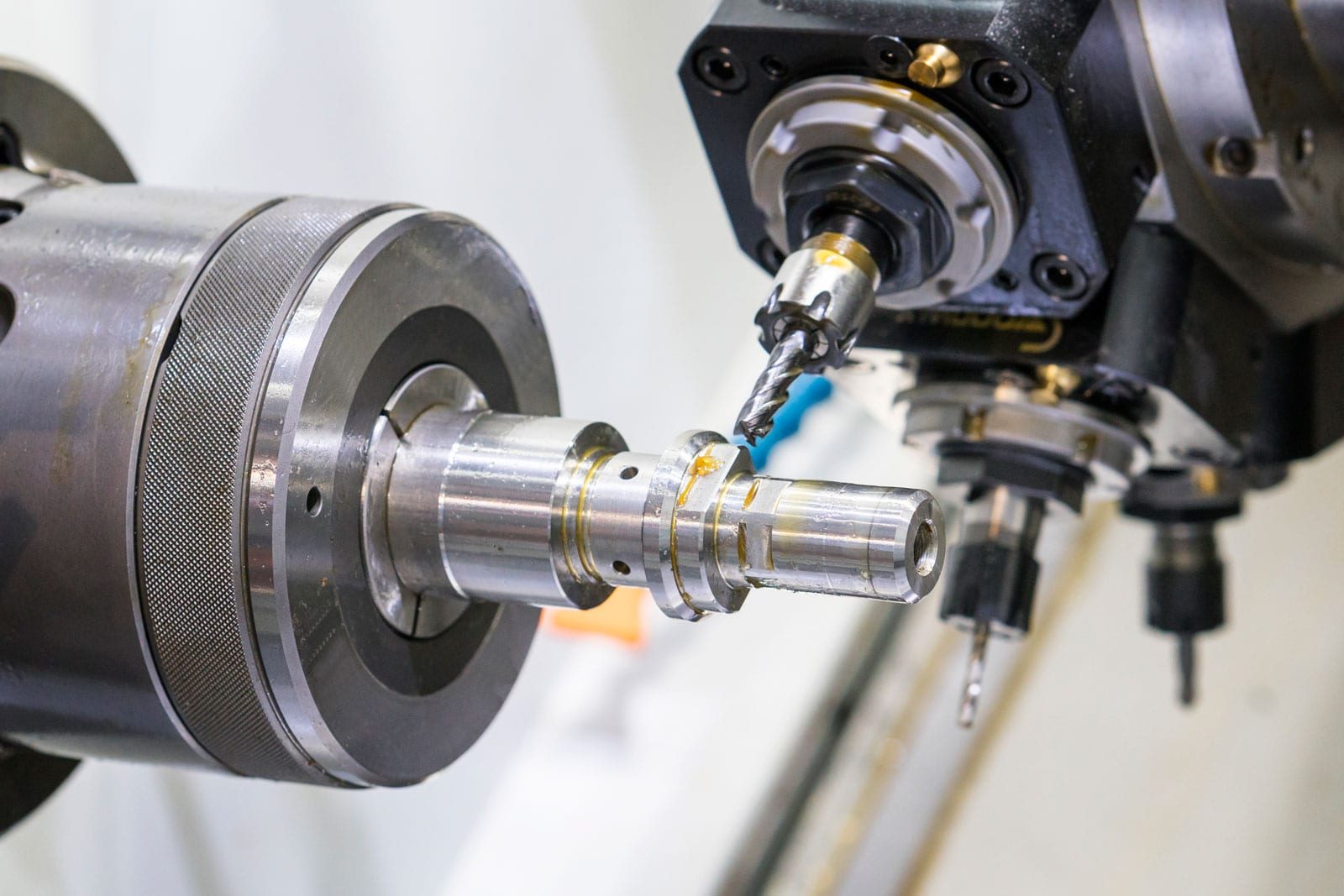
At the mechanical heart of turn-mill machining technology is the integration of high-torque main spindles, sub-spindles, and live tooling turrets capable of continuous multi-axis motion (including X, Y, Z, C, and A/B rotational axes). Rather than treating turning and milling as separate manufacturing stages, CNC turning and milling centers execute both operations concurrently or sequentially within a single clamping envelope, establishing true one-setup machining.

Engineering Decision Criteria for Process Selection

Engineers evaluating manufacturing processes must establish clear decision criteria when selecting the optimal machinery configuration for custom shaft machining:

  • Geometric Complexity Thresholds: Plain cylindrical shafts with simple stepped diameters remain cost-effective on standard 2-axis CNC lathes. However, once a shaft design incorporates angled oil holes, off-center flats, helical grooves, or transverse keyways, 5-axis CNC machining and turn-mill integration become technically superior by eliminating secondary milling operations entirely.
  • Batch Size and Setup Viability: For rapid prototyping (1 to 10 units), turn mill CNC machining reduces total lead time from weeks to 3–5 business days by skipping multi-fixture design and fabrication. For medium-to-high volume production runs (500 to 20,000+ units per month), process consolidation minimizes labor overhead and maximizes machine utilization rates.
  • Material Adaptability and Tooling Rigidity: Utilizing premium machine platforms from industry leaders like Mazak and DMG MORI, Rejin CNC excels in CNC shaft manufacturing using a broad spectrum of challenging engineering metals—including SUS304/SUS316 stainless steels, 42CrMo alloy steels, 6061/7075 aluminum alloys, titanium, and brass—ensuring optimal chip evacuation and prolonged tool life under heavy cutting loads.

Concentricity and Positional Accuracy Improvements

Maintaining stringent geometric tolerances across the entire length of an industrial shaft is essential for preventing mechanical vibration, premature bearing wear, and operational failure, making shaft machining accuracy a paramount objective.
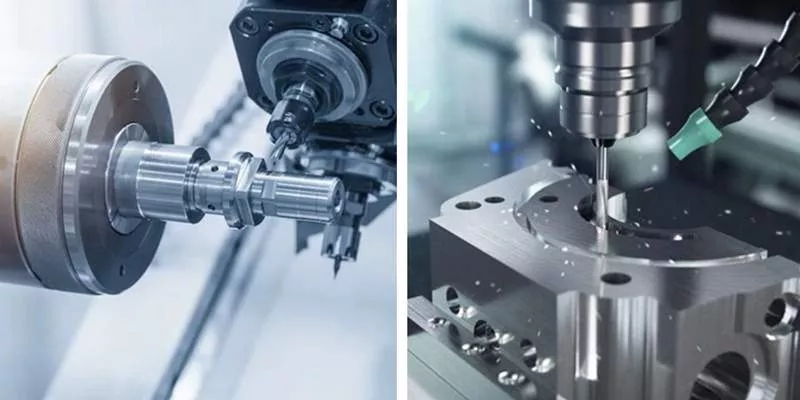
Precision CNC shaft machining with ≤0.01 mm concentricity and runout

Eliminating Re-Fixturing Drift and Stackup Errors

In rotating equipment, shaft concentricity, radial shaft runout, and cylindrical alignment dictate smooth torque transmission and operational longevity. When shafts are machined across multiple setups, positioning discrepancies naturally accumulate. One-setup machining via turn-mill machining centers fundamentally alters this precision paradigm by machining all primary features under a single reference coordinate system:

  • Elimination of Re-Fixturing Drift: Machining main bearing journals, seal surfaces, splines, and retaining ring grooves in one continuous setup guarantees that rotational axes remain perfectly aligned. Rejin CNC routinely achieves tight shaft machining accuracy, maintaining radial shaft runout and shaft concentricity tolerances within ≤ 0.01 mm on precision industrial shafts.
  • Y-Axis and C-Axis Angular Precision: The C-axis spindle control provides precise rotational indexing down to fraction-of-a-degree increments, while full Y-axis stroke motion allows for true off-center milling and keyway cutouts with zero angular deviation relative to the shaft center.

Metrology Verification and Quality Assurance Protocols

Precision CNC shaft machining must be verified by rigorous metrology. Rejin CNC enforces strict quality assurance protocols at every stage:

  • In-House Quality Control: Includes First Article Inspection (FAI) with complete FAIR reports, in-process CMM (Coordinate Measuring Machine) dimensional checks, optical profile measurement, and material certification. This systematic approach ensures that production output consistently aligns with customer CAD specifications.

Cost Benefits and Operational Scalability for High-Volume Production

While the initial capital investment in multi-axis turn-mill CNC machining equipment is substantial, the total unit cost savings achieved during high-volume shaft machining runs are decisive.
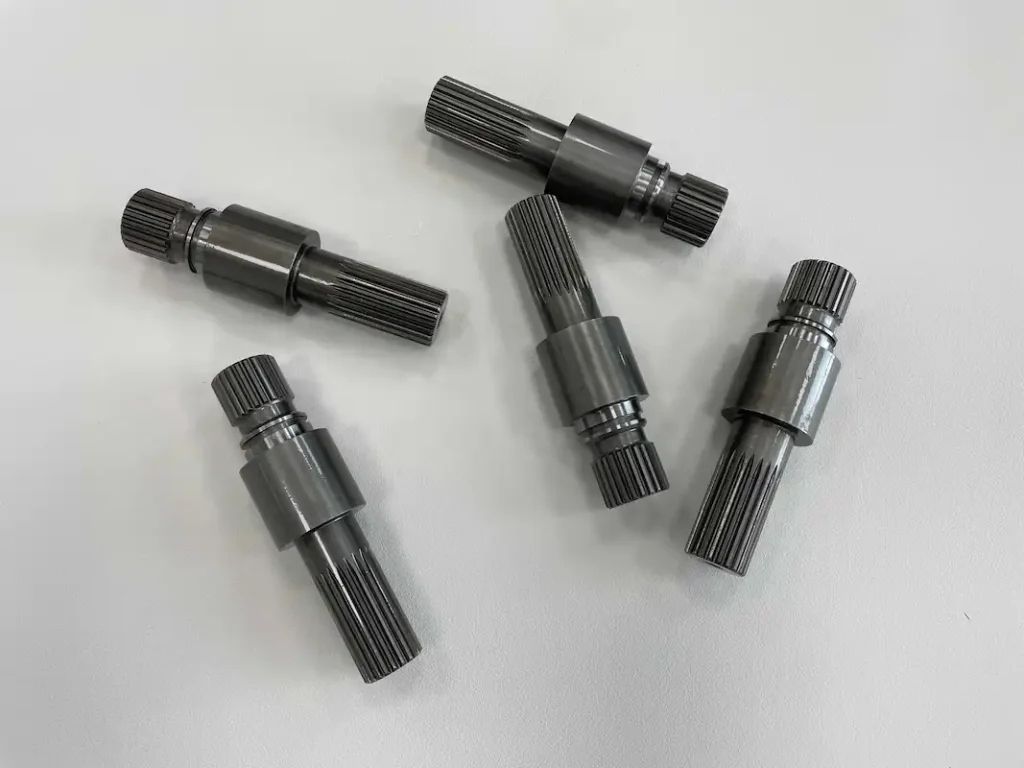
High-volume CNC shaft machining cost savings and scalability

Cycle Time and Overhead Cost Reduction

By streamlining operations, reducing manual intervention, and accelerating throughput, integrated CNC turning and milling offers significant financial and logistical advantages for OEM procurement managers:

  • Drastic Cycle Time Reduction: Eliminating intermediate setup changes and manual part transfers drastically reduces overall machining cycle time by 40% to 60%. Live tooling centers equipped with automatic tool changers (ATC) perform turning, face milling, side drilling, and thread tapping seamlessly, cutting unit lead times significantly.
  • Lower Labor and Tooling Overhead: Operating a single automated turn-mill machining cell requires fewer machine operators compared to managing three separate traditional machines. Furthermore, optimized cutting toolpaths reduce tool wear and scrap rates in industrial shaft manufacturing.

Anonymized Client Case Study and Capacity Baselines

To demonstrate concrete commercial scalability in precision shaft machining, consider a recent real-world OEM project execution:

  • Proven High-Volume Case Evidence: A leading Tier-1 European automotive supplier partnered with Rejin CNC to produce custom stainless steel drive connector shafts for vehicle fluid and transmission systems. Previously, the client experienced a 12-day turnaround for sample revisions and suffered from a 3.5% defect rate due to thread runout issues across multiple vendors. Rejin CNC implemented a 5-axis CNC machining turn-mill strategy, reducing sample delivery to just 5 business days, establishing a stable dimensional pass rate exceeding 99.5%, and scaling high-volume shaft machining to over 20,000 units monthly with zero delayed shipments over a 3-year period.
  • Flexible Order Thresholds: To accommodate diverse client lifecycles, Rejin CNC offers zero Minimum Order Quantity (MOQ = 1 unit) for rapid prototyping and initial DFM (Design for Manufacturability) verification, while seamlessly scaling up to support multi-thousand unit recurring batch orders for custom shaft machining.

Conclusion: Streamlining Precision Shaft Sourcing

Modern industrial equipment needs parts that provide tight accuracy, solid strength, and good value. Turn-mill CNC machining meets these needs by combining turning, milling, and multi-axis drilling in a single setup.
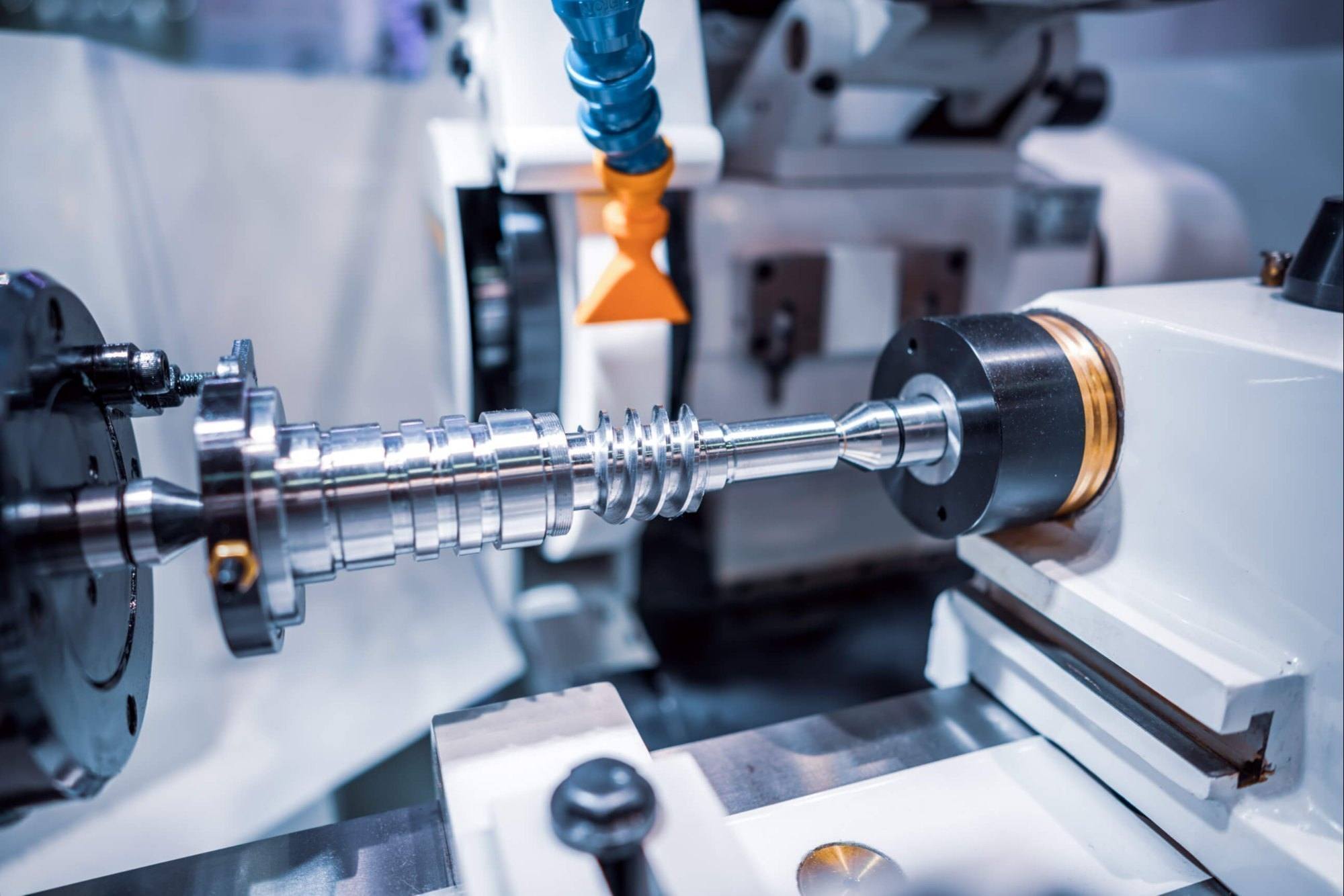
Precision turn-mill CNC shaft manufacturing for industrial applications

Rejin CNC Single-Source Manufacturing Advantage

Rejin CNC holds ISO 9001 and IATF 16949 certifications as a steady partner in CNC shaft manufacturing. The company draws on more than twenty years of shop experience and uses modern multi-axis machinery with live tooling. All surface finishing stays in-house, covering anodizing, sandblasting, electroplating, and laser marking. This approach cuts extra supplier steps, shortens machining cycle time, and maintains micron-level shaft machining accuracy. Global OEM buyers therefore gain a single-source option for industrial shaft manufacturing.

Ready to improve your component manufacturing and shorten production lead times? Upload your 2D/3D CAD drawings to Rejin CNC today to receive a free DFM feasibility analysis and formal quotation within 24 hours.

FAQ

Q: What specific geometric features indicate that a shaft should be manufactured on a turn-mill center rather than a standard CNC lathe? 

A: Shafts with radial holes, off-center keyways, flats, cross-tapped threads, or helical gear profiles benefit from turn-mill machining and CNC turning and milling. These features are finished in one setup. No move to a secondary milling machine is needed.

Q: How does single-setup turn-mill machining directly improve shaft concentricity and radial runout? 

A: Bearing seats, journal diameters, and keyways are machined in one continuous clamping cycle. One-setup machining removes the positioning errors that come from re-fixturing. Radial shaft runout and shaft concentricity stay within ≤ 0.01 mm as a result.

Q: What quality documentation and inspection reports are typically provided for custom OEM shaft orders? 

A: Standard quality packages for custom shaft machining include First Article Inspection (FAIR) reports, raw material test certificates, CMM full-dimensional inspection logs, and surface roughness verification files to ensure total traceability and compliance.

Q: What is the typical lead time transition from rapid prototyping to mass volume production for custom shafts? 

A: Rapid prototype samples for precision shaft machining are typically delivered within 3 to 5 business days following DFM approval, while high-volume shaft machining orders (500 to 20,000+ units) generally require 2 to 4 weeks depending on surface finishing requirements.
Tags:

Table of Contents

Frequently Asked Questions

The ordering process is simple: 1.Submit your design files 2.Select materials and manufacturing processes 3.Receive quotation 4.Confirm the order 5.Production and delivery
We provide a wide range of services, including CNC Machining Services, Sheet Metal Fabrication, Surface Finishing Solutions, and DFM Analysis Support.
We offer multiple CNC machining materials, such as Copper (Cu), Iron (Fe), Aluminum (Al), Stainless Steel, and Engineering Plastics.
We accept credit card, PayPal, and T/T Bank Transfer.
Yes. You can track your order via our online tracking system or contact our support team through Customer Support Team.
Our CNC machining delivers high precision, typically with a tolerance up to ±0.005mm, depending on the material and complexity of the part.
Yes. We offer design and engineering assistance to bring your ideas to life. Our team can help with product design, prototyping, and optimization.
RELATED PRODUCTS

Parts We Machine Every Day

View More
SIMPLE PROCESS

What Happens After You Click Send?

1
Inquiry Received

Your message lands directly with our senior engineers — instantly acknowledged.

2
Engineer Review

We study your requirements and propose a workable solution with material & process options.

3
Quote Within 24h

Detailed quotation with specs, options and lead time — no hidden fees.

4
Sample & Production

Approve the sample, then we mass-produce with full QC and on-time shipping.

WhatsApp: +86 13790500374

Email: info@rejincnc.com

Request a Quote

Custom Quote Within 24 Hours

    Full Name *

    Business Email *

    Phone / WhatsApp *

    Company Name

    Upload Drawing / Sketch (Optional)

    No file selected

    Project Details

    Your CAD files are kept strictly confidential. Quotation within 24 hours.