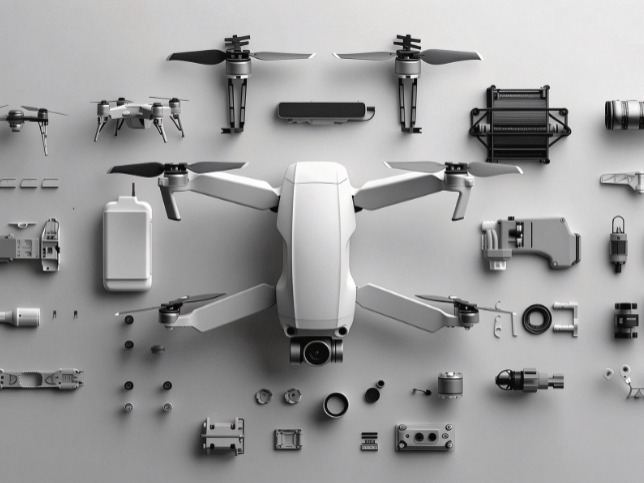
Navigating UAV Manufacturing Sourcing
Picking a CNC partner for commercial drone parts means weighing strength, exact tolerances, and weight limits at the same time. Solid UAV CNC machining skills help turn out light parts that hold together in real flight use.
Executive Introduction: The Engineering Demands of Unmanned Aerial Systems
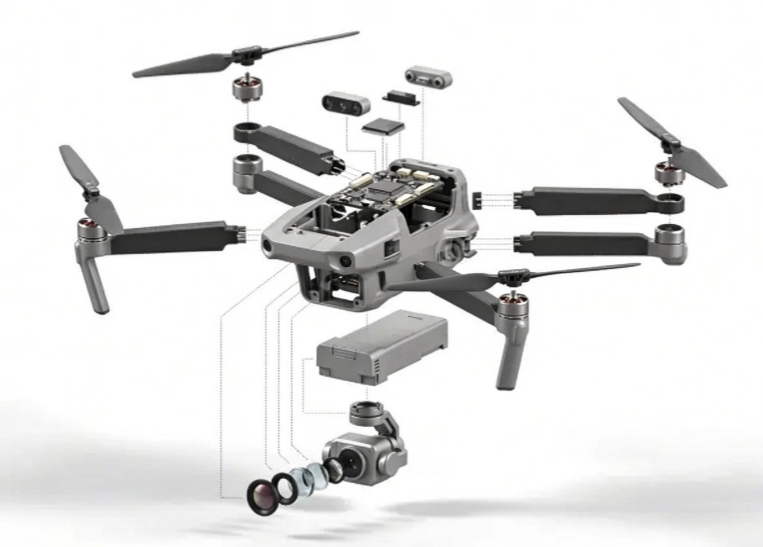
Commercial UAVs have grown fast in recent years. They now cover farm spraying work and long mapping flights with multiple rotors. This growth pushes the need for light yet tough metal parts. Engineers must trade off payload against flight time because every extra gram cuts efficiency right away. That is why UAV precision machining plays a key role when making frames, motor mounts, camera gimbals, and housings with fine details.
Sourcing good CNC machined UAV parts brings special issues. Thin walls can bend during cuts. Deep pockets call for special tools. Angled surfaces need steady references through each step. A weak UAV CNC machining supplier can cause holdups in assembly, size changes between batches, and breaks from vibration once the drone flies.
Partnering with Rejin CNC for High-Precision Components
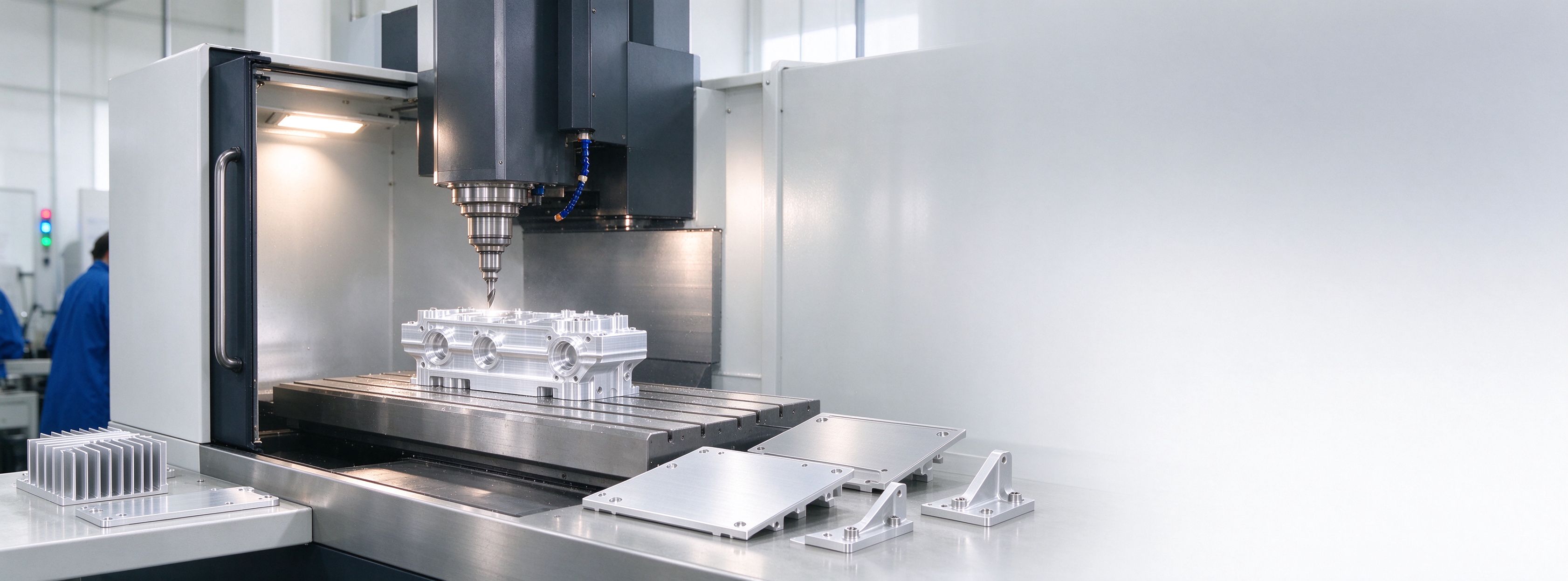
Rejin CNC focuses on precision CNC milling, turning, 5-axis machining, and surface finishing for tough commercial jobs such as drone CNC machining and full UAV builds.
- Extensive Fleet Capabilities: Operating over 200 high-precision CNC machines, including advanced 5-axis machining centers capable of holding tolerances within ±0.01 mm.
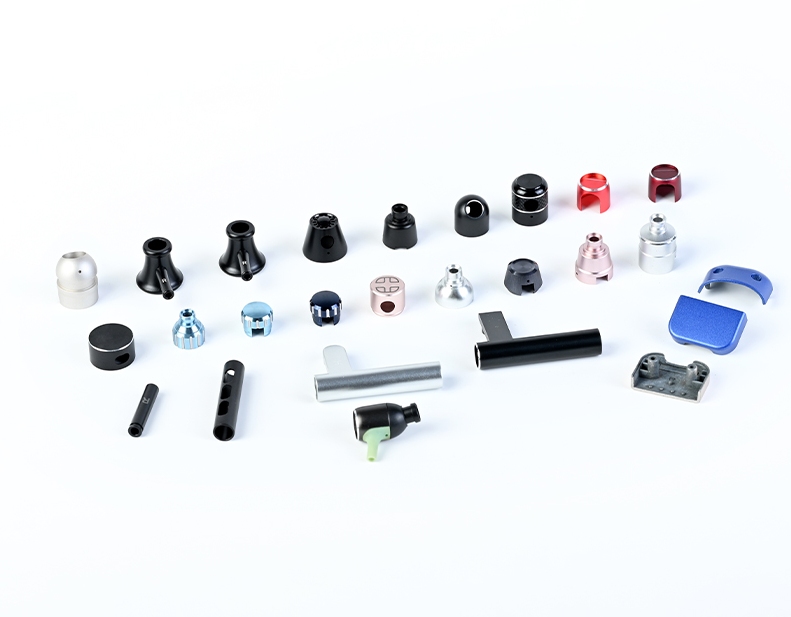
- Integrated Surface Workshop: In-house sandblasting, anodizing, and laser engraving eliminate third-party logistics delays and prevent batch color drift.
- Engineering-Led Communication: Direct DFM feedback from process engineers within 24 to 48 hours to resolve manufacturability issues early.
- Quality Assurance Standards: Certified to IATF 16949 standards, utilizing full CMM measurement and 100% inspection for critical feature callouts.
Core Design Challenges in UAV Precision Machining
Modern commercial drones demand complex geometries that push standard three-axis milling setups to their physical limits, requiring deep process knowledge to prevent part failure.
Thin-Wall Warping and Structural Deformation
Commercial drone architectures rely heavily on pocketing and thin walls (often below 1.0 mm) to minimize weight while preserving torsional stiffness. Producing these lightweight CNC-machined parts requires careful control of stress, clamping force, and cutting strategy.
- Internal Residual Stress: Milling away deep pockets in extruded aluminum stock releases internal material stresses, causing thin walls to bow or twist.
- Chatter and Tool Vibration: Unsupported thin structures vibrate under high tool engagement, causing poor surface finish and dimensional variances outside design limits.
- Clamping Distortion: Traditional vise clamping deforms thin-walled workpieces during machining, causing parts to spring back out-of-spec once released.
Multi-Axis Complex Geometries and Weight Optimization
Modern UAV structural parts often incorporate complex organic curves, angled pockets, and hollowed-out internal channels created through topology optimization.
- Multiple Setup Errors: Re-clamping a part across multiple operations on standard 3-axis machines introduces cumulative position errors between reference features.
- Deep Pocketing Access: Machining deep internal cavities for avionics and batteries requires long-tool overhangs, increasing tool deflection risk.
- Weight Reduction Pockets: Milling high-aspect-ratio ribs requires high spindle speeds and optimized chip clearance to prevent chip re-cutting and tool breakage.
Technical Criteria for Evaluating a UAV CNC Machining Supplier
Procurement teams must audit potential suppliers against rigorous engineering metrics to ensure batch-to-batch repeatability and long-term supply chain stability.
5-Axis CNC Machining for Complex UAV Frames
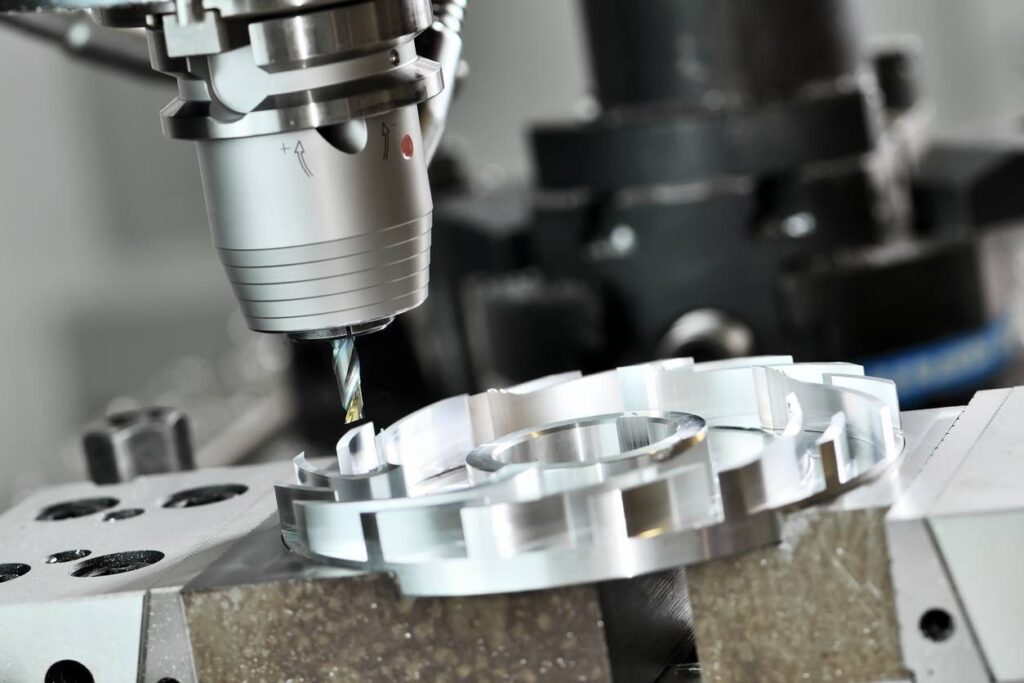
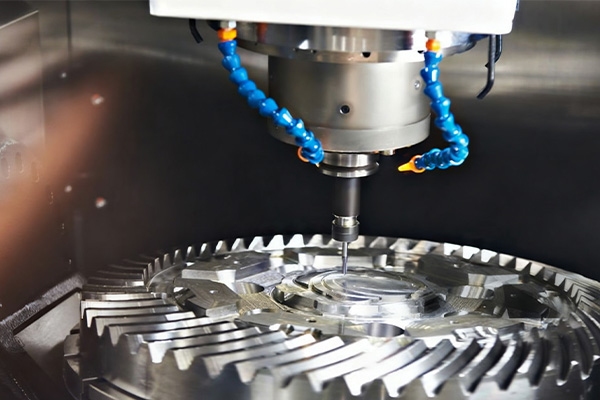
Capability in 5-axis CNC machining for UAV parts is essential for producing complex structural components without introducing multi-setup stack-up errors.
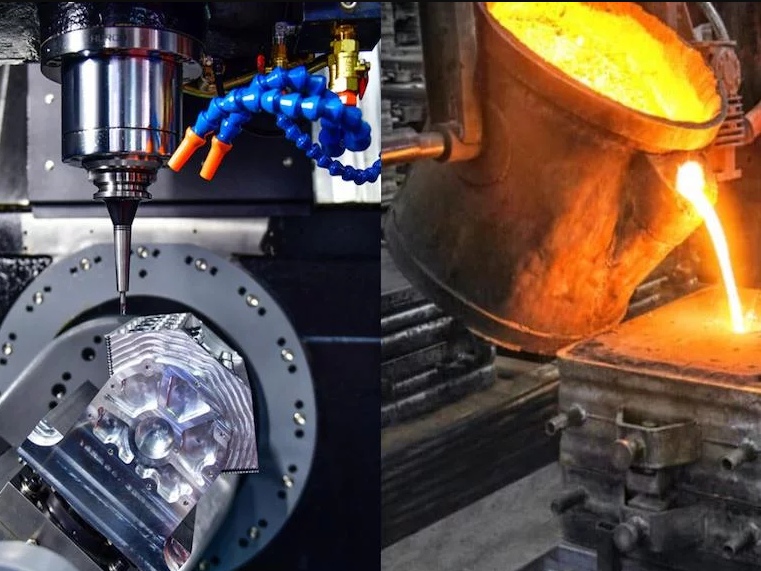
- Single-Setup Feature Alignment: 5-axis UAV machining completes multi-sided features, counterbores, and angled sensor bosses in a single clamping setup, preserving true position accuracy across all faces.
- Shorter Cutting Tools: Multi-axis rotation allows cutting tools to approach workpieces at optimal angles, enabling shorter, stiffer tooling that improves surface finish and feed rates.
- Seamless Contour Milling: Continuous 5-axis motion smoothly mills organic aerodynamic curves on drone arm connectors and housing shrouds without tool-path transition marks.
High-Strength 7075 Aluminum UAV Parts and Alloy Selection
Material selection directly impacts payload capacity, fatigue life, and structural safety margins during high-G maneuvers.
- 7075-T6 Aluminum Utilization: Machining 7075 aluminum UAV parts provides exceptional yield strength (up to 503 MPa) and strength-to-weight ratios, outperforming standard 6061 alloy in high-stress frame brackets.
- 6061-T6 Aluminum Versatility: Ideal for CNC machined UAV housing components requiring high corrosion resistance, excellent weldability, and superior anodizing finish quality.
- Engineered Plastics & Composites: Precision machining of PEEK, Delrin, and carbon fiber plates for insulating electronics brackets and lightweight structural spacers.
Single-Setup Datum Alignment for Tight Tolerances
A supplier’s datum retention strategy determines whether assembly components align smoothly on the final production line.
- Zero Datum Loss: Establishing a single primary datum for all critical holes and bearing seats prevents alignment errors across mating frame halves.
- Precision Bearing Bore Machining: Holding H7 hole tolerances (typically within +0.012/0 mm) for motor bearing seats prevents motor shaft play and premature bearing wear.
- Flatness Control: Utilizing face-milling strategies and stress-relief passes guarantees surface flatness within ≤0.05 mm across large frame mounting plates.
Practical Application Scenarios: CNC Solutions for UAV Subsystems
High-precision CNC machined drone parts solve specific structural, thermal, and environmental challenges across various commercial drone applications.
Industrial Inspection Drone Frame CNC Machining
Industrial multirotors operating near power lines or offshore wind turbines face intense wind gusts and high vibration.
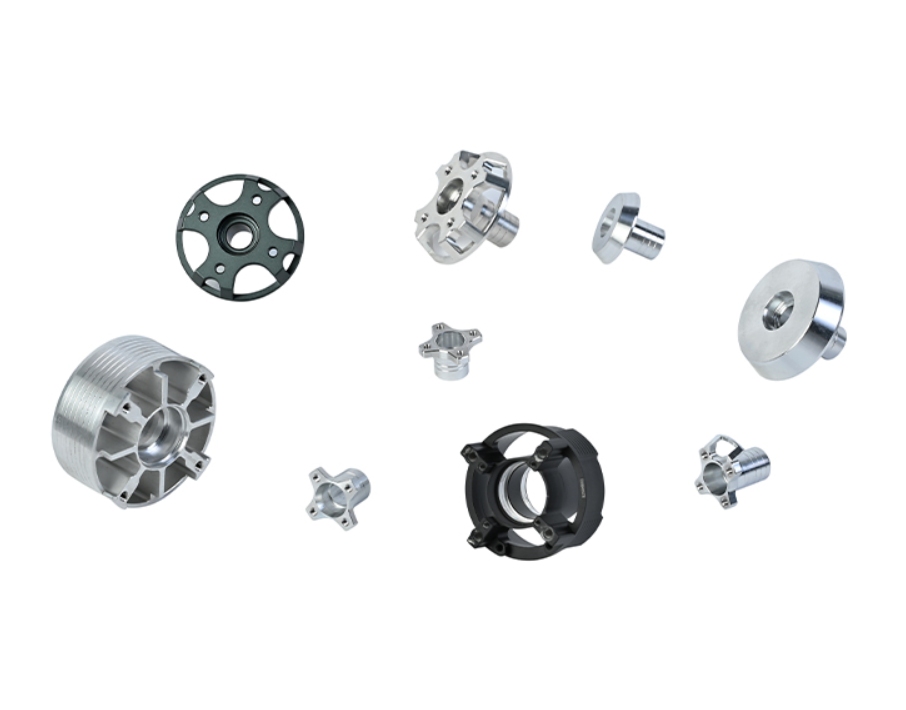
- Structural Integrity: UAV frame CNC machining produces unified arm-to-body brackets that absorb continuous motor torque without dynamic flex.
- Vibration Isolation Mounts: Precision-milled mounting hubs ensure damper grommets fit securely, preventing high-frequency motor noise from disrupting camera sensors.
- Fastener Retention Features: Integrated helicoil threads and custom press-fit lock nuts eliminate thread stripping during field maintenance.
Sealed Sensor & Gimbal Housings
Optical payloads, LiDAR units, and thermal camera systems require weather-tight enclosures to protect sensitive electronics.
- Environmental Sealing: Drone CNC machining cuts precision O-ring grooves with smooth finish standards (Ra 0.8 µm), maintaining IP67 dust and moisture ingress protection.
- Thermal Management Integration: Monolithic drone frame CNC machining incorporates internal heat-sink fins directly into the aluminum housing to cool video processors.
- Optical Alignment: Precision-milled sensor mounting faces keep multi-camera arrays aligned within arcseconds.
High-Stress Motor Mounts and Arm Connectors
Drones carrying heavy agricultural spray tanks or delivery packages place extreme fatigue loads on arm hinge pivots and motor hubs.
- Fatigue Resistance: Utilizing high-strength lightweight CNC machined parts prevents fatigue cracking at high-stress radius corners during repeated folding cycles.
- Precision Motor Alignment: Parallelism within 0.02 mm between top and bottom motor faces ensures thrust vector alignment and optimizes battery consumption.
- Quick-Release Mechanisms: Custom CNC-turned and milled latching pins provide fast, slop-free field assembly.
Manufacturing Case Benchmark: Scaling UAV Structural Production
Examining real-world production data illustrates how process optimization reduces lead times and prevents assembly line downtime.
Production Case Study: 12,000-Unit Run of Lightweight UAV Housings
A leading commercial drone developer required a scalable manufacturing partner to produce 12,000 sets of lightweight camera gimbal housings per year.
- Engineering Challenge: The original design featured a 0.8 mm thin-wall enclosure that experienced severe twisting and warping during tool passes when tested at previous machine shops.
- DFM Optimization: Process engineers at Rejin CNC revised the machining sequence, introducing a high-speed roughing pass, followed by stress relief and custom soft-jaw vacuum clamping for final finishing.
- Production Scale & Results: Over a continuous 12-month delivery window (1,000 sets/month), Rejin CNC achieved a 99.98% assembly acceptance rate across 12,000 units. Critical hole position tolerances were consistently held within ±0.008 mm on automated CMM checks.
Quality Control and DFM Verification
Rigorous quality assurance protocols ensure that digital CAD designs translate reliably into airworthy physical components.
Early DFM Analysis and CMM Lot Verification
Partnering with an experienced aerospace CNC machining supplier and standard manufacturer helps ensure that design oversights are caught before production starts.
- Automated & Manual DFM Analysis: Evaluating wall-thickness ratios, tool clearance angles, and undercut geometries within 24 to 48 hours of drawing submission.
- CMM Dimensional Verification: Coordinating 3D coordinate measuring machines (CMM) to map high-precision hole locations, concentricity, and profile tolerances.
- Lot Traceability & Surface Inspection: Archiving material mill test reports (MTRs) for raw stock and using spectrophotometers to confirm anodizing batch color matching within ΔE < 1.0.
Streamline Your UAV Supply Chain with Rejin CNC
Need precise, reliable UAV structural parts for your commercial drone platform? Rejin CNC combines advanced 5-axis CNC machining for UAV parts, strict quality control, and rapid engineering support to bring your hardware to market faster.
Upload Your CAD File for a Free 24-Hour DFM Review & Quote
FAQ
Q: How do you prevent thin-wall aluminum UAV parts from warping during CNC machining?
A: We pick stress-relieved aluminum alloys for these thin parts. High-speed tool paths with light step-overs cut down on heat and force. Vacuum fixtures or custom soft jaws hold the work steady. Several machining passes let internal stresses settle before the final finishing cuts. Shops with years of UAV work find this keeps frames flat and accurate.
Q: Why is 5-axis CNC machining preferred over 3-axis for commercial UAV structural components?
A: 5-axis machining finishes complex multi-sided parts in one setup. This reduces re-clamping errors that show up in 3-axis work. Shorter and stiffer tools reach angled features and curves without extra vibration. Teams often see better fit on motor mounts and brackets when parts stay in the same fixture.
Q: What surface treatments are recommended for outdoor commercial CNC machined drone parts?
A: Type II anodizing gives good corrosion resistance and lets teams choose colors for quick part ID in the field. Type III Hardcoat anodizing adds wear protection on sliding joints, motor mounts, and frames that face rough use. Many outdoor drone builds use the harder coating where parts rub or take impact.
Q: What lead time can be expected for custom CNC UAV prototypes versus batch production?
A: Prototype orders usually ship in 5 to 7 business days after DFM approval. Volume runs of 1,000 units or more take 2 to 3 weeks once surface finishing steps are added. Lead times can shift by a few days when parts need extra masking or special colors.