Why Choose a CNC Machining Manufacturer for Smart AI Devices
Why Choose a CNC Machining Manufacturer for Smart AI Devices
Byli
10th lipiec 2026
Quick Answer
Smart AI edge devices demand extreme computational power packed into compact form factors, creating unprecedented thermal dissipation and RF signaling challenges. Choosing a specialized CNC machining manufacturer like Rejin CNC allows hardware teams to achieve high-precision tolerances (up to ±0.005mm), variable wall thicknesses, and complex geometries that traditional die casting or stamping cannot deliver. This guide outlines how precision multi-axis CNC machining solves critical AI hardware bottlenecks, accommodates rapid engineering design changes, and provides a clear scaling path from prototype to mass production.
The physical architecture of silicon chips is undergoing a radical transformation as artificial intelligence migrates from centralized cloud data centers directly to edge devices. Hardware engineering teams are now forced to pack immense computational power into highly compact consumer and enterprise form factors. At Rejin CNC, a specialized CNC machining manufacturer, we partner with global technology innovators to solve these exact manufacturing bottlenecks. Building high-performance AI hardware is no longer just an electronics challenge; it is a mechanical engineering challenge where structural tolerances dictate processing efficiency.
The Hardware Architecture Dilemma of Next-Gen Smart Devices
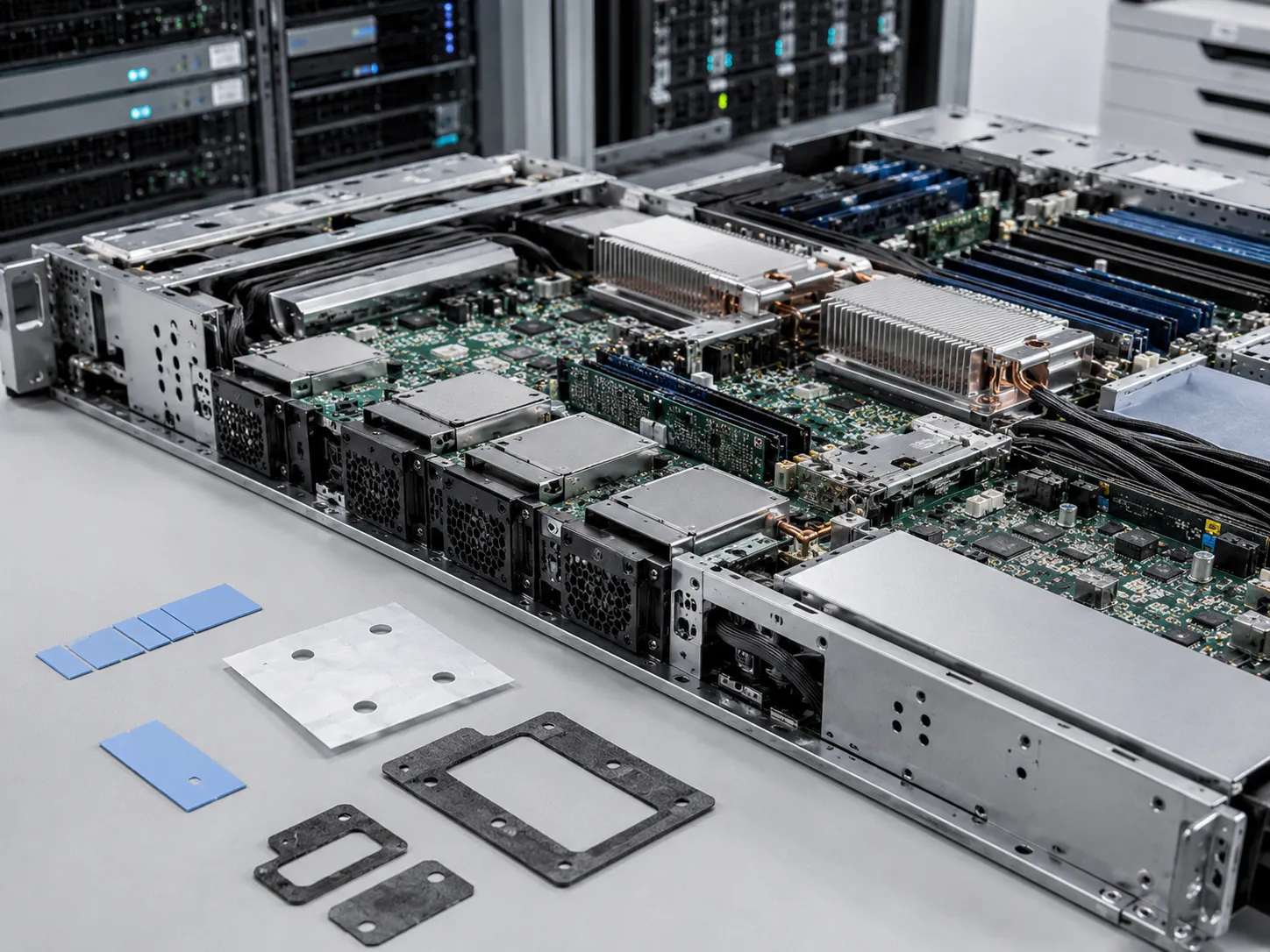
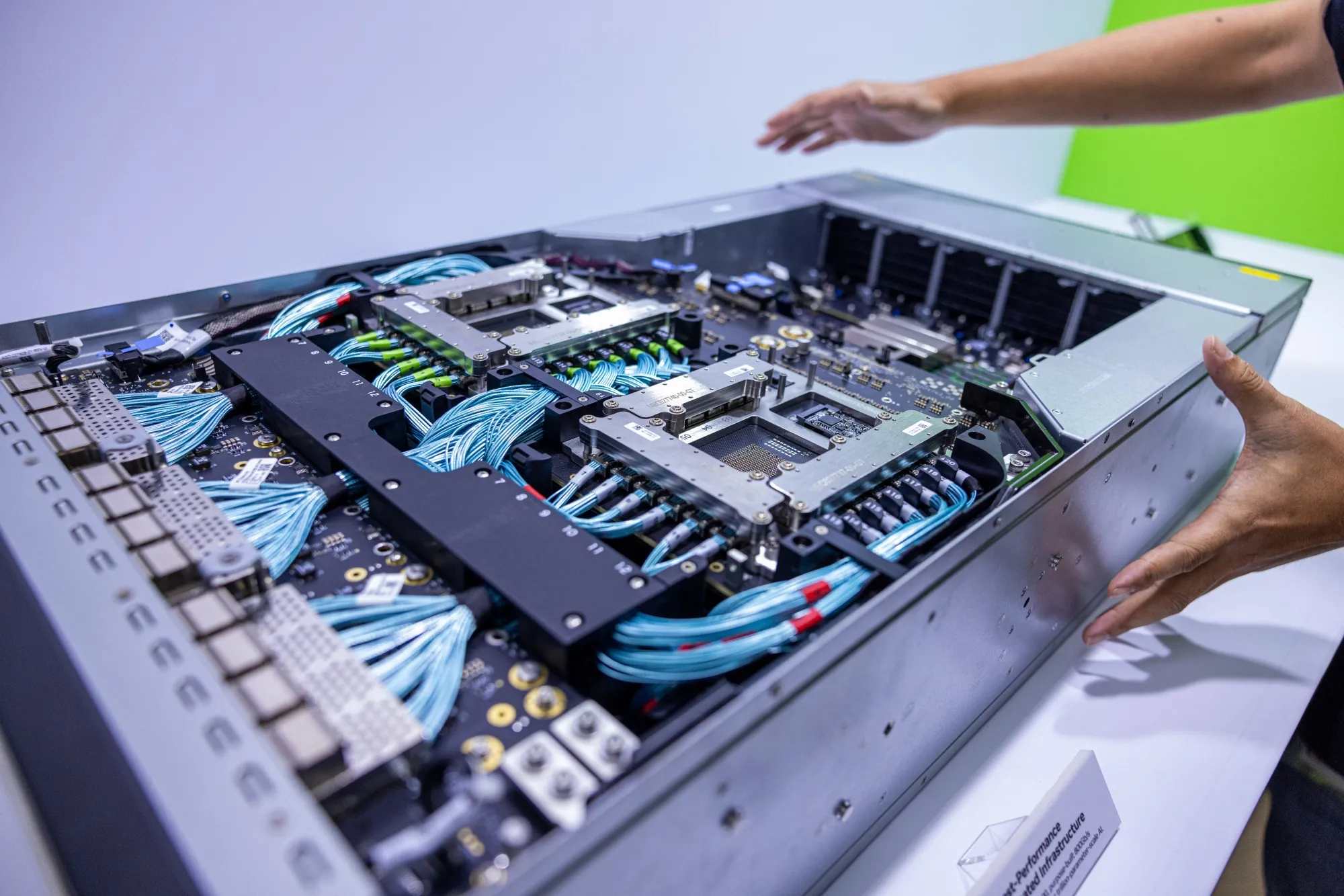
The integration of local AI processing units yields a massive spike in localized thermal output and electromagnetic interference. Engineering teams must design enclosures that act simultaneously as protective skins, structural chassis, and advanced thermodynamic heat sinks.
The Shift from Enclosures to Active Thermal Management Systems
Modern edge-AI components run hot, requiring structural frames to actively dissipate thermal energy through direct-contact mechanical coupling.
Integrated vapor chamber pockets: Milling deep, flat-bottomed cavities with sub-10-micron planarity directly into the chassis aluminum to significantly enhance thermal transfer efficiency across multi-phase cooling plates.
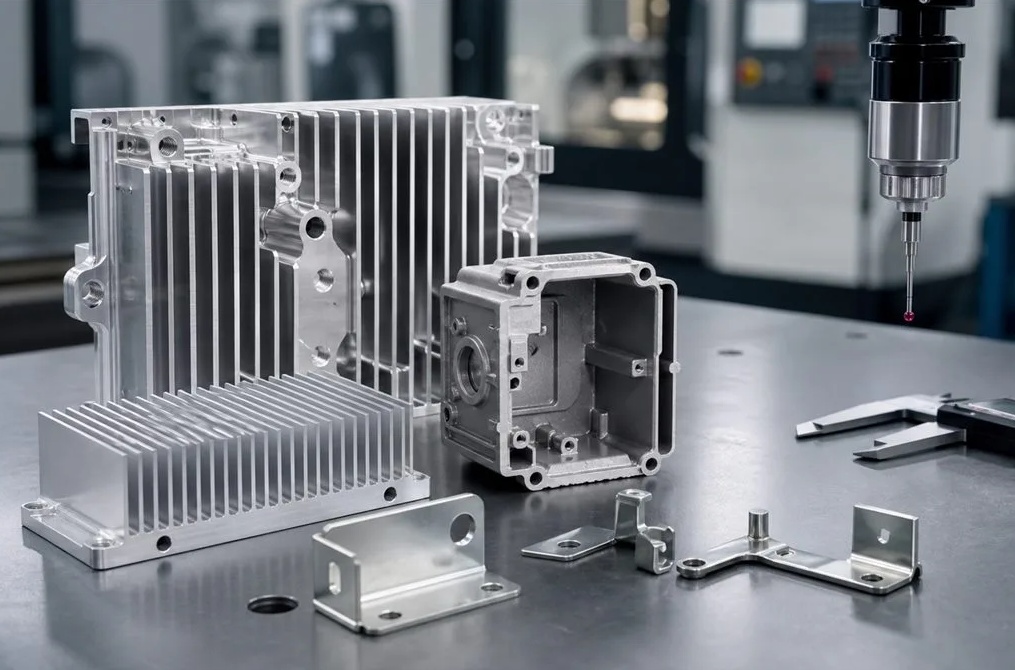
High-aspect-ratio cooling fins: Machining ultra-thin, tightly pitched 0.5 mm cooling ribs directly onto exterior surfaces to expand convective surface area without increasing device footprint.
Thermal interface material (TIM) compression zones: Creating precisely depth-controlled recesses that maintain optimal, uniform pressure across elastomeric thermal pads to substantially reduce micro-void air pockets.
Balancing Structural Rigidity with High-Frequency Signal Transmissions
AI devices rely on massive data throughput via Wi-Fi 7, 5G, and millimeter-wave arrays, meaning metal enclosures must be engineered to mitigate radio frequency shielding issues.
Antenna window pocketing: Utilizing high-speed 3D milling to thin out specific zones of an aluminum chassis down to 0.3 mm, allowing RF signals to pass through efficiently when bonded with composite inserts.
RF shielding isolation walls: Machining contiguous, uninterrupted internal walls that fit precisely into PCB shield cans, minimizing internal cross-talk between the power management IC and sensitive analog sensors.
Anodization masking paths: Executing micro-toleranced mechanical masking during post-processing to ensure specific internal mounting bosses remain raw, conductive metal for highly reliable electrical grounding.
Structural Complexity: Why Traditional Methods Fail AI Edge Hardware
When product volumes transition from prototype to mass production, selecting the correct fabrication methodology determines both product performance and financial viability.
The Geometric Limits of Die Casting and Injection Molding
Casting and molding handle low-cost, high-volume parts well. Yet they often miss the structural strength and precision needed in advanced AI device assemblies.
Porosity and structural voids: Die casting tends to trap small air pockets in the metal. These pockets lower heat transfer and reduce strength when the part takes a hit.
Draft angle constraints: Injection molding and casting need walls with a slight taper, usually 1° to 3°, for easy release from the mold. AI parts inside, though, call for straight 90° walls to keep space tight.
Surface finish imperfections: Molded parts show lines where the mold meets and where material flows join. These lines need a lot of hand work afterward. That makes it tough to achieve the clean look Tier-1 brands want.
The Economic Transition: CNC Machining vs. Progressive Die Stamping
Choosing CNC machining over progressive die stamping depends on how complex the shape is, how much the tools cost upfront, and how many units you plan to make.
The 50,000-unit break-even threshold: When yearly output stays below 50,000 units, stamping dies can cost over $80,000 to set up. multi-axis CNC machiningthen offers the better value.
Wall thickness ratios: Stamping keeps the sheet metal the same thickness everywhere. Frezowanie CNClets you vary it, such as using 5.0 mm at a corner for strength and 0.8 mm on the side.
Design agility during scaling: Updating a feature in a CNC program takes just minutes and adds almost no extra tool cost. Changing a stamping die, on the other hand, can halt work for weeks and run up costs by tens of thousands of dollars.
How Rejin Supports AI Hardware Projects
Rejin CNC provides an integrated, end-to-end framework tailored specifically for high-stakes AI hardware procurement and engineering teams:
DFM Feedback Within 24 Hours: Upload your CAD files and receive a detailed Design for Manufacturing (DFM) analysis alongside a personalized quote within 24 hours, eliminating cost traps before production begins.
Multi-Stage Lifecycle Support: From Early Verification Testing (EVT) and Design Verification Testing (DVT) with prototypes down to 1–50 units, up to stable multi-shift mass production reaching 45,000 units monthly.
Vertical Process Integration: Founded by veteran engineer Mr. Zhang Yi, our infrastructure spans from premium raw material provisioning to our own dedicated anodizing and automated surface treatment lines, ensuring absolute control over lead times and cosmetic consistency.
How Rejin CNC Empowers AI Device Innovators: Engineering & Fleet Scale
As a dedicated CNC machining manufacturer, Rejin CNC bridges the gap between complex industrial design and high-volume manufacturing feasibility. We specialize in transforming complex raw geometries into repeatable, market-ready mechanical components.
Ultra-Precision Multi-Axis CNC Milling for Complex Internal Geometries
Advanced AI devices feature highly complex internal architectures that cannot be reached by standard 3-axis machining configurations.
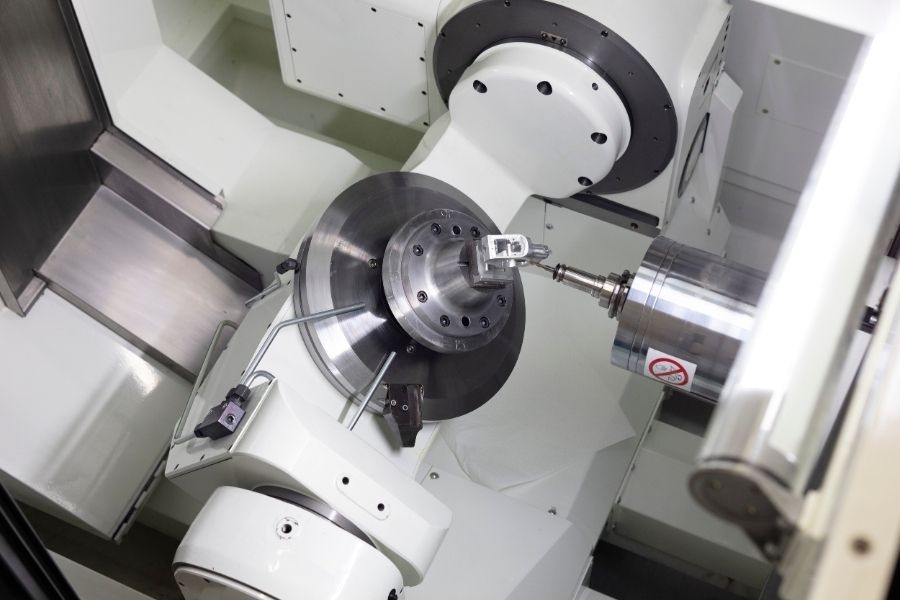
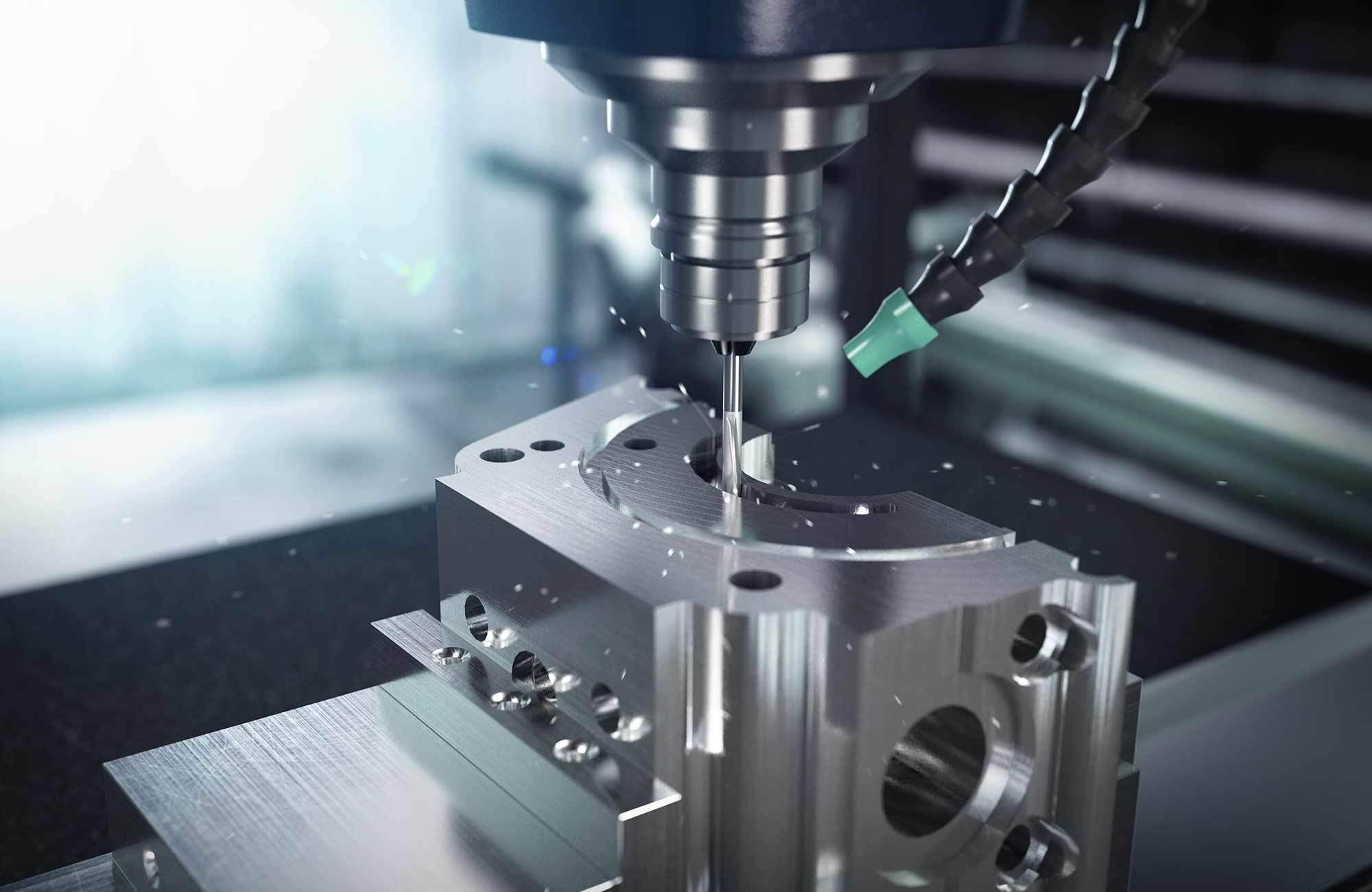
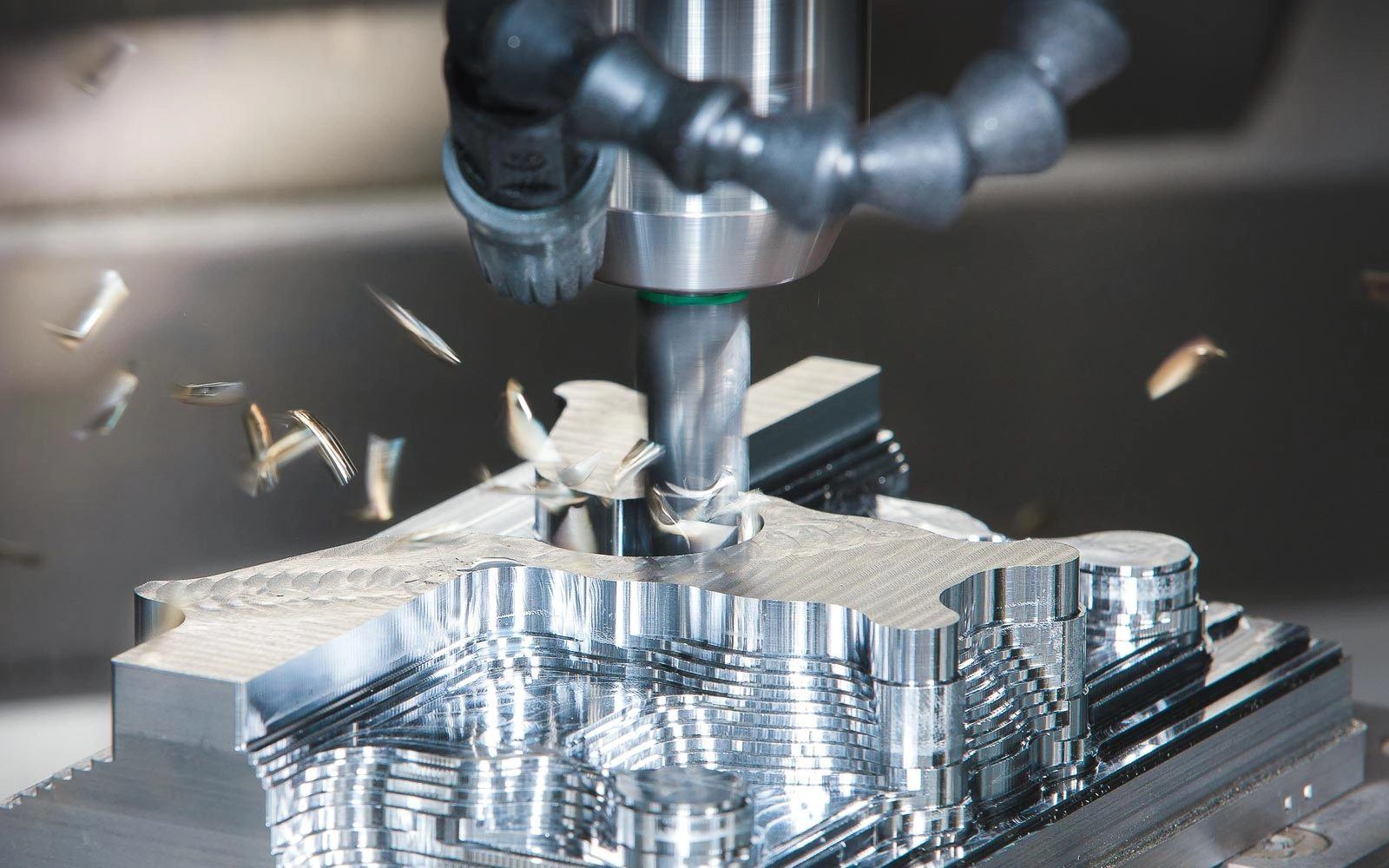
Simultaneous 5-axis toolpaths: By manipulating the workpiece along five axes concurrently, we machine complex organic contours, undercuts, and angled ports in a single setup, drastically reducing cumulative fixture stacking errors.
Micro-endmilling down to 0.2 mm: Our high-rpm spindles allow us to utilize fragile, micro-diameter cutters to form sharp internal corner radii ($R\le0.1\text{ mm}$) and ultra-fine threads required for sub-miniature electronic fasteners.
Surface flatness control within 0.01 mm: Utilizing diamond-tipped fly cutters, we achieve exceptional planarity on mating surfaces, ensuring high-fidelity contact with internal processor heat spreaders.
Turnkey Mechanical Assemblies and Rigorous Quality Verification
We do more than simple metal cutting. Our teams deliver complete modules that arrive ready to install and fit directly into customer production lines.
Automated helicoil and thread-insert installation: Pneumatic tools insert stainless steel threads into aluminum or magnesium parts. This gives good resistance against pull-out forces.
CMM and laser-scanning metrology: Every key dimension is checked on Coordinate Measuring Machines along with optical scanners. The checks confirm that parts match the original CAD model specifications.
Salt-spray and environmental testing: Coated parts undergo 96 hours of salt fog exposure. The test confirms solid corrosion resistance for long-term use in tough field conditions.
Real Client Cooperation & Validation
True manufacturing competence is proven through field execution. Below are real-world applications where our cross-industry engineering interventions directly resolved critical scaling roadblocks for our long-term partners.
Case Study 1: High-Precision Thermal and Structural Components for Automotive AI Computing
An automotive electronics partner required robust, high-performance structural components to safeguard localized computing units deployed across multiple vehicle models.
The Procurement Benchmark: The client required strict adherence to rigorous IATF 16949 automotive standards, highly compressed prototyping turnaround, and a reliable path to transition from pilot testing to stable mass production.
The Engineering Challenge: The original structural components exhibited minor variations in dimensional accuracy across batches, resulting in thermal interface gaps that risked processor throttling under sustained computing loads.
The Rejin CNC Solution: Leveraging our IATF 16949:2016 certified quality framework and high-speed CNC milling centers, we optimized the machining path to achieve a dimensional yield rate of ≥99.5%. We successfully compressed the prototyping cycle from 12 days down to 5 days, establishing a robust mass production workflow that maintained a 100% on-time delivery rate and reduced the client product return rate to under 0.3%.
Case Study 2: Acoustic Enclosures for Premium Electroacoustic Equipment Brands
Drawing on our deep roots established in 2003 in electroacoustic hardware and speaker components, a premium audio device manufacturer engaged us to manufacture complex, cosmetically pristine internal acoustic sound chambers.
The Procurement Benchmark: The project demanded premium aesthetic finishes paired with strict compliance withintricate acoustic geometries and a flexible ordering structure to support regional market launches.
The Engineering Challenge: The acoustic enclosures required internal variable-depth channels with stringent, near-zero draft requirements that could not be achieved via traditional molding without risking structural voids or altering the unblemished external finish.
The Rejin CNC Solution: Utilizing our multi-axis CNC machining centers, we successfully produced the sound cavities with zero draft angles while maintaining uniform wall thicknesses. By routing the parts through our automated sandblasting and in-house anodization production lines, we eliminated manual post-processing variables, delivering a premium matte surface finish that effectively met the brand’s stringent acoustic resonance and cosmetics specifications.
Selecting Your CNC Partner: Production Capabilities and Procurement Benchmarks
When vetting a B2B CNC machining manufacturer, procurement teams must verify that the vendor’s physical asset infrastructure and volume capacities effectively align with their product roadmap.
Equipment Fleet and Machinery Specifications
Our production floor is optimized for both rapid-response engineering changes and high-capacity, multi-shift production consistency.
Equipment Classification
Machine Brand / Model
Axis Configuration
Primary Application
Target Industry
Ultra-Precision CNC Mill
Mazak VCN-530C
3-Axis / 4-Axis
High-speed aluminum chassis profiling
Consumer Electronics
High-Speed Machining Center
DMG MORI CMX 1100 V
3-Axis / 4-Axis
Structural brackets & sub-frames
Robotics & Industrial AI
Simultaneous 5-Axis Mill
Hermle C 250
5-osi
Complex internal geometry & undercuts
Aerospace & Premium Audio
Swiss-Type Precision Lathe
Tsugami B0328-II
8-Axis Turning
Micro-miniature pins, connectors, fasteners
IoT & Medical Devices
Minimum Order Quantities (MOQ) and Monthly Throughput Capacity
We structured our operational limits to flexibly accommodate products at every stage of their lifecycle, from initial validation to global rollout.
Prototype & NPI (New Product Introduction) MOQ: We accept short-run orders starting at 1 to 50 units, allowing hardware teams to execute functional engineering validation tests (EVT) without heavy upfront capital exposure.
Pilot-Run Production Scale: For design validation testing (DVT) and regional product launches, our standard operational sweet spot ranges from 100 to 1,000 units, delivered on compressed lead times.
Mass Production Monthly Throughput: Powered by our extensive fleet of over 100 high-end machining centers running continuous multi-shift schedules, our facility maintains a maximum monthly capacity of up to 45,000 precision-machined components.
Partner with Rejin CNC for Your Next AI Project
Overcoming the structural, thermal, and cosmetic challenges of modern AI hardware demands a manufacturing partner who treats precision as a foundational metric. At Rejin CNC, we combine an advanced machine fleet with deep DFM (Design for Manufacturing) expertise to ensure your smart devices scale smoothly from initial concept to high-volume market success.
Email: nicole@rejincnc.com
WhatsApp/Tel: +86 13790500374
Często zadawane pytania
Q: What is the typical surface roughness (Ra) achievable on thermal mating surfaces without resorting to manual polishing?
A: Our Mazak machining centers with diamond fly-cutters reliably produce an Ra of 0.4 μm (16 μin) directly from the machine. This precise finish level supports highly efficient heat transfer where parts meet.
Q: How does a CNC machining manufacturer handle engineering design changes (ECOs) mid-production compared to die casting vendors?
A: CNC workflows run entirely on digital programming. We adjust the G-code script and continue the run with minimal delay. In contrast, die casting requires modifying hard steel molds, which introduces substantial tooling expenditures and weeks of downtime.
Q: What geometric tolerances can your facility reliably hold on critical internal features across a 10,000-unit production run?
A: We reliably hold linear tolerances to ±0.01 mm (±0.0004 in), while true position and cylindricity consistently stay within 0.02 mm. Automated CMM sampling checks confirm these values throughout the full production run.
Q: Which aluminum alloys are recommended for AI smart devices that require both structural rigidity and high thermal dissipation?
A: Aluminum 6061-T6 serves as the industry standard, offering an optimal balance of structural strength, clean machinability, and high thermal conductivity (167 W/m·K). For components requiring a premium cosmetic appearance following anodization, 6061-T6 or 6063 alloys deliver the most consistent results in consumer electronics.
Proces zamówienia jest prosty:
1. Prześlij swoje pliki projektowe
2. Wybierz materiały i procesy produkcyjne
3. Otrzymaj ofertę
4.Potwierdź zamówienie
5.Produkcja i dostawa
Oferujemy szeroki zakres usług, w tym usługi obróbki CNC, wytwarzanie blach, rozwiązania wykończenia powierzchni i wsparcie analizy DFM.
Oferujemy wiele materiałów obróbkowych CNC, takich jak miedź (Cu), żelazo (Fe), aluminium (Al), stal nierdzewna i tworzywa sztuczne inżynieryjne.
Akceptujemy kartę kredytową, PayPal i przelew bankowy T / T.
- Tak. - Tak. Możesz śledzić zamówienie za pośrednictwem naszego systemu śledzenia online lub skontaktować się z naszym zespołem wsparcia za pośrednictwem zespołu wsparcia klienta.
Nasza obróbka CNC zapewnia wysoką precyzję, zazwyczaj z tolerancją do ±0,005 mm, w zależności od materiału i złożoności części.
- Tak. - Tak. Oferujemy pomoc projektową i inżynieryjną, aby zrealizować Twoje pomysły. Nasz zespół może pomóc w projektowaniu produktu, tworzeniu prototypów i optymalizacji.
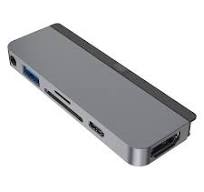
Nasze węzły iPad są obróbane CNC z wysokiej jakości materiałów metalowych, zapewniając stabilną strukturę, wydajne rozpraszanie ciepła i precyzyjny interfejs
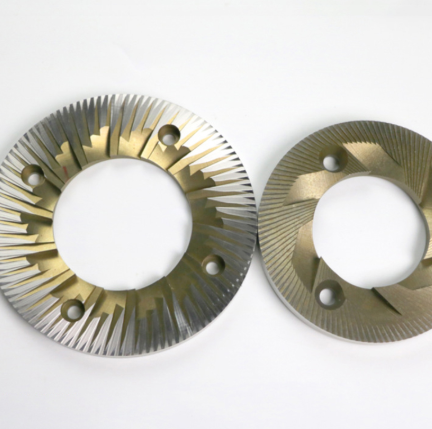
Profesjonalny producent specjalizujący się w niestandardowej obróbce CNC części mechanicznych. Możemy dostosować szeroką gamę specjalnych obudow i innych komponentów ekspresu do kawy zgodnie z wymaganiami klienta, z szerokim wyborem dostępnych materiałów. Skontaktuj się z nami w razie zapytań!
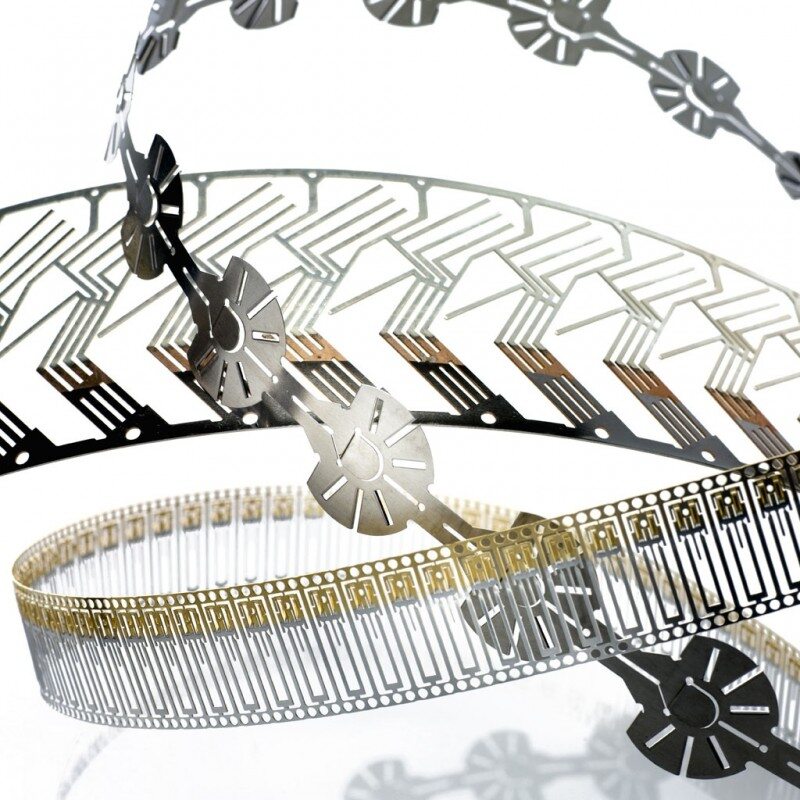
Rejin CNC produkuje precyzyjne części tłoczenia o wysokiej dokładności wymiarowej i spójnej jakości. Nasze komponenty do tłoczenia metalu są szeroko stosowane w elektroniki, przemyśle motoryzacyjnym i sprzętie przemysłowym, wspierając produkcję OEM i ODM.
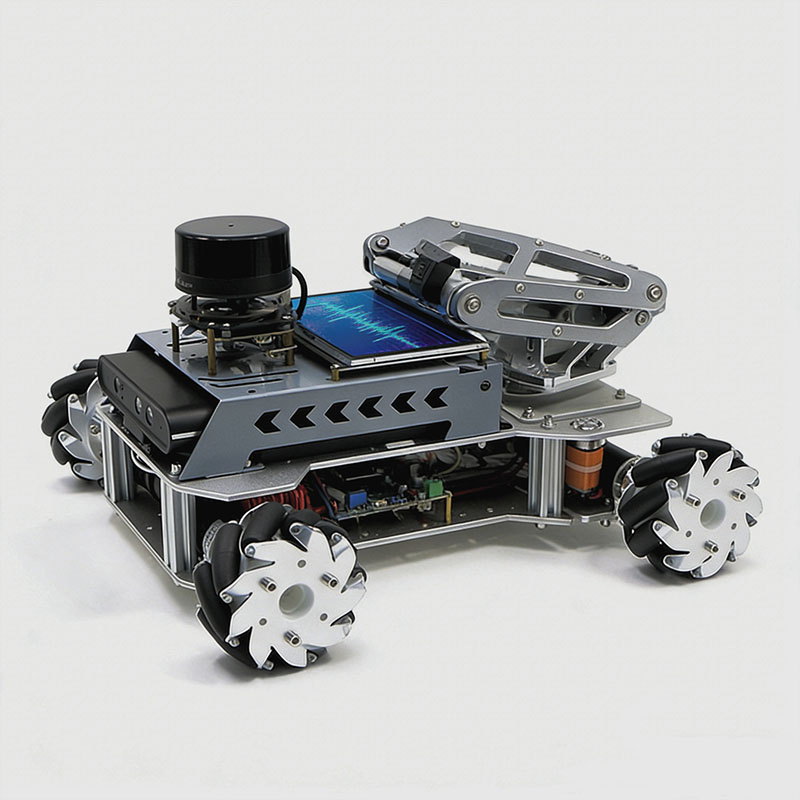
Te części robotów obróbanych CNC są zaprojektowane do systemów robotycznych, w tym części łącznych, wałów i komponentów konstrukcyjnych. Wysoka precyzja zapewnia płynny ruch i długoterminową stabilność.

 Byli
Byli