Precision CNC Machining Parts for Modern Automotive Systems
Precision CNC Machining Parts for Modern Automotive Systems
Eren
9th July 2026
The automotive industry is undergoing its most profound transformation since the introduction of the moving assembly line. Modern vehicles have evolved far beyond basic mechanical transport to become sophisticated, high-performance computers on wheels. This structural shift has raised the threshold for manufacturing precision exponentially. Automotive engineers now routinely bypass generic manufacturing methods in favor of components holding aerospace-grade tolerances, all while requiring seamless integration into high-volume global supply chains.
In advanced vehicle engineering, Rejin CNCkonwsa deviation of just a few microns represents the boundary between optimized performance and system-wide mechanical failure. High-precision CNC machining parts serve as the critical foundation for this new era of automotive engineering, combining decades of foundational mechanical expertise with advanced multi-axis technology to resolve the industry’s most demanding manufacturing challenges.
Why CNC Machining is the Backbone of Modern Vehicle Systems
CNC machining remains irreplaceable for producing the complex, high-strength structural and functional parts that modern vehicle architectures require for safety, structural integrity, and prolonged operational performance.
Meeting the Demand for ±0.01mm Tolerances in Automotive Engineering
Automotive parts need tight dimensions that old casting or hand work cannot match. CNC machining closes this gap with several clear benefits.
Sub-Micron Precision & Geometric Control: CNC programs on multi-axis machines hit tolerances of ±0.01mm on a regular basis. Fuel injectors and sensor housings depend on this fit to stop fluid leaks or signal loss.
Preservation of Material Integrity: CNC cutting keeps the original strength of alloys such as 42CrMo and SUS316 stainless steel. Casting or molding can add stress cracks inside the material.
Surface Finish Optimization: Steady cutting settings produce finishes below Ra0.8μm. Lower roughness reduces friction in fast-moving assemblies and adds years to powertrain life.
Strict Repeatability at Scale: Orders above 10,000 units must show the same quality across every batch. Machine controls and tool adjustments make the first part match the last with no measurable difference.
Precision Under Pressure: Critical Engine and Transmission Parts
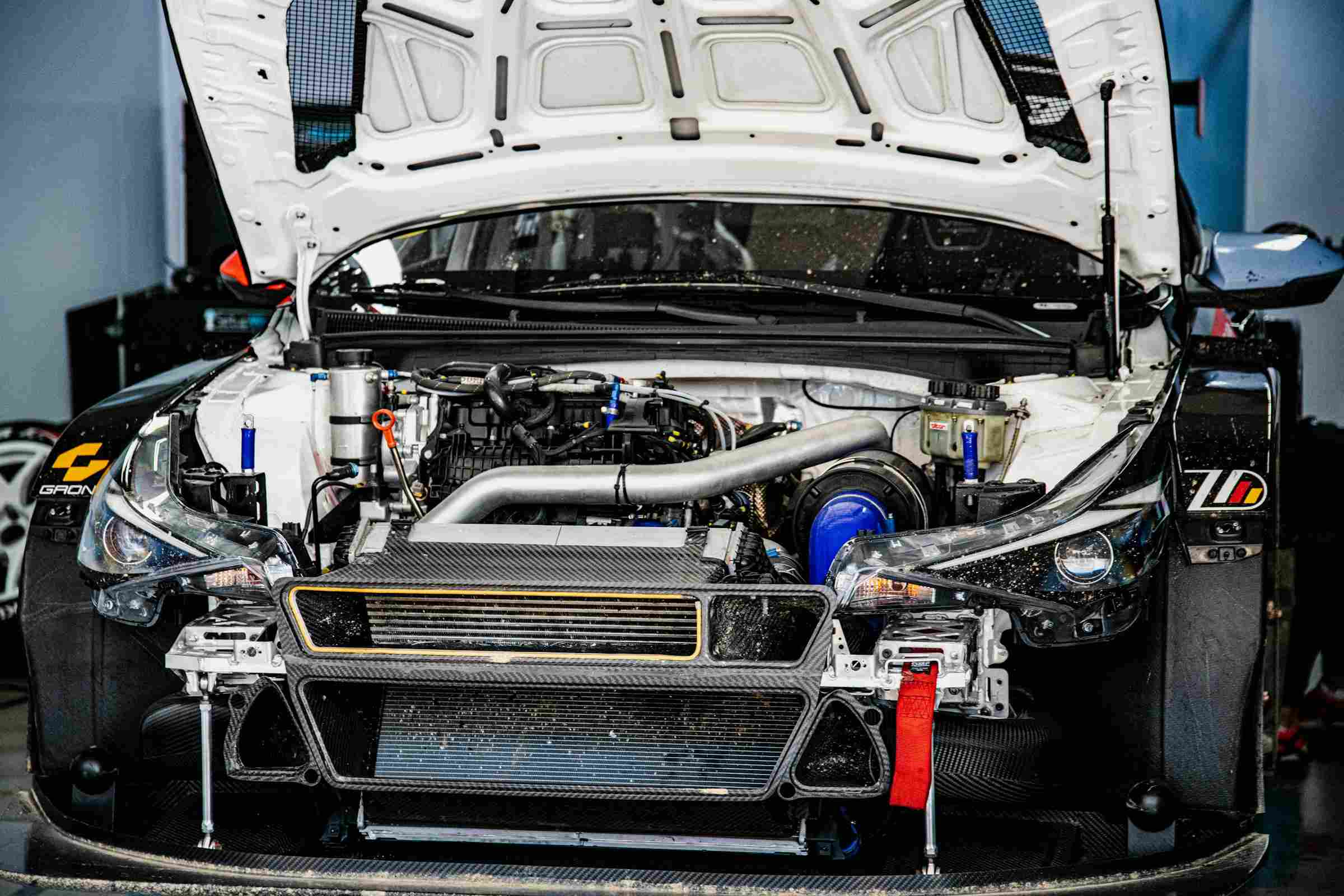
Despite the accelerating adoption of electric drivetrains, the requirement for high-precision CNC machining parts within highly optimized internal combustion engines (ICE) and hybrid powertrains remains critical. These components are subjected to higher thermal and mechanical stresses than ever before.
Specialized CNC Machining for Engine Auxiliary and Support Systems
Engine auxiliary systems require structural components that simultaneously resist cyclic vibration, chemically aggressive fluids, and intense thermal fluctuations.
Engine Mounts and Brackets: Machined from high-grade 7075 aluminum, these components leverage optimized weight-to-strength ratios, ensuring rigid stabilization of the engine block while supporting comprehensive vehicle lightweighting initiatives.
Valve Train Components: High-RPM valvetrain shafts and sleeves demand a roundness threshold within 0.01mm. This is consistently achieved via a combination of precision turning and sequential grinding cycles to prevent operational binding under high thermal loads.
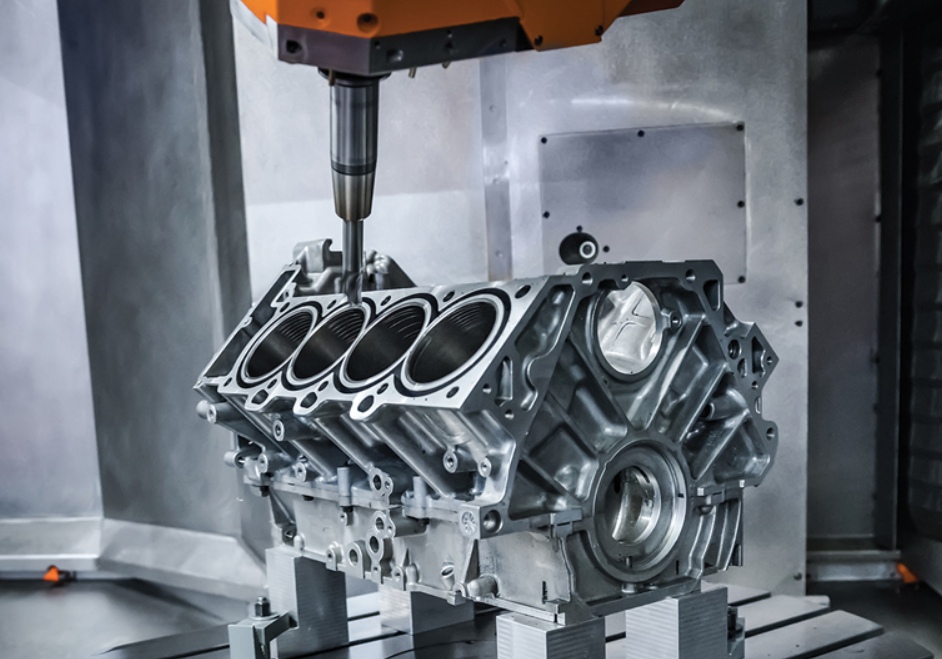
Turbocharger Housings: Characterized by complex, aerodynamic internal geometries, these housings are processed using 5-axis milling in a single setup. This single-clamping methodology eliminates cumulative fixture errors, ensuring uniform airflow dynamics.
Bearing Seats: Precision-turned to exact concentricity standards, these seats eliminate the micro-vibrations and subsequent acoustic anomalies that often plague high-speed modern engine configurations.
High-Durability Components for Advanced Transmission Modules
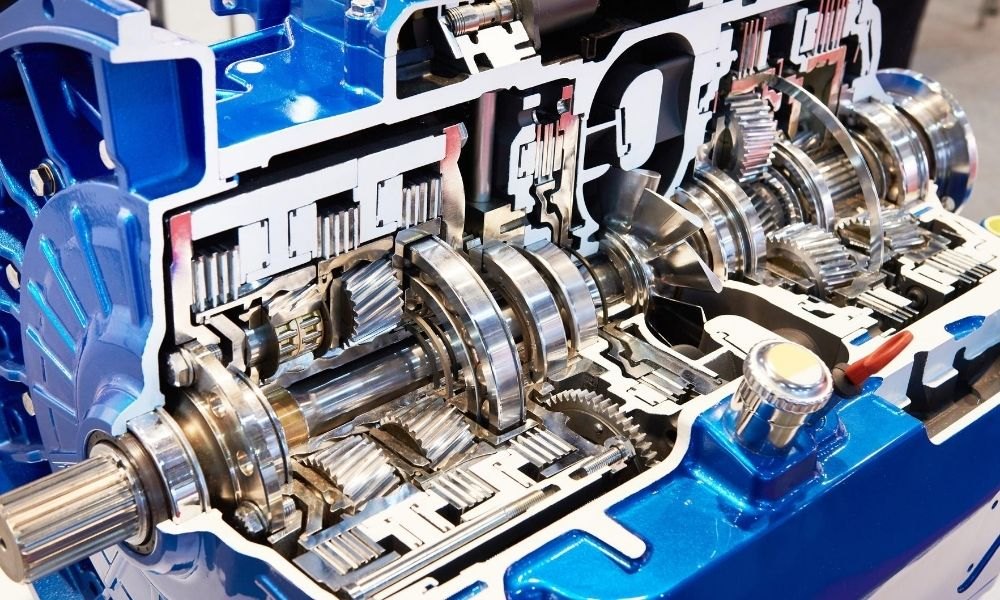
Transmission systems represent some of the most mechanically complex sub-assemblies in modern vehicles, demanding tight-tolerance gears, shafts, and fluid controls capable of transferring immense torque with zero slippage.
Transmission Shafts: Utilizing specialized CNC turningcenters, multi-stage shafts featuring integrated threads and structural grooving are produced in single setups, keeping the rotational axis perfectly aligned to eliminate drivetrain noise, vibration, and harshness (NVH).
Gearbox Control Valves: These highly intricate components regulate hydraulic fluid distribution within the transmission block. They require mirror-like surface finishes to prevent long-term seal abrasion, a specification secured through dedicated micro-polishing and controlled automated sandblasting protocols.
Shift Forks: CNC millingfrom forged blanks allows the realization of shift forks that combine lightweight geometry with extreme structural stiffness, enabling the rapid, crisp gear engagement expected in modern premium vehicles.
Geely Auto Powertrain Components: Manufacturing expertise extends to legacy and hybrid powertrain systems for Geely Auto, delivering high-durability transmission shafts and specialized shift forks that satisfy demanding NVH and torque-transfer specifications.
Powering the Future: CNC Solutions for Electric and Hybrid Vehicles
The rapid expansion of the New Energy Vehicle (NEV) sector has introduced entirely new manufacturing paradigms, dominated by the challenges of thermal management, strict weight limits, and electromagnetic interference (EMI) protection.
Lightweight Motor Housings and 5-Axis Thermal Management Parts
Electric motors generate massive thermal energy within exceptionally tight spatial constraints, making thermal dissipation a primary engineering hurdle for high-output NEV performance.
Complex Motor Housings: Utilizing high-speed 5-axis CNC machiningcenters, intricate motor housings with integrated helical cooling channels can be processed in a single clamping. This reduces the processing cycle from a standard 120 minutes down to just 45 minutes, significantly lowering unit costs for Tier 1 suppliers.
Heat Sinks and Cooling Plates: Precision-milled from 6063 aluminum, these components feature high-aspect-ratio fins that expand available surface area, dissipating heat up to 30% more effectively than traditional cast variations.
Electronic Control Unit (ECU) Enclosures: NEV control electronics require robust housings that provide concurrent thermal dissipation and EMI shielding. Precision-milled sealing surfaces ensure tight mechanical interfaces capable of meeting stringent IP67 ingress protection standards.
Inverter Bases: These bases demand flatness tolerances of less than 0.02mm to ensure continuous, uniform contact with high-power modules—a standard verified systematically through rigorous First Article Inspection (FAI) processes.
Battery Structural Components and Secure Mounting Brackets
Structural integrity in electric vehicles centers largely on the battery pack architecture, which mandates components strong enough to absorb impact loads yet highly precise to facilitate automated robotic assembly.
Battery Tray Connectors: Heavy-duty busbars and connectors are machined from highly conductive copper and aluminum alloys, maintaining ultra-tight mechanical tolerances to prevent fastening loosening under sustained road vibration.
End Plates: Large-format CNC milling centers produce structural battery cell end plates that apply completely uniform pressure across the battery cell stack, preventing cell swelling and maximizing overall pack lifespan.
Cable Management Brackets: Integrating sheet metal fabrication with localized CNC milling allows for the creation of vibration-resistant, non-conductive brackets designed to secure and route high-voltage vehicle cabling safely.
NIO High-Performance Prototyping and Pilot Runs: Collaborative experience includes supporting development phases for NIO’s advanced thermal management modules. Utilizing 5-axis milling, complex cooling plates were quickly brought from digital CAD models to physical validation, ensuring compliance with strict weight budgets and IP67 parameters.
Reliability in the Details: Connectors, Fasteners, and Fluid Systems
In automotive reliability engineering, the smallest hardware components often present the highest failure risks. Minor fluid leaks or fastener fatigue can lead to catastrophic system shutdowns or warranty recalls.
Leak-Proof Stainless Steel Connectors for Vehicle Fluid Modules
Vehicle fluid systems, including high-pressure brake lines and advanced thermal coolant loops, rely on mechanical connectors that endure severe pressure cycles without structural degradation.
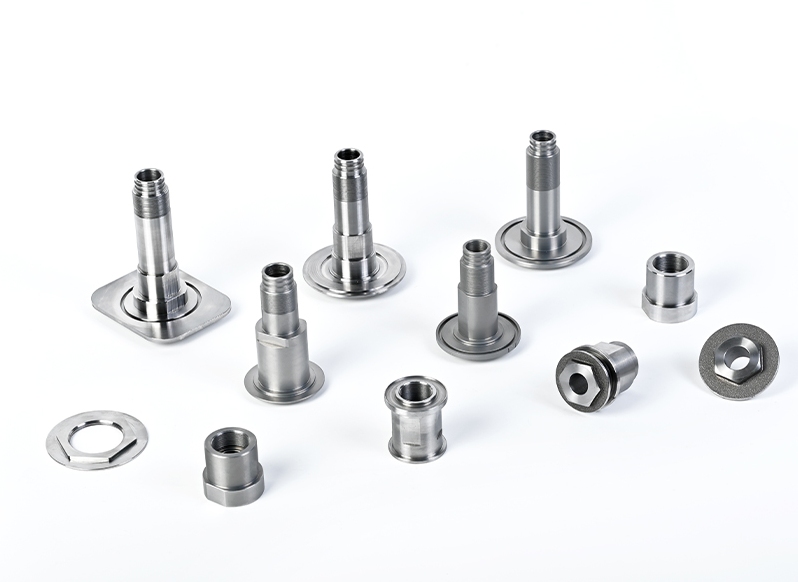
Concentric Mounting Bases: CNC-turned stainless steel connectors are engineered with stepped sealing shoulders, achieving a secure mechanical interference seal that eliminates the need for liquid chemical sealants.
High-Precision Threading: Every internal and external thread undergoes strict thread plug-gauge and ring-gauge verification to ensure compliance with the exact global ISO standards required for automated assembly lines.
Engineered Corrosion Resistance: By selecting premium AISI 304 and 316 stainless steel grades, components easily resist road salt exposure and aggressive engine chemicals throughout a standard 15-year vehicle lifecycle.
High-Strength Fasteners and Non-Standard Studs
Standard off-the-shelf fasteners are frequently inadequate for the specialized mounting configurations found in modern lightweight chassis and high-density electronics.
Custom Non-Standard Studs: Specialized machining of custom studs from high-tensile steels (such as 40Cr) allows for the integration of custom flanges or specialized heads designed for unique structural mounting coordinates.
Precision Turn-Machined Nuts: CNC-turned nuts deliver significantly higher thread engagement and load distribution than cold-headed alternatives, providing critical resistance in high-vibration chassis and suspension nodes.
Anodized Light-Alloy Fasteners: For exterior body panel applications, hard-anodized aluminum fasteners prevent galvanic corrosion when mating carbon fiber structures with aluminum subframes.
Proven Success: From Tier 1 Pilot Batches to Global Supply
The best proof of capability is a successful delivery. We recently partnered with a major European automotive components supplier to solve a critical bottleneck in their fluid transfer module.
Case Study: Stainless Steel Bearing Assembly Optimization
The Challenge: A prominent European automotive components supplier faced severe supply bottlenecks for a critical motor bearing assembly utilized in an ICE engine auxiliary module. The incumbent supplier suffered a 12-day lead time and a 5% dimensional reject rate, stalling assembly lines.
The Technical Solution: The manufacturing process was re-engineered around an optimized “Precision Turning + Cylindrical Grinding” sequence. Concurrently, a dedicated production cell was deployed equipped with custom automated inspection protocols.
The Results: Total production lead time was compressed from 12 days down to just 5 days, while the dimensional pass rate improved to a stable ≥5%. To date, over 200,000 precision units have been delivered into global assembly lines with zero field failures reported.
Capacity Reference: Standard production capacity for high-precision automotive components exceeds 20,000 units per month per SKU, with Minimum Order Quantities (MOQ) starting at 10 units to support prototype validation.
Strategic Decision Gateways: When to Choose CNC Over Stamping
A frequent challenge for B2B procurement partners is determining whether to allocate tooling capital to precision CNC machining or high-speed progressive metal stamping. This decision primarily hinges on geometric complexity and total volume.
Batch Size and Geometric Complexity Analysis
Optimizing the Total Cost of Ownership (TCO) requires a clear analysis of manufacturing constraints:
The Complexity Threshold: When a component requires multi-level 3D curved surfaces, internal blind threads, or non-uniform wall thicknesses, CNC machining is the technically necessary choice. Stamping is fundamentally restricted to parts with uniform sheet thickness.
Volume Break-Even Dynamics: For small to medium production runs (ranging from 10 to 5,000 units), CNC machining offers superior cost efficiency by completely eliminating upfront die tooling investments, which typically range from $5,000 to $50,000 and carry multi-week lead times.
Speed to Market & Agility: CNC workflows accommodate Design for Manufacturing (DFM) modifications within hours via digital program updates. Stamping dies require laborious physical modifications. This makes CNC the standard for prototype validation and pilot production runs.
Material Utilization Efficiency: While subtractive machining inherently generates chips, advanced manufacturing setups utilize computer-aided nesting and optimized high-speed cutting paths to push raw material utilization beyond 90%, offering a highly efficient process for expensive alloys.
Beyond the Machine: Integrated Supply Chain and Quality Assurance
Advanced equipment is only effective when paired with a robust quality management framework. Technical operations must cover every phase from raw material verification to documented final surface treatment.
IATF 16949 Standards and Infrastructure
The Dongguan production facility operates as a dedicated automotive supply and manufacturing hub:
Production lines follow IATF 16949 and ISO 9001:2015 standards. This setup delivers complete traceability along with FMEA-based risk reviews. A strict defect-prevention system supports the demands of global Tier 1 and Tier 2 automotive buyers.
The production floor holds more than 100 advanced machining centers. These include high-speed 5-axis units from Mazak and DMG MORI. Such equipment keeps micron-level tolerances stable during runs.
Engineers provide Design for Manufacturing feedback on each inquiry. They review part geometry early. This step cuts tool wear and cycle times. Production costs often fall by up to 20 percent as a result.
Surface treatment lines handle anodizing, electroplating, and powder coating in one place. Strict controls keep colors consistent. Parts also gain strong resistance to salt-spray corrosion.
Engineering teams are available to convert complex automotive blueprints into high-performance components. Whether developing next-generation NEV motor architectures or sourcing stable supply runs for legacy powertrains, technical support is fully available.
Email: nicole@rejincnc.com
WhatsApp/Tel: +86 13790500374
FAQ
Q: Why is 5-axis CNC machining preferred for new energy vehicle (NEV) motor housings?
A: 5-axis machining handles complex internal cooling channels and detailed outer shapes in one setup. Shops cut down on repeated clamping steps, which lowers alignment mistakes and shortens overall run time by more than 60 percent. A housing that used to take 120 minutes across several machines now finishes in 45 minutes on a 5-axis center. This change brings the cost per part down in a clear way.
Q: How does IATF 16949 certification benefit a B2B automotive CNC machining parts buyer?
A: IATF 16949 shows that a maker follows the quality rules the global auto industry expects. Buyers receive full tracking of every material batch along with solid FMEA work. They also gain steady risk reviews and a firm push toward zero defects. These points form basic requirements for joining Tier 1 and Tier 2 OEM supply chains.
Q: What is the typical lead time for an automotive CNC machining prototype?
A: For everyday auto metals such as 6061 aluminum or 304 stainless steel, prototypes reach customers in 3 to 7 working days. The window covers early DFM comments from engineers, the actual cutting work, and routine finishes like sandblasting or protective anodizing.
Q: Can CNC machining reliably handle high-performance materials like titanium or hardened steels used in professional racing systems?
A: Yes. Centers fitted with strong spindles, rigid frames, and advanced carbide or ceramic tools cut tough alloys such as Grade 5 Titanium or 42CrMo hardened steel. They hold tight tolerances even when cutting loads and temperatures stay high.
The ordering process is simple:
1.Submit your design files
2.Select materials and manufacturing processes
3.Receive quotation
4.Confirm the order
5.Production and delivery
We provide a wide range of services, including CNC Machining Services, Sheet Metal Fabrication, Surface Finishing Solutions, and DFM Analysis Support.
We offer multiple CNC machining materials, such as Copper (Cu), Iron (Fe), Aluminum (Al), Stainless Steel, and Engineering Plastics.
We accept credit card, PayPal, and T/T Bank Transfer.
Yes. You can track your order via our online tracking system or contact our support team through Customer Support Team.
Our CNC machining delivers high precision, typically with a tolerance up to ±0.005mm, depending on the material and complexity of the part.
Yes. We offer design and engineering assistance to bring your ideas to life. Our team can help with product design, prototyping, and optimization.
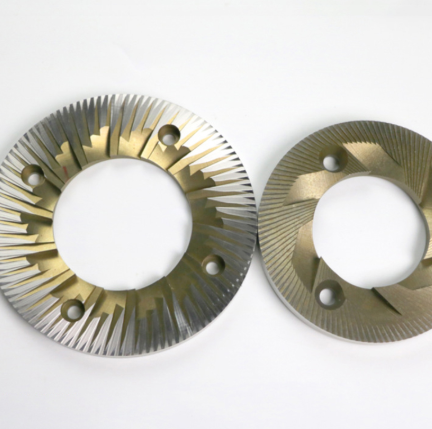
A professional manufacturer specializing in custom, non-standard CNC machining of mechanical parts. We can tailor-make a wide range of special housings and other coffee machine components according to customer requirements, with a broad selection of materials available. Feel free to contact us for inquiries!
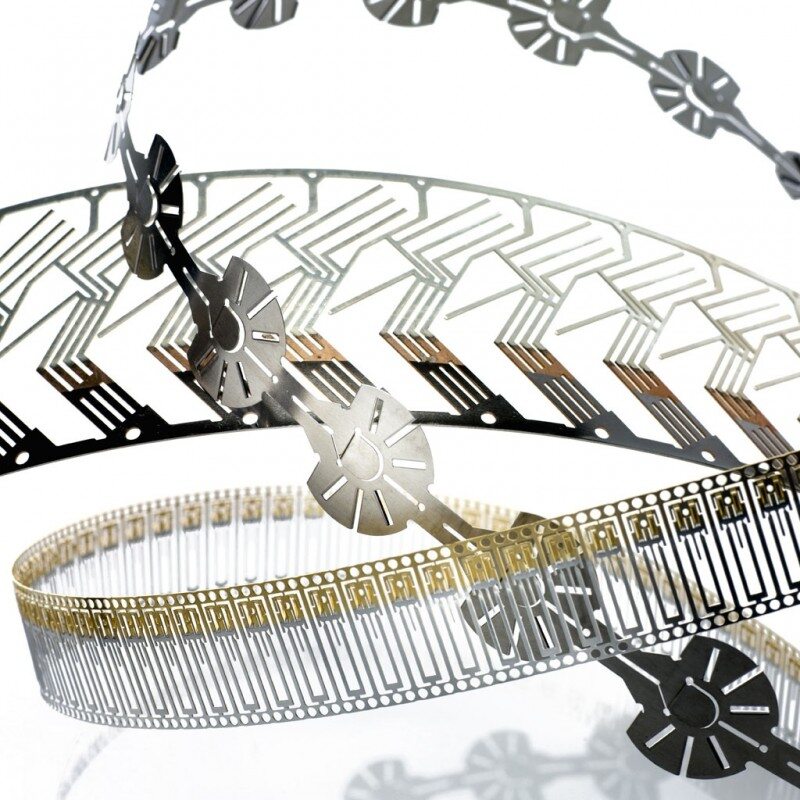
Rejin CNC manufactures precision stamping parts with high dimensional accuracy and consistent quality. Our metal stamping components are widely used in electronics, automotive, and industrial equipment, supporting OEM & ODM production.
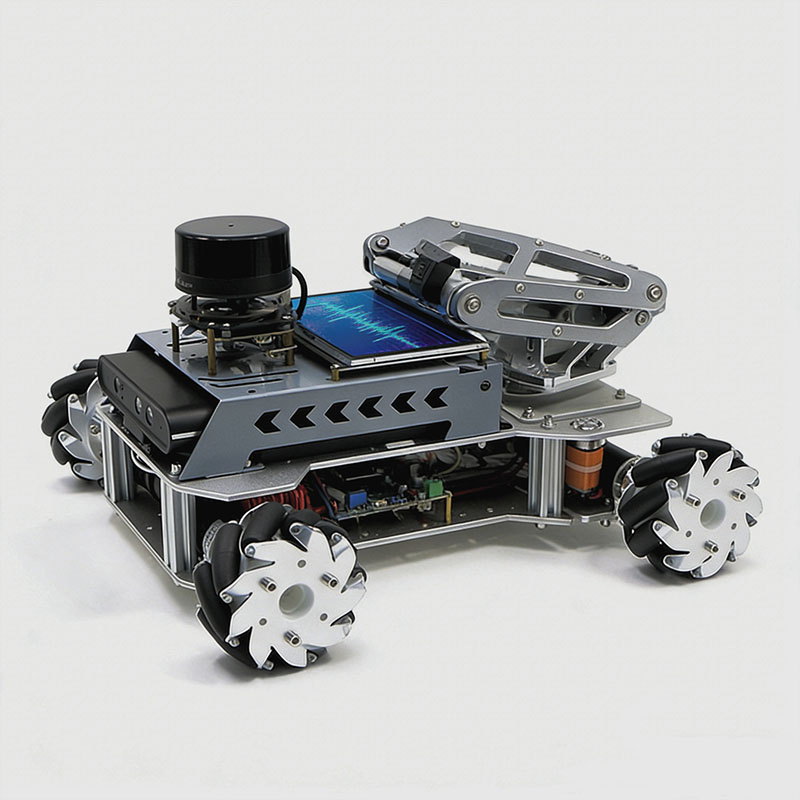
These CNC machined robot components are designed for robotic systems, including joint parts, shafts, and structural components. High precision ensures smooth motion and long-term stability.

 Eren
Eren