W e l c o m e t o R e j i n C N C

Loading

Service

No matter what your Metal parts processing needs may be, we're here to help. Contact us today to learn more about our services and how we can assist you with all of your needs.
CNC Turning

CNC Turning

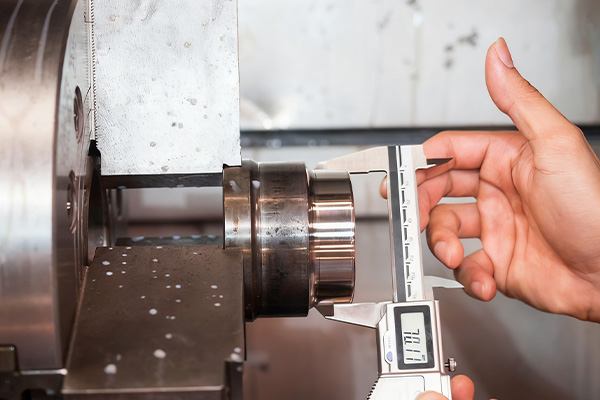
CNC turning is a machining process where the workpiece rotates while a fixed cutting tool removes material. Think of it as an “advanced pottery lathe”: the spindle spins the workpiece at high speed while the cutting tool follows a programmed path to shape it. Ideal for shaft and rotational parts.       CNC turning has become a mainstream process in precision hardware machining due to four core advantages: ① High precision and repeatability, as program control guarantees highly consistent specifications for batch – produced parts; ② High – efficiency integration, modern CNC lathes are equipped with automatic tool changers and live tool turrets, which can integrate operations like drilling, milling, and tapping to shorten delivery time; ③ Wide material adaptability, capable of processing various metals such as stainless steel, aluminum alloy, titanium alloy, copper, as well as engineering plastics; ④ Flexible adaptability, suitable for both small – batch prototyping and large – volume foreign trade orders, widely applied in manufacturing precision parts for industries including automotive, aerospace, medical, and electronics. CNC turning is a subtractive manufacturing process. Its core lies in using computer – programmed cutting tools to precisely machine a high – speed rotating workpiece for material removal. The workpiece is clamped in a chuck and rotated at high speed, while the cutting tool feeds along paths such as the X and Z axes. It can finish multiple operations like external turning, boring, facing, threading, and grooving in a single setup. Unlike conventional lathes, it achieves automated machining via digital programming, with tolerances reaching ±0.005–0.01mm, suitable for batch and custom production of various rotational hardware parts including shafts and disks.

CNC Milling

CNC Milling

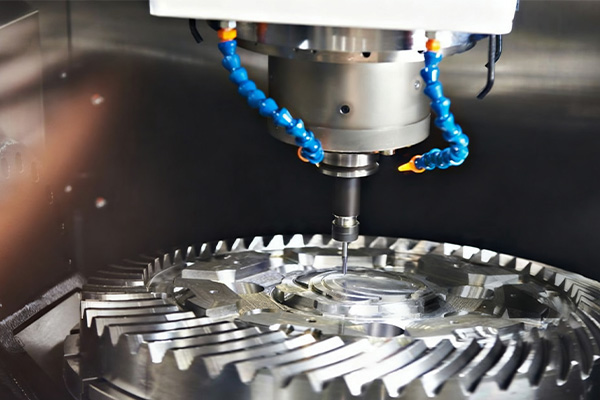
Precision cutting of metal or plastic with rotating tools, ideal for flat and complex-shaped parts.     CNC milling has become one of the preferred processes for precision machining in various industries due to multiple advantages: First, high precision and repeatability. Computer program control greatly reduces human errors and ensures high uniformity of specifications for each batch of parts; second, high efficiency and automation. Equipment equipped with an automatic tool changer (ATC) can continuously complete multiple processes without frequent manual intervention, significantly improving production efficiency; third, strong processing flexibility, which can adapt to diverse processing needs from simple planes to complex 3D curved surfaces, especially good at manufacturing special-shaped structures; fourth, wide material compatibility, which can process various metals such as stainless steel, aluminum alloy, titanium alloy, and copper, as well as engineering plastics such as ABS and polycarbonate, and carbon fiber composite materials. It can efficiently adapt to needs whether it is small-batch custom prototyping or large-batch mass production. According to the machine tool structure and the number of axes, CNC milling is mainly divided into three-axis, four-axis and five-axis milling: three-axis milling is suitable for the processing of simple planes and three-dimensional structures, with convenient operation and controllable cost; four-axis milling adds a rotating axis, which can process parts with inclined surfaces; five-axis milling can realize multi-directional linkage processing, accurately complete the integrated manufacturing of complex curved surfaces and special-shaped parts, and is the core equipment in high-end fields such as aerospace. Its application scenarios widely cover aerospace, automobile manufacturing, mold processing, medical equipment, electronic industry, etc. Typical processed parts include UAV connectors, auto parts, mold cavities, precision components of medical devices, electronic product casings, etc., providing key support for the R&D and production of core products in various industries.

5-Axis CNC Machining

5-Axis CNC Machining

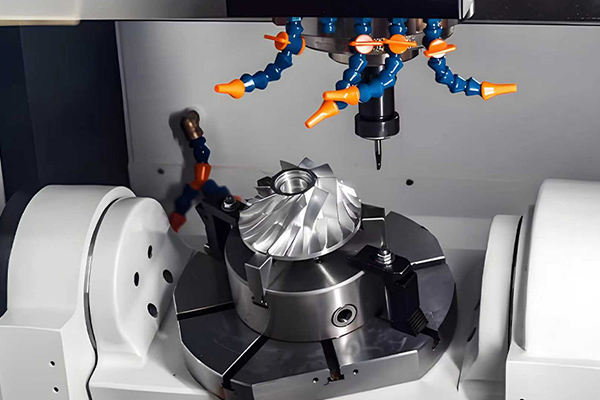
5-axis CNC machining is an advanced form of milling that represents the highest level of precision and complexity. As the name suggests, it adds two rotational axes (typically A and C) to the standard three linear axes (X, Y, Z). Ideal for machining parts with complex geometries.     With its unique technical advantages, 5-axis CNC machining is widely used in core high-end manufacturing fields such as aerospace, medical equipment, automotive manufacturing, and high-end molds: In the aerospace field, it is used to process complex curved surface parts such as aircraft engine blades and spacecraft structural parts, meeting the high-precision processing needs of difficult-to-process materials such as titanium alloy; In the medical equipment field, it produces implants such as artificial joints and dental implants, ensuring biocompatibility and use safety with micron-level precision, complying with the ISO 13485 medical industry certification standard; In the automotive manufacturing field, it adapts to the mass production of new energy vehicle motor housings and transmission special-shaped components, improving product performance and production efficiency; In the high-end mold field, it processes complex cavities and cores of injection molds and die-casting molds, ensuring mold precision and improving the qualified rate of finished products. In addition, it also plays a key role in the processing of turbine components in fields such as wind power and energy equipment. 5-axis CNC machining has become a core supporting technology for high-end manufacturing with four core advantages: First, integrated full-process processing. One-time clamping can complete the processing of multi-faceted and complex structures, which can reduce the number of clamping times by more than 80% compared with traditional 3-axis machining, greatly reducing positioning errors; Second, ultra-high precision and stability. Through real-time optimization of tool posture and multi-axis linkage compensation, micron-level machining accuracy can be achieved, while ensuring the consistency of batch parts and improving the surface finish to below Ra0.8μm; Third, extremely strong processing flexibility. It can accurately process complex components such as impellers, mold cavities, and medical implants that cannot be completed by 3-axis/4-axis machines, adapting to the high-value-added production needs of multi-variety and small-batch; Fourth, significantly improving production efficiency. The processing cycle is shortened by optimizing the cutting path. For example, the processing cycle of new energy vehicle motor housings can be reduced from 120 minutes to 45 minutes, while reducing tool wear and lowering comprehensive production costs.

Sheet Metal Fabrication

Sheet Metal Fabrication

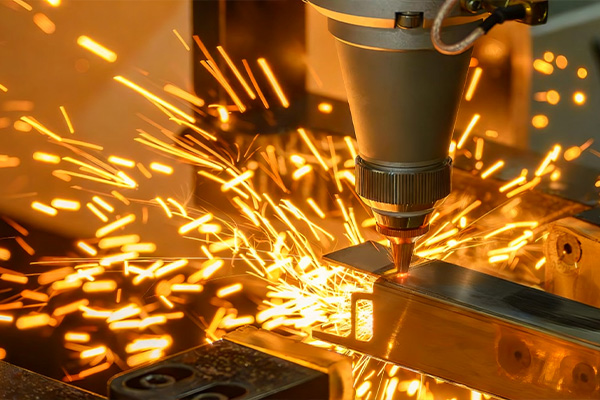
Sheet metal and die technology are the backbone of modern manufacturing. It involves using precisely designed and crafted dies to shape and process metal sheets. Dies, often called the “mother of industry,” directly determine the quality, efficiency, and consistency of the final products.       2.Metal Stamping Metal stamping is a high-efficiency cold-forming processing technology. With the help of punching machines and special molds, pressure is applied to metal sheets, strips or pipes to make them undergo plastic deformation or separation, so as to obtain stamping parts with specific shapes, sizes and properties. No additional heating of metal materials is required during the processing, which features fast forming speed and stable precision. According to the process types, it can be divided into separation processes (such as shearing, blanking, punching) and forming processes (such as bending, drawing, flanging). It is widely used in the production of large-batch standardized metal components and is a core basic process in industries such as automobile, electronics and home appliances. 1.Sheet metal processing Sheet metal processing has become a mainstream process in the hardware manufacturing field with four major advantages: First, high forming efficiency. Batch stamping forming can be realized through molds, which is suitable for large-scale production of standardized components and greatly reduces the unit cost; Second, strong design flexibility. It can customize complex special-shaped structures according to customer needs, and there is no need to adjust core production equipment when modifying design schemes, adapting to small-batch customized orders; Third, high material utilization rate. Computer-aided nesting technology is adopted to optimize cutting paths, reduce sheet waste, and the material utilization rate can reach more than 90%; Fourth, adapting to multi-industry needs. The processed components have both lightweight and structural strength, and their corrosion resistance can be improved through surface treatments such as spraying and electroplating, meeting the application requirements of automobiles, electronics, communications, medical equipment and other fields.

Surface Treatments

Surface Treatments

To enhance the appearance, durability, and functionality of metal parts, we offer a variety of advanced surface treatment technologies.     1.First Article Inspection (FAI) Following a strict inspection process, FAI verifies whether production processes, tooling, and equipment can consistently produce conforming parts. It aims to detect and correct deviations early, preventing batch defects and ensuring product consistency. 2.Polishing Services Polishing uses physical or chemical methods to remove minor surface imperfections, creating a smooth, mirror-like finish. It enhances visual quality and gloss while reducing surface defects, providing an ideal base for subsequent treatments such as plating or anodizing. 3.Sandblasting Services Sandblasting uses high-speed abrasive jets to clean and roughen metal surfaces. It removes all contaminants and creates a uniform texture, greatly improving adhesion for subsequent coatings such as painting or plating, while also relieving stress and strengthening the surface. 4.Spray Painting Service High-precision metal painting with even coating, corrosion-resistant and durable, available in multiple colors for CNC parts, hardware, and metal housings. 5.Electroplating service High-precision electroplating creates an even metal layer on surfaces, enhancing corrosion resistance and appearance. Suitable for hardware, CNC parts, metal housings, and industrial components, with various metal finishes available. 6.Powder coating Service High-precision powder coating uses electrostatic spraying to apply dry powder on parts, then cures it at high temperature to form a durable, dense coating. Corrosion-resistant, scratch-resistant, colorful, and eco-friendly. 7.Silk Screening Silk screening is a reliable method for applying logos, text, and decorative patterns. From plastic housings to metal panels, it creates durable, clear, and wear-resistant markings that remain intact during everyday use. 8.Laser Engraving Laser engraving uses a high-energy laser beam to precisely mark surfaces in a digital process. It provides high-precision, permanent markings on most materials, featuring a non-contact, consumable-free, and highly efficient operation.

FAQ

Frequently Asked Questions

faq
The ordering process is simple: 1.Submit your design files 2.Select materials and manufacturing processes 3.Receive quotation 4.Confirm the order 5.Production and delivery
We provide a wide range of services, including CNC Machining Services, Sheet Metal Fabrication, Surface Finishing Solutions, and DFM Analysis Support.
We offer multiple CNC machining materials, such as Copper (Cu), Iron (Fe), Aluminum (Al), Stainless Steel, and Engineering Plastics.
We accept credit card, PayPal, and T/T Bank Transfer.
Yes. You can track your order via our online tracking system or contact our support team through Customer Support Team.
Our CNC machining delivers high precision, typically with a tolerance up to ±0.005mm, depending on the material and complexity of the part.
Yes. We offer design and engineering assistance to bring your ideas to life. Our team can help with product design, prototyping, and optimization.
Products
Contacts
WhatsApp
Email