
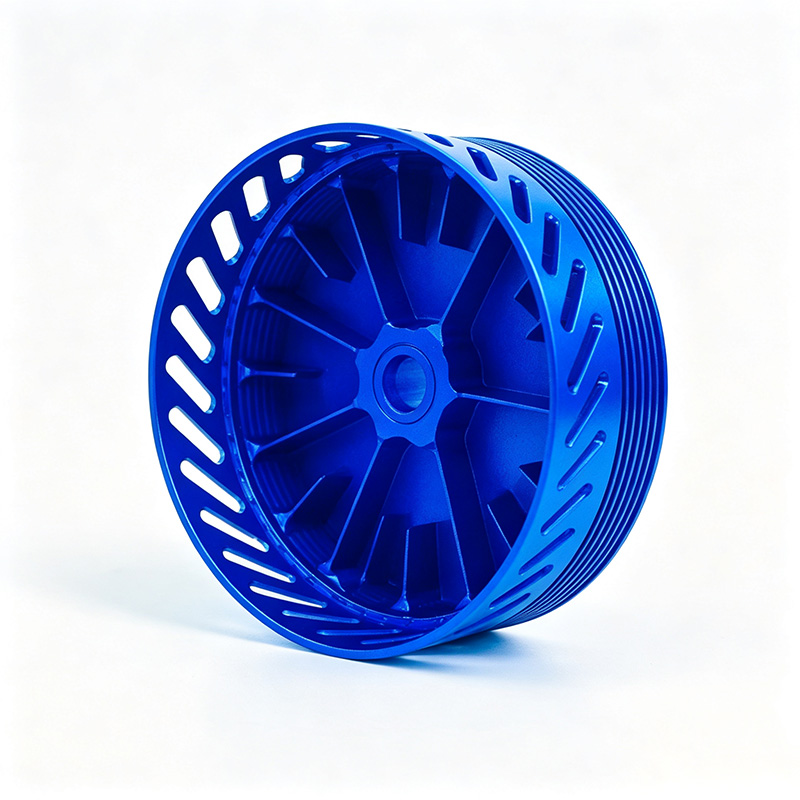
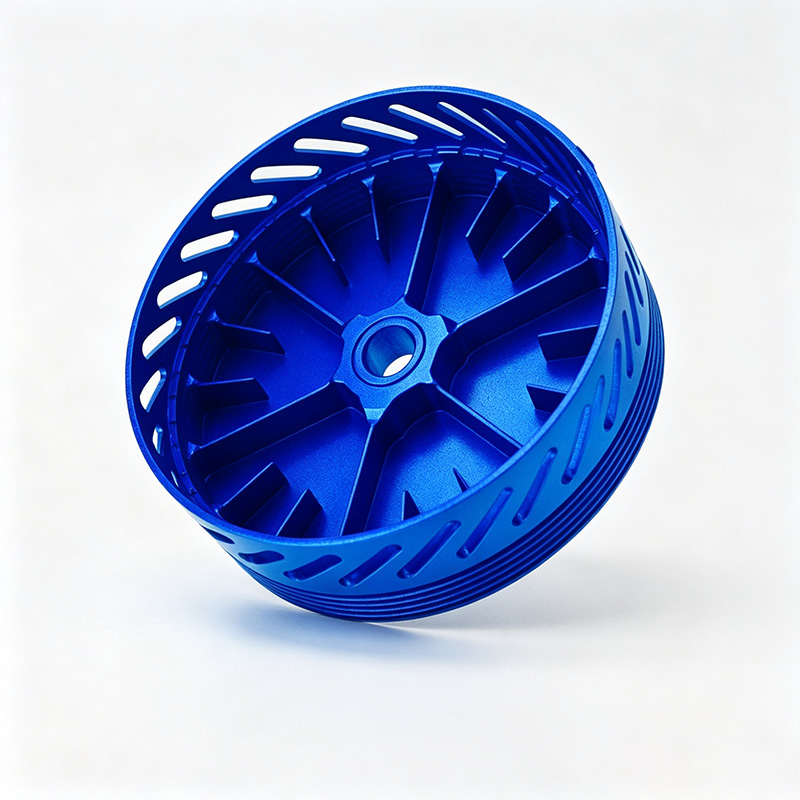
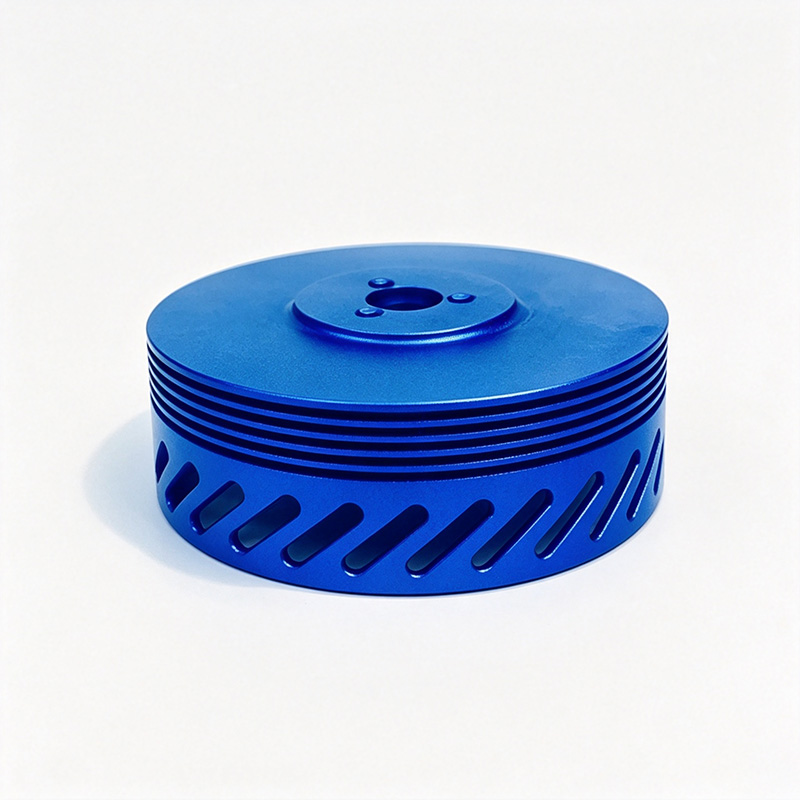
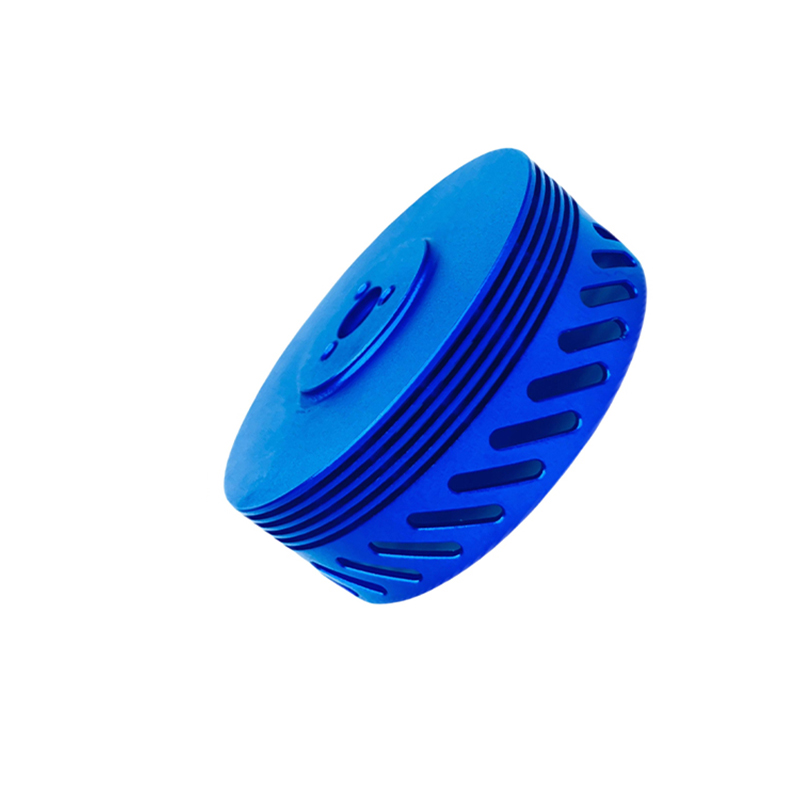
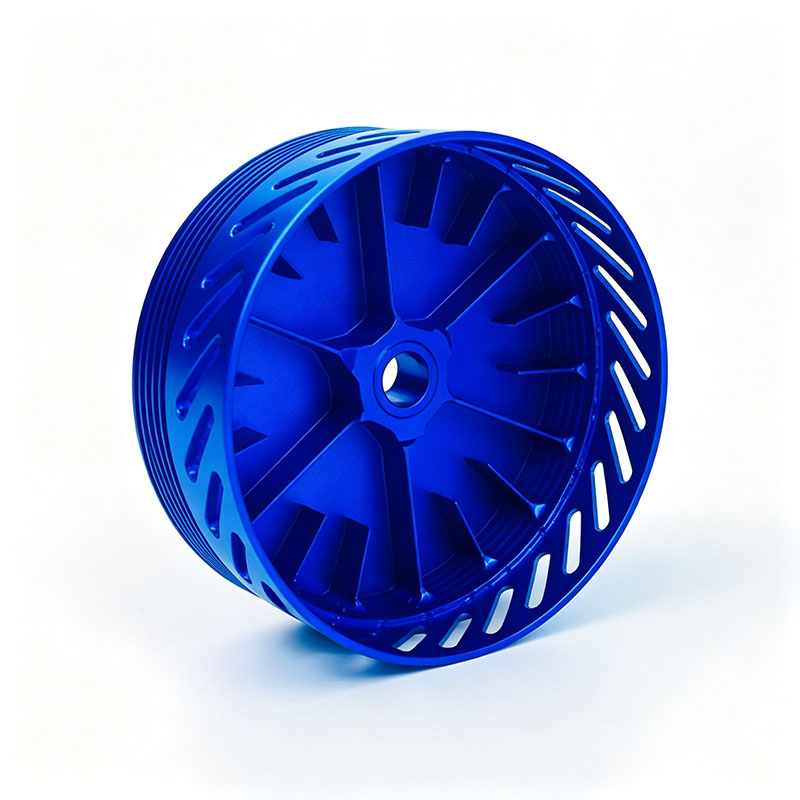
Custom CNC Machined 6061 Aluminum Centrifugal Fan Impeller in Blue Anodized Finish
Custom CNC turn-milled 6061-T6 aluminum centrifugal fan impeller in a blue anodized finish — a radial blade pack, integrated back plate and slotted shroud machined from one billet for smooth airflow, low vibration and a repeatable shaft fit.
Tolleranza di lavorazione ±0.03 mm, hub bore H7, dynamic balance to G6.3/G2.5 on request. CMM, runout and balance report with every batch. Prototypes in 1–3 days.
- Turn-milled from 6061-T6 billet, integral blades, back plate and shroud
- Hub bore H7 with keyway, set screw or clamping options
- Blade angle, height and spacing held to ±0.03 mm
- Dynamic balance G6.3/G2.5, corrected in the hub
- Blue Type II anodize 15–25 µm, hub bore and keyway masked
- CMM, runout, balance report, FAI and 3.1 material cert
What Is This Centrifugal Fan Impeller?
This centrifugal fan impeller is the rotating air-moving wheel inside an industrial fan or dust-extraction unit. Air enters at the centre, the radial blade pack accelerates it outward, and the slotted shroud band guides the discharge into the fan housing. The back plate, hub and blades are machined from one 6061-T6 billet, then blue anodized, so the wheel runs true, resists corrosion and keeps the same blade geometry across repeat builds.
Geometry we machine
- Outer diameter, blade count, blade height and radial or backward-curved angle
- Slotted shroud band with controlled slot width, pitch and deburred edges
- Integrated back plate, hub boss and inlet eye, machined in one setup where possible
- H7 shaft bore, keyway, set screw holes or clamping hub
- Balance correction pads and laser-marked rotation direction or part number
Why 6061-T6 for a fan wheel
6061-T6 is the usual alloy for an aluminum impeller: it machines cleanly, anodizes evenly, resists moisture and mild chemicals, and has enough strength for fans running at moderate tip speeds. 7075-T6 gives higher yield strength for high-speed or high-pressure wheels, but it anodizes darker and is less corrosion-resistant in wet dust environments. For high-temperature exhaust or very large diameters, steel or a hybrid welded hub may be the better route. Send the operating speed and air temperature and we will recommend an alloy instead of defaulting to one.
Integral machining versus welded construction
A wheel machined from solid has no weld seams, no heat distortion and no filler metal in the airflow path. Blade angles stay identical from one wheel to the next, the back plate runs flat, and the hub stays concentric with the blade pack. The trade-off is material removal and machining time, which grows quickly with diameter. For large low-speed wheels we may propose a machined hub and shroud with welded or bolted blades; for small and medium high-speed wheels, integral machining is usually the better balance of rigidity and repeatability.
Balance, runout and vibration
An impeller is the most common source of fan vibration: one heavy blade, an eccentric hub or a warped back plate shows up as bearing noise, motor current fluctuation and structure-borne vibration. We control blade thickness and slot symmetry, hold the hub concentric to the blade pack within 0.03 mm, and check back-plate runout before balancing. Finished wheels can be dynamically balanced to G6.3 for general ventilation or G2.5 for high-speed and low-noise applications, with correction by milling the hub or adding balance weights. The report states the balancing speed and residual unbalance in g·mm, not just a pass/fail stamp.
Hub bore and shaft fit
The hub bore is machined to H7 unless your drawing calls for another fit, then checked with a bore gauge or pin gauge. A typical motor shaft uses h6, giving a light interference or transition fit that stays concentric without distorting the bore. Keyways are cut symmetrical to the blade pattern, set screw holes are spotted after the bore is finished, and the bore and keyway are masked during anodizing so coating thickness does not close the fit. Tell us the shaft diameter, key size and whether the wheel mounts on a motor shaft, bearing shaft or adapter sleeve.
Blade geometry, airflow and noise
Blade angle, blade height, inlet eye diameter and shroud slot area set the flow-pressure curve. We machine to your CAD or CFD model and can adjust blade angle or slot pitch for a prototype, but airflow and sound validation needs your housing, motor and test setup; we do not quote a flow curve without a test rig. For noise-sensitive units, we deburr trailing edges, keep the slot band uniform and hold shroud roundness so tip clearance stays consistent. If you are reverse-engineering an existing wheel, send a sample and we will 3D scan the blade pack and slot pattern before machining.
Anodizing and masking
Wheels are bead blasted, Type II anodized to 15–25 µm in blue or another colour, then sealed. Anodize adds roughly half the coating thickness per surface, so the hub bore, keyway and any shaft-contact land are masked or opened up before coating to protect the H7 fit. Colour is matched within a batch and across repeat orders using the same dye lot. For wet dust or wash-down environments, we can seal the coating and mask threads or inserts as needed.
Inspection and documentation
Each batch is checked for outer diameter, blade height and angle, slot position, hub bore, keyway, back-plate runout and hub concentricity. Critical wheels ship with a CMM dimensional report, dynamic balance report, FAI, EN 10204 3.1 material certificate, certificate of conformity and RoHS/REACH declaration. Overspeed or spin testing can be arranged through a qualified test house on request; the customer remains responsible for validating the finished fan assembly.
Send us for a quote
STEP/STP model or a measured sample, outer diameter, blade count and angle, hub bore and keyway, motor speed, balance grade, airflow or pressure target, housing clearance, alloy and finish, quantity and documentation. We return a DFM review covering blade machining strategy, shroud slots, hub fit and balancing, usually within 24 hours.
Capabilities for Centrifugal Fan Impellers
Integral Blade Pack
Blades, back plate and shroud machined from one billet, keeping blade angles and hub concentric without weld distortion.
Hub Bore and Shaft Fit
H7 bore, keyway and set screw holes machined after the blade pack, with bore and keyway masked during anodizing.
Dynamic Balancing
G6.3 or G2.5 balance at the specified speed, corrected in the hub, with residual unbalance reported in g·mm.
Slotted Shroud Geometry
Slot width, pitch and angle machined uniformly and deburred, with shroud roundness held for consistent tip clearance.
Blue Anodize with Masking
Type II blue anodize at 15–25 µm, batch colour matched, with shaft fits and keyways protected from coating growth.
Airflow and Documentation
CMM dimensions, runout, balance report, FAI, 3.1 material cert and RoHS/REACH declaration for each batch.
Materiali che lavoriamo
Dall'alluminio di grado aerospaziale alle materie plastiche tecniche certificate per uso medicale, i nostri centri di lavorazione CNC interni lavorano un'ampia gamma di metalli e materie plastiche sotto lo stesso tetto.
Metalli
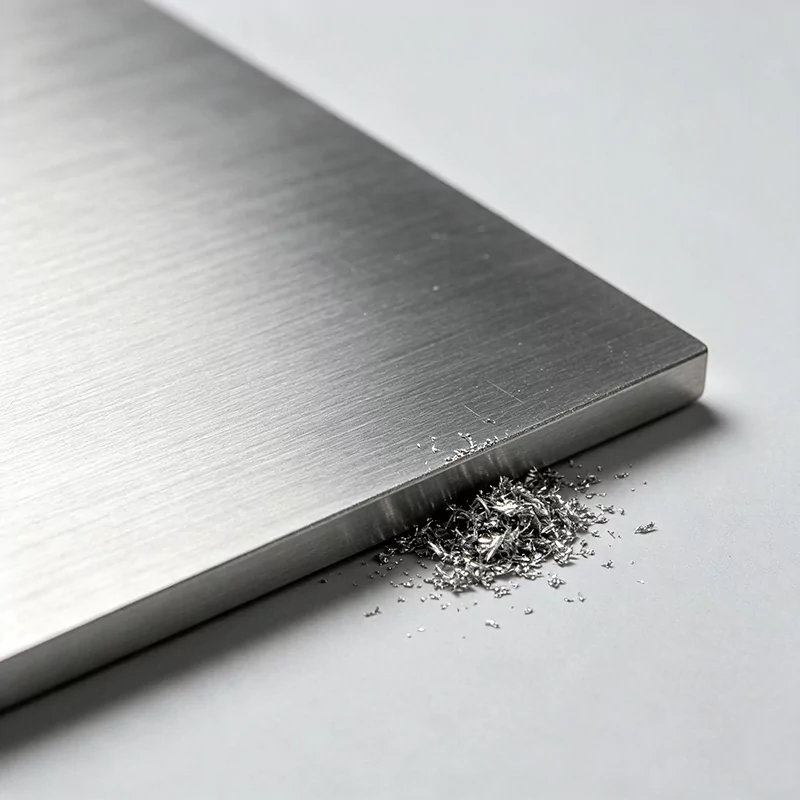
Alluminio
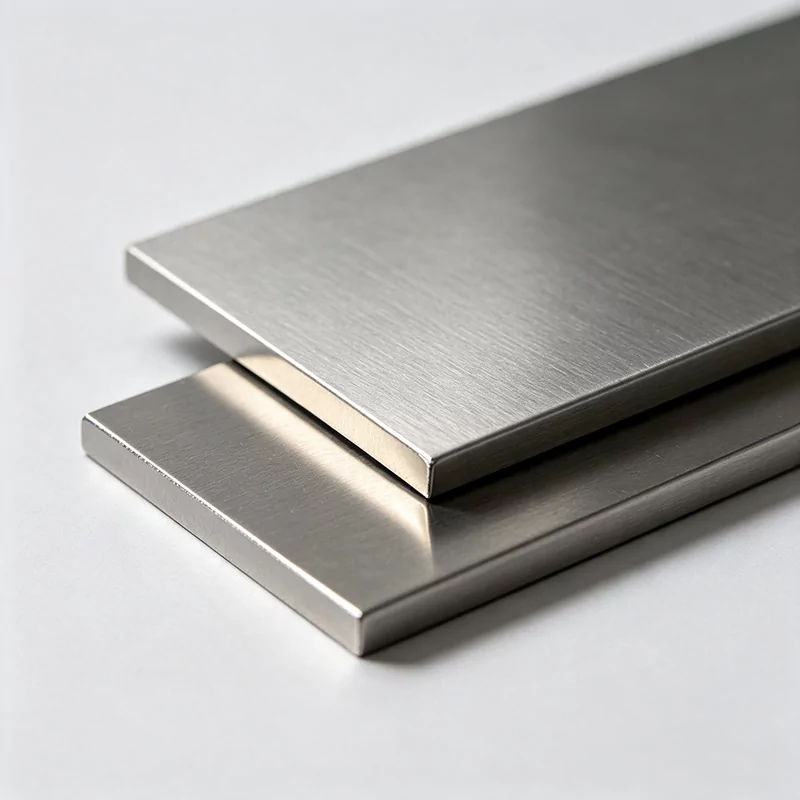
Acciaio inox
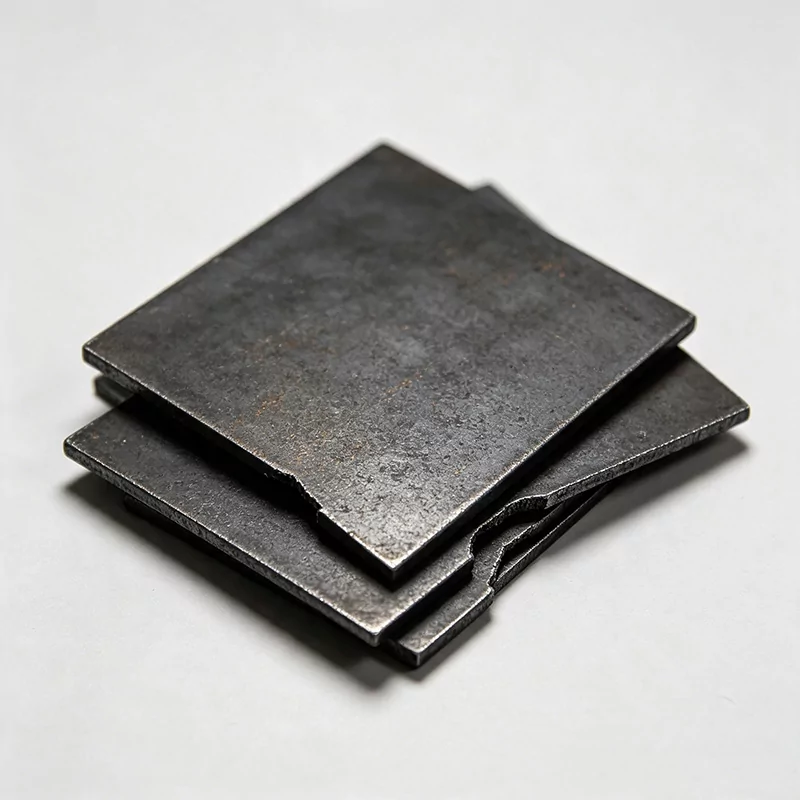
Acciaio al carbonio & legato
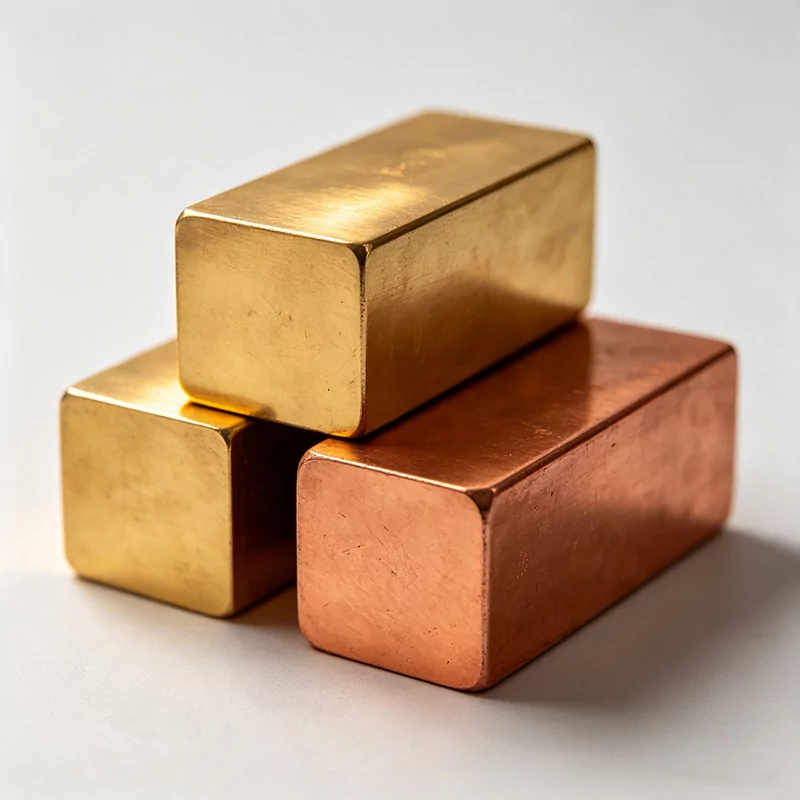
Ottone & rame
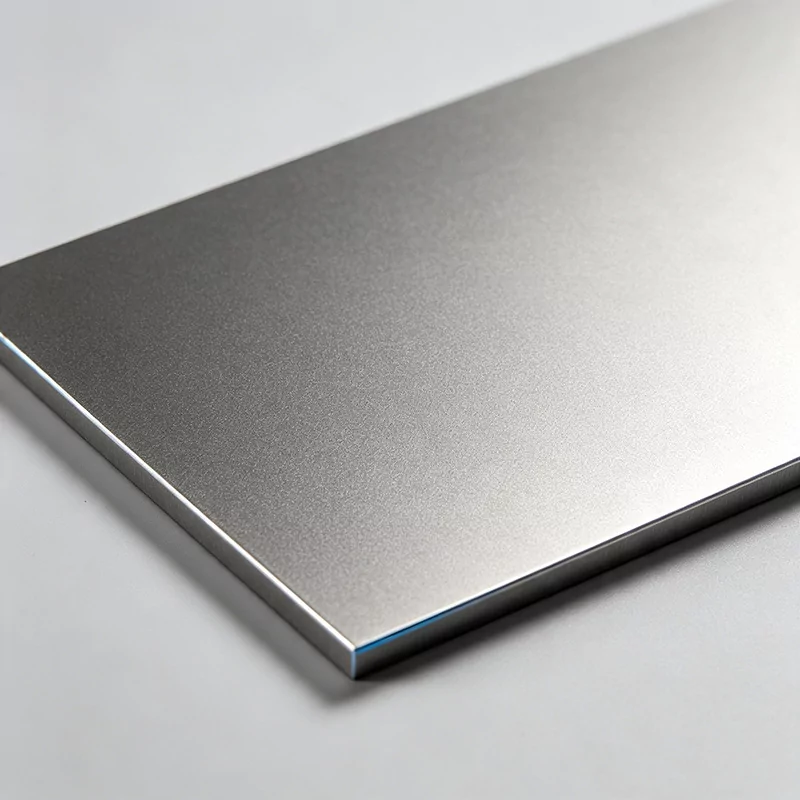
Titanio & materiali speciali
Materie plastiche tecniche
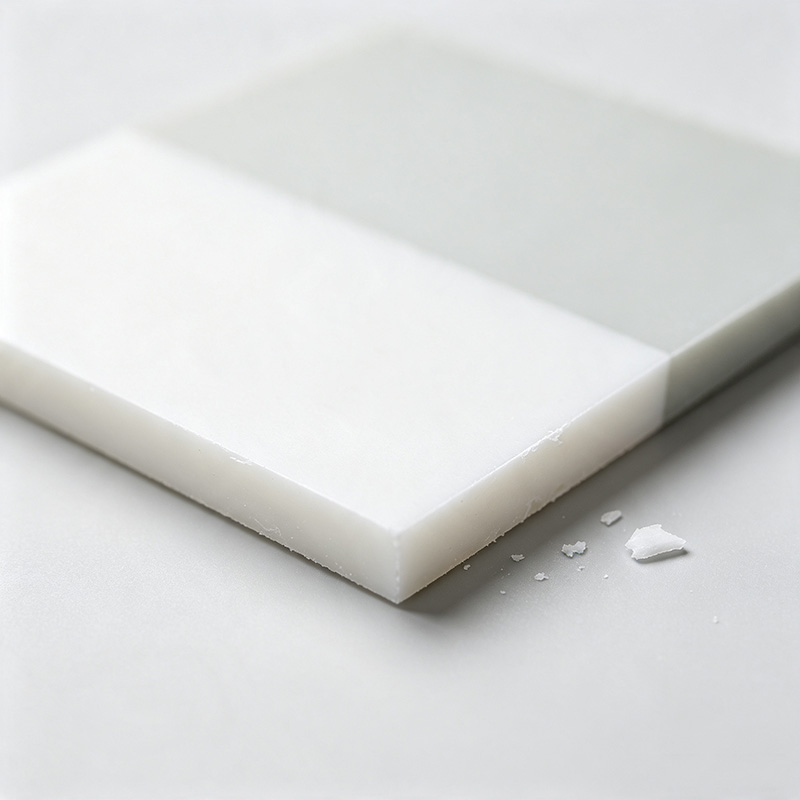
POM (Delrin)
Nylon (PA66)
PTFE (Teflon)
PEEK / PEI (Ultem)
ABS / PC / PMMA
Non trovate il vostro materiale? Inviare il disegno per la revisione — confermeremo la disponibilità e forniremo un preventivo.
Opzioni di finitura superficiale
Finiture funzionali ed estetiche eseguite internamente o tramite partner selezionati.
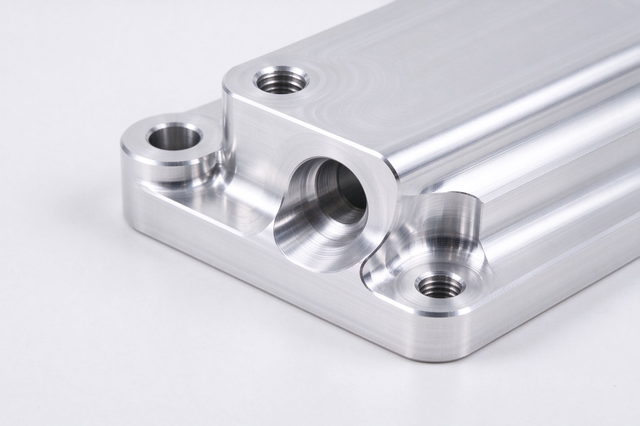
Anodizzazione naturale
Anodizzazione protettiva di Tipo II, finitura argento naturale.
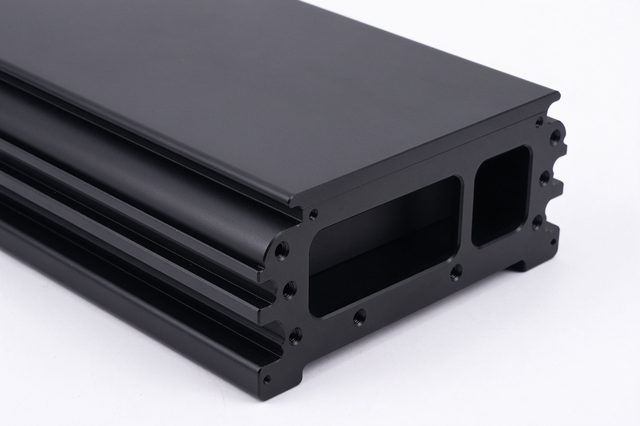
Anodizzazione dura nera
Rivestimento duro di Tipo III, nero resistente all'usura.
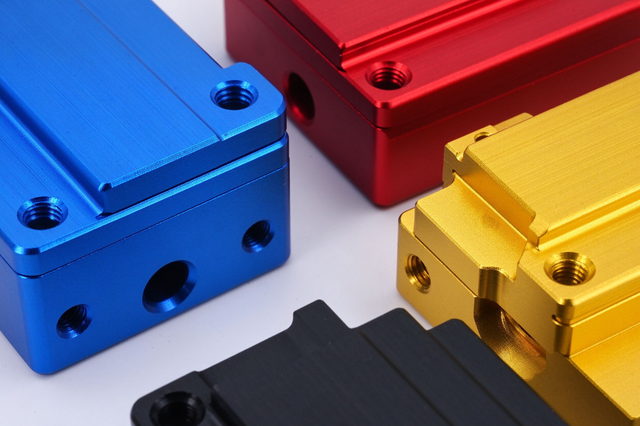
Anodizzazione colorata
Colorazioni blu, rosse, oro e verdi per audio e 3C.
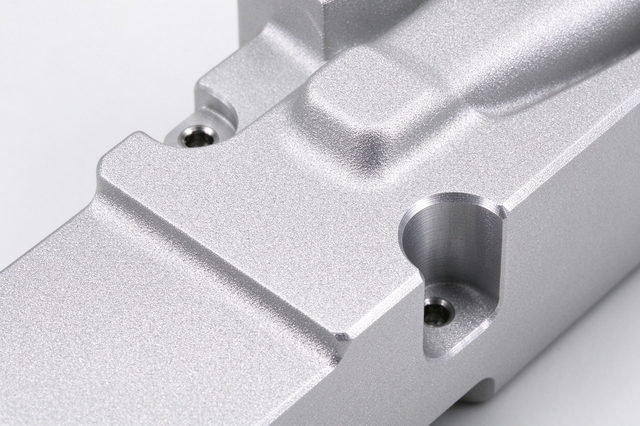
Sabbiatura a microsfere
Texture opaca uniforme, nasconde le tracce di lavorazione.
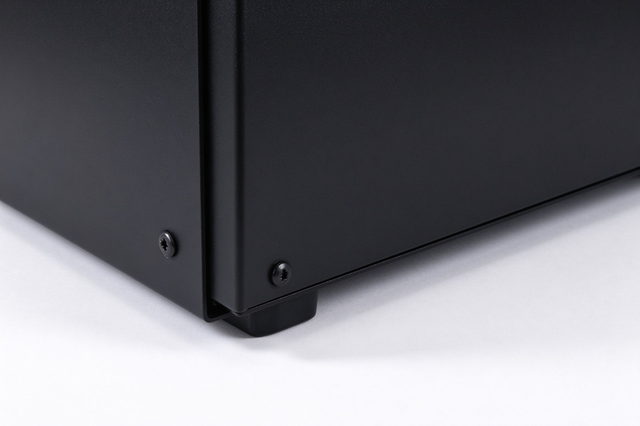
Verniciatura a polvere
Colori RAL durevoli e resistenti alla corrosione.
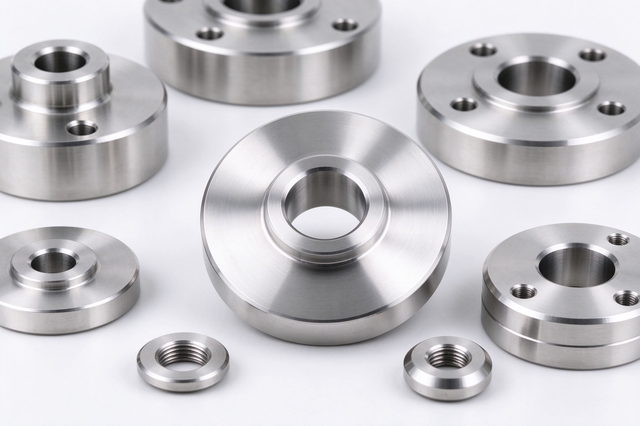
Passivazione
Rimuove il ferro libero, migliora la resistenza alla corrosione dell'inox.
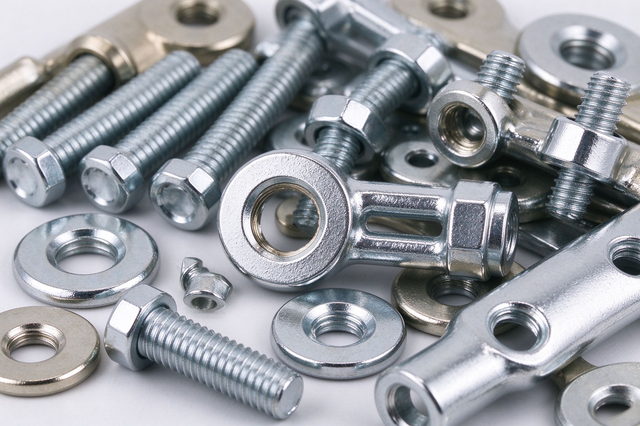
Placcatura
Zinco, nichel, cromo e stagno per i connettori.
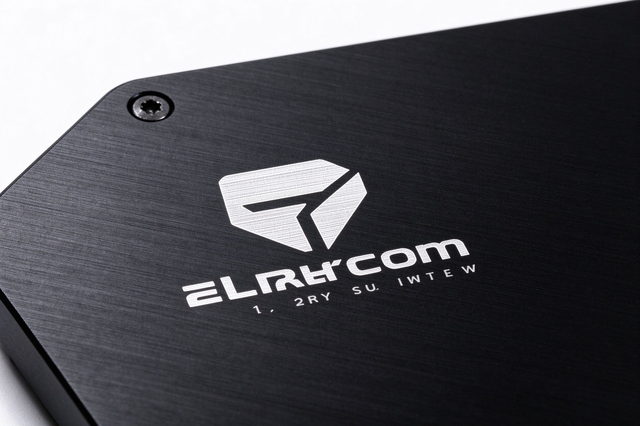
Marcatura laser
Loghi e numeri di serie permanenti, senza contatto.
Dal disegno alla consegna
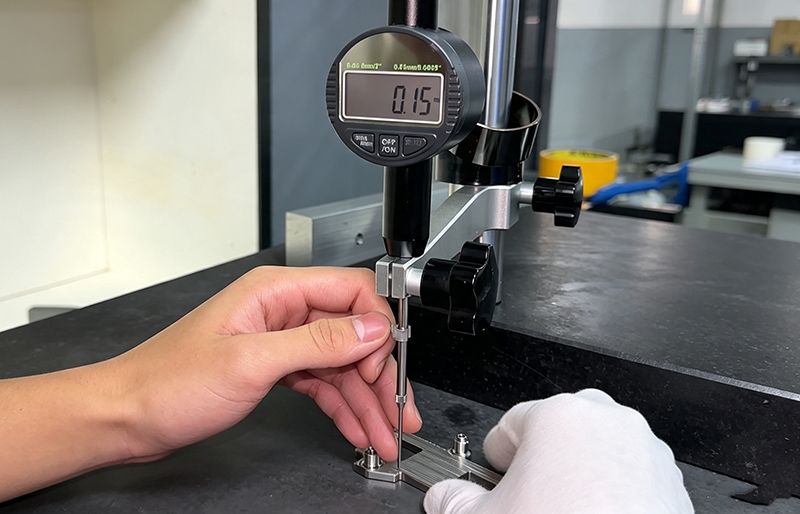
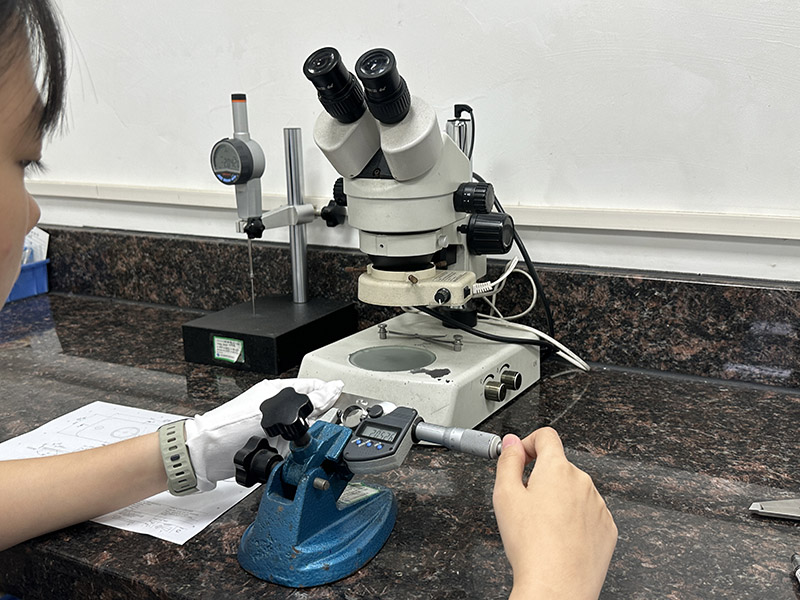
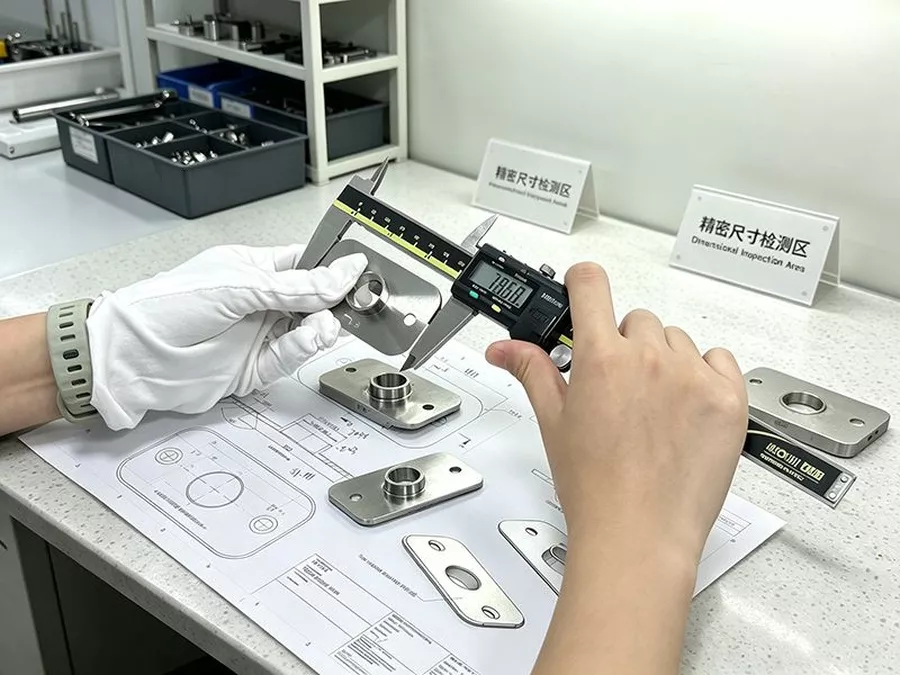
Qualità che potete verificare
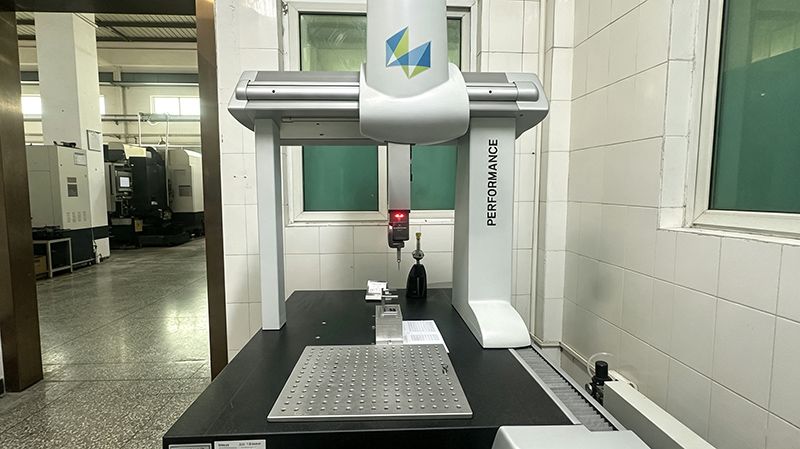


Altri prodotti in questa categoria
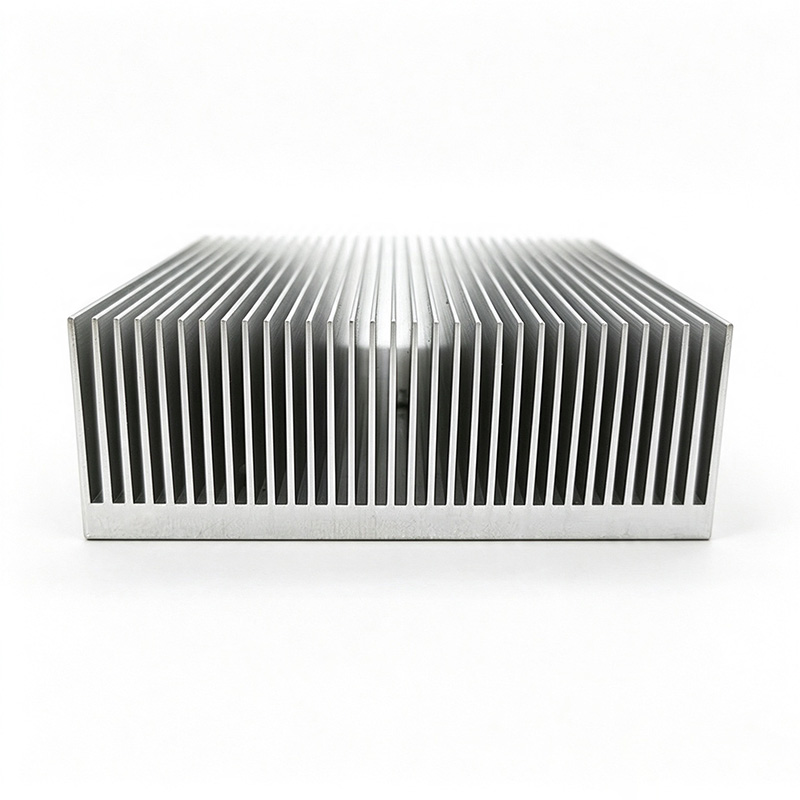
Dissipatori in alluminio con alette skivate personalizzati per IGBT e moduli di potenza - base fresata piana, alette a pettine dense, fori forati e filettati secondo lo schema del vostro modulo.
Vedi prodotto →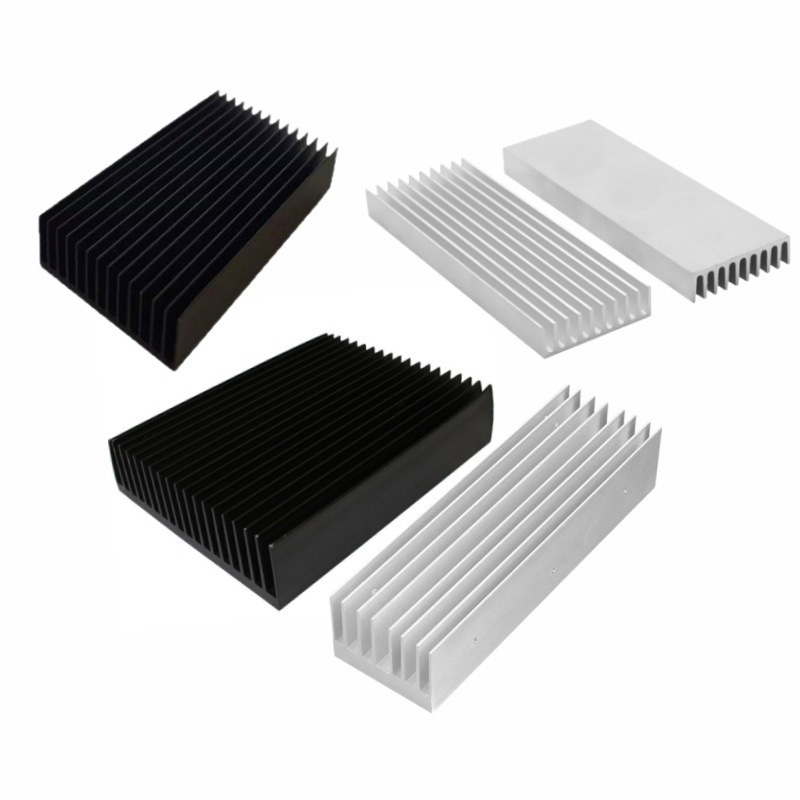
Profili standard per dissipatori in estrusione di alluminio con finitura anodizzata nera o naturale - 6063, tagliati a lunghezza, fori forati, campioni rapidi da magazzino.
Vedi prodotto →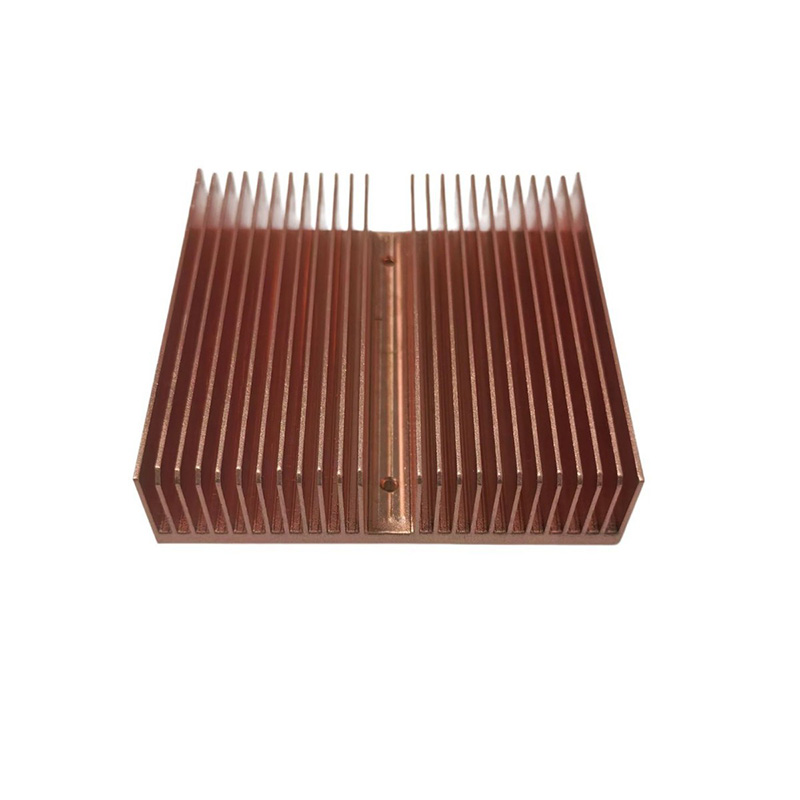
Dissipatori in rame T2 con alette skivate personalizzati per CPU ad alta potenza, IGBT, diodi laser e basi di cold plate a liquido - fresati piani, fori filettati, alette integrali skivate.
Vedi prodotto →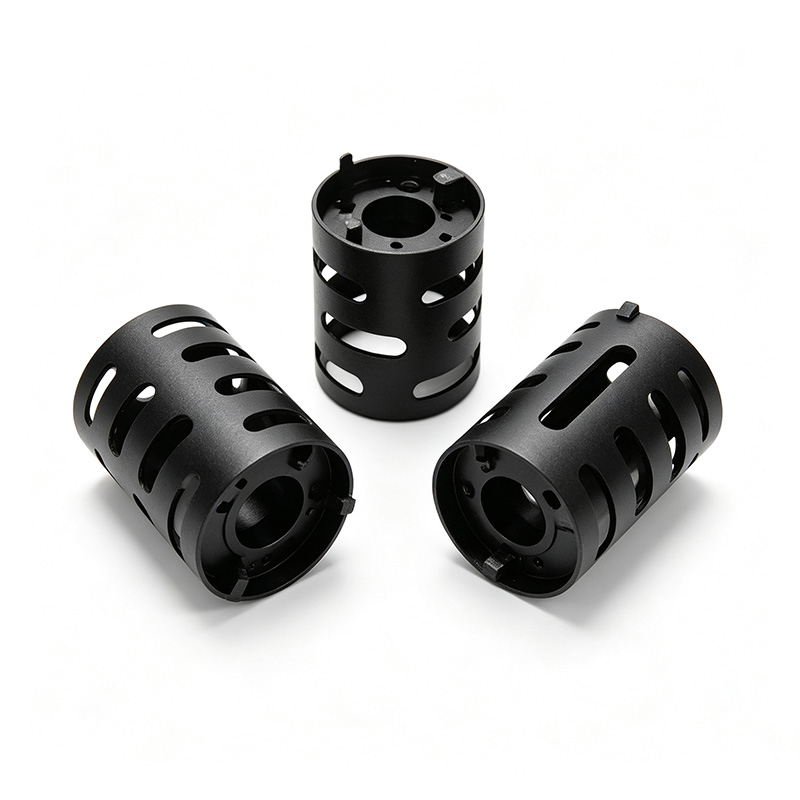
7075-T6 heat sink sleeves and cooling cages, turn-mill machined at ±0.03 mm with radial air slots and black oxide finish. 1 pc MOQ, 3–5 day samples.
Vedi prodotto →Dentro la nostra fabbrica — oltre 200 macchine sotto lo stesso tetto
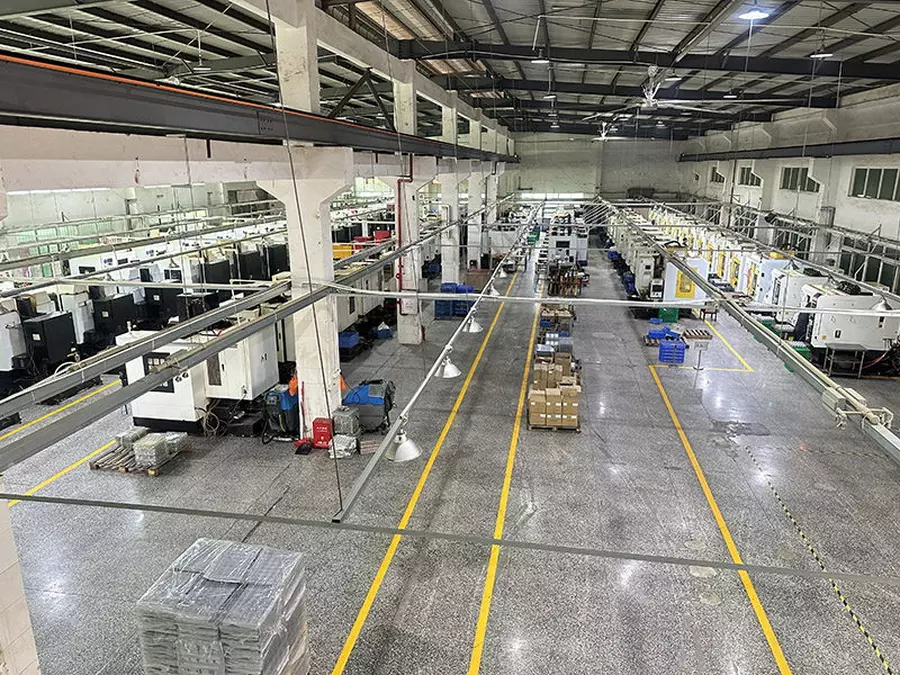
Centri di lavorazione verticali
Centri verticali ad alta efficienza per la produzione di parti metalliche in prototipo, medi lotti e grandi serie.
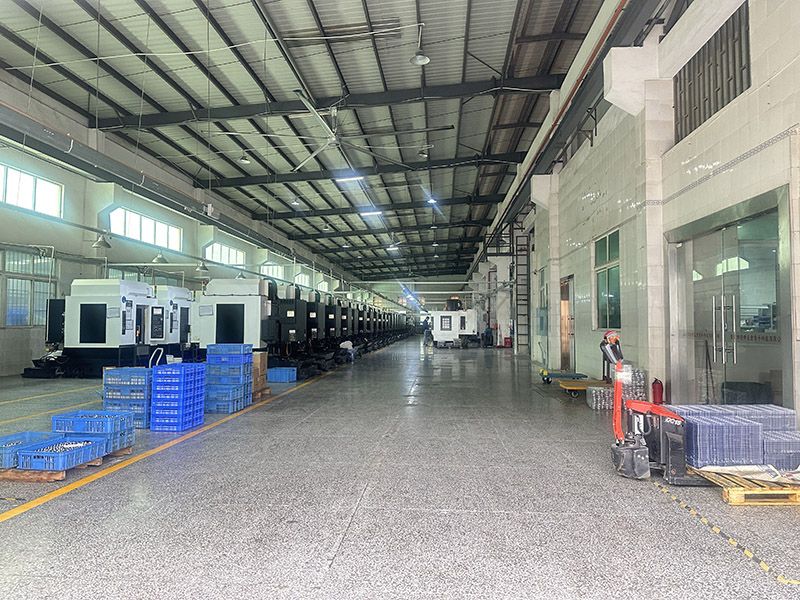
Centri di lavorazione foratura & maschiatura
Foratura, maschiatura e fresatura integrate accorciano i tempi di consegna degli scatoli in alluminio.
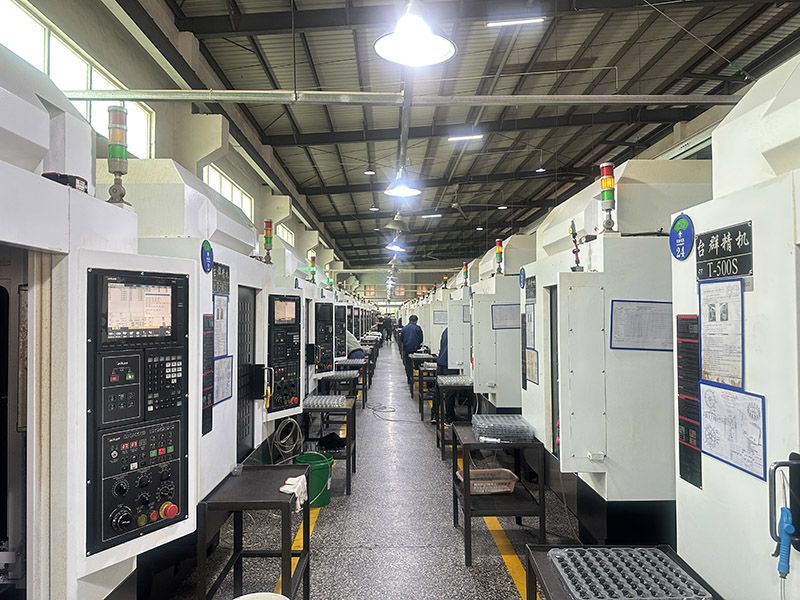
Reparto di lavorazione multifunzione
Linee combinate di foratura-fresatura a supporto sia di piccoli lotti sia di ordini OEM di volume.
Officina di produzione CNC
Zone di produzione ben organizzate a supporto di tutto, dai pezzi unici ai programmi di grande serie.
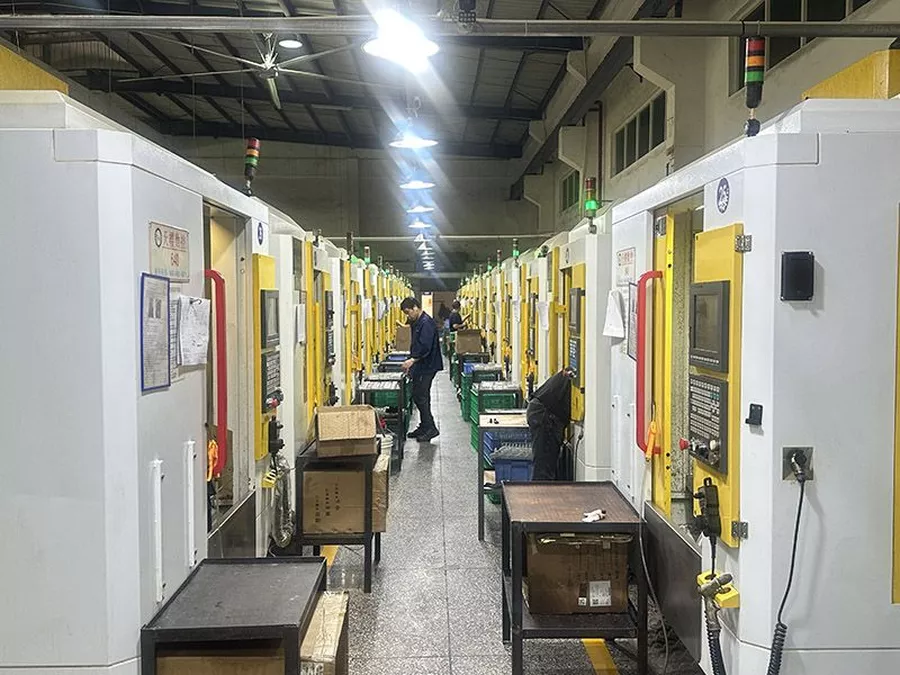
Linee CNC standard
Un layout di linea sistematico aumenta l'efficienza di lavorazione e garantisce consegne puntuali.
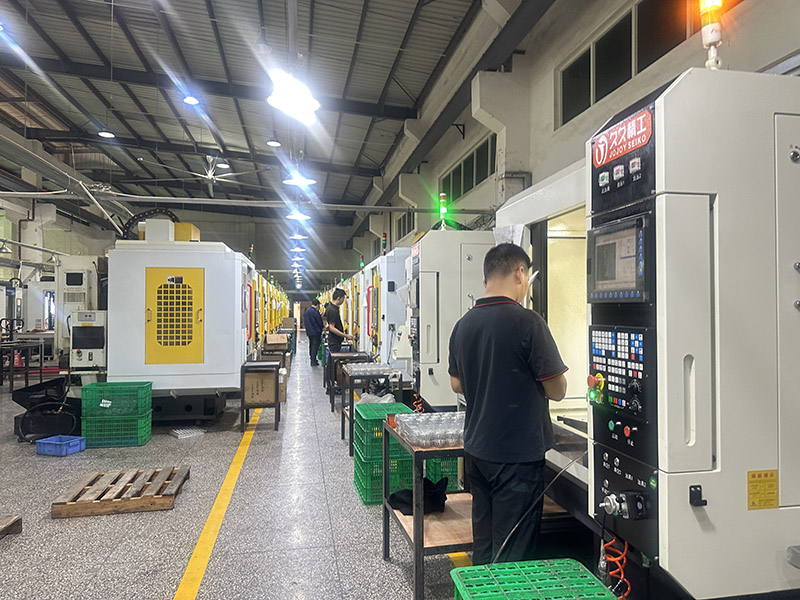
Attrezzatura di lavorazione a 5 assi
Un completo set di attrezzature CNC consente un funzionamento continuo e stabile per volumi OEM.
Dongguan, Cina · oltre 200 macchine CNC · anodizzazione & taglio laser interni · visitatori e ispezioni di terze parti sono i benvenuti.
Qualità, ingegneria & logistica — Pensata per gli acquirenti globali

Certificazione IATF 16949 & ISO 9001
Sistema di gestione qualità pienamente certificato. Ogni lotto viene spedito con certificati dei materiali e report di ispezione affidabili.

Supporto ingegneristico DFM gratuito
I nostri ingegneri esaminano ogni disegno in anticipo — segnalando tolleranze, sottosquadri e fattori di costo prima di tagliare il primo truciolo.

Imballaggio sicuro & spedizione globale
Schiuma personalizzata, casse in legno e imballaggi pronti per FBA. Trasporto porta a porta verso oltre 60 paesi con tracciamento completo.
Domande frequenti
Should a fan impeller be machined from solid or welded?
What balance grade can you hold?
What hub bore tolerance do you machine?
Can you reverse-engineer an existing fan wheel?
How do you reduce noise and vibration?
What is the minimum order and lead time?
PROCESSO SEMPLICE
Cosa succede dopo che cliccate Invia?
Il vostro messaggio arriva direttamente ai nostri ingegneri senior — con conferma immediata.
Studiamo i vostri requisiti e proponiamo una soluzione realizzabile con opzioni di materiale & processo.
Preventivo dettagliato con specifiche, opzioni e tempi di consegna — nessun costo nascosto.
Approvate il campione, quindi produciamo in serie con QC completo e spedizione puntuale.
WhatsApp: +86 13790500374
Email: info@rejincnc.com

Scansionate questo codice QR con la vostra app WeChat per aggiungerci come contatto — inviate disegni, ricevete preventivi entro 24 ore e chattate direttamente con i nostri ingegneri.
Preventivo personalizzato entro 24 ore
I vostri file CAD sono mantenuti strettamente riservati. Preventivo entro 24 ore.