
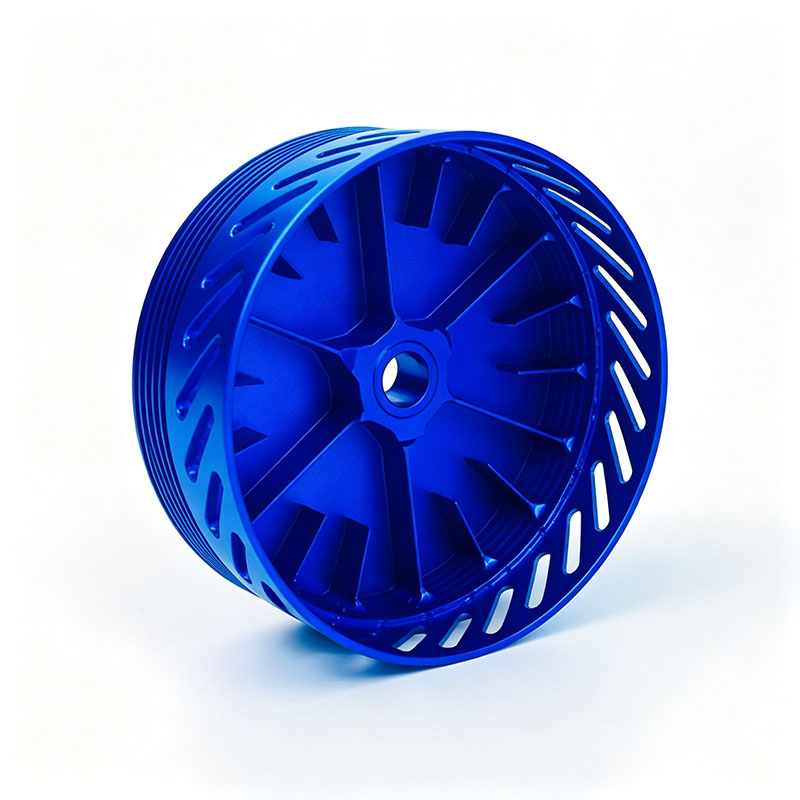
Custom CNC Machined 6061 Aluminum Centrifugal Fan Impeller in Blue Anodized Finish
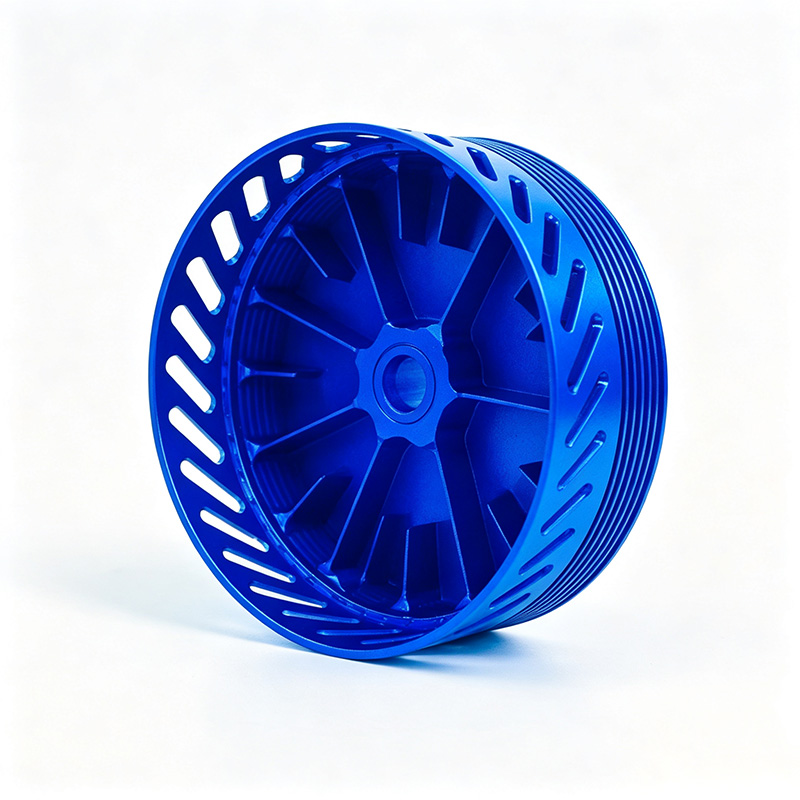
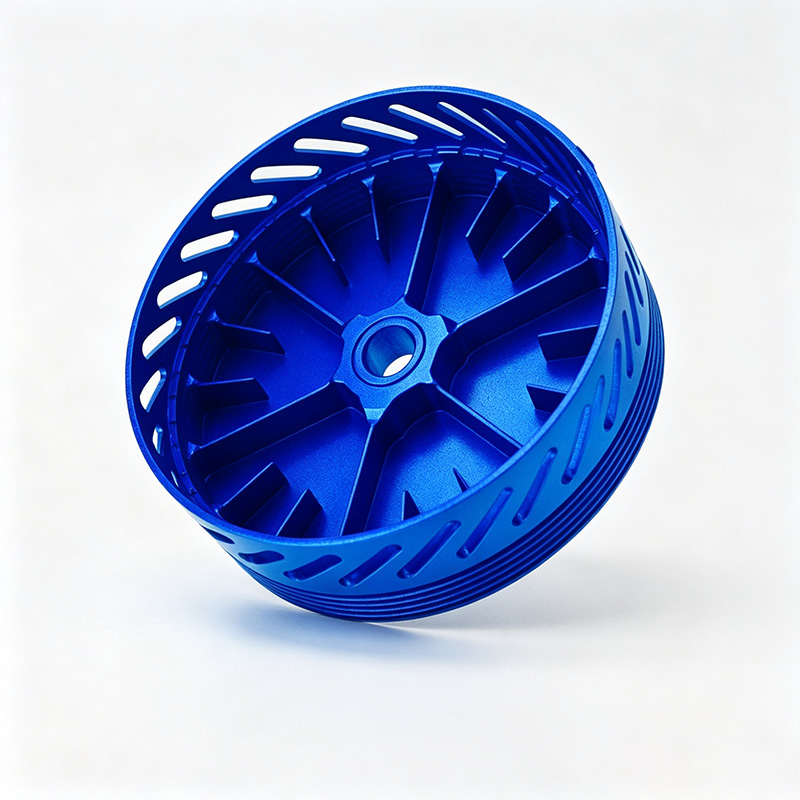
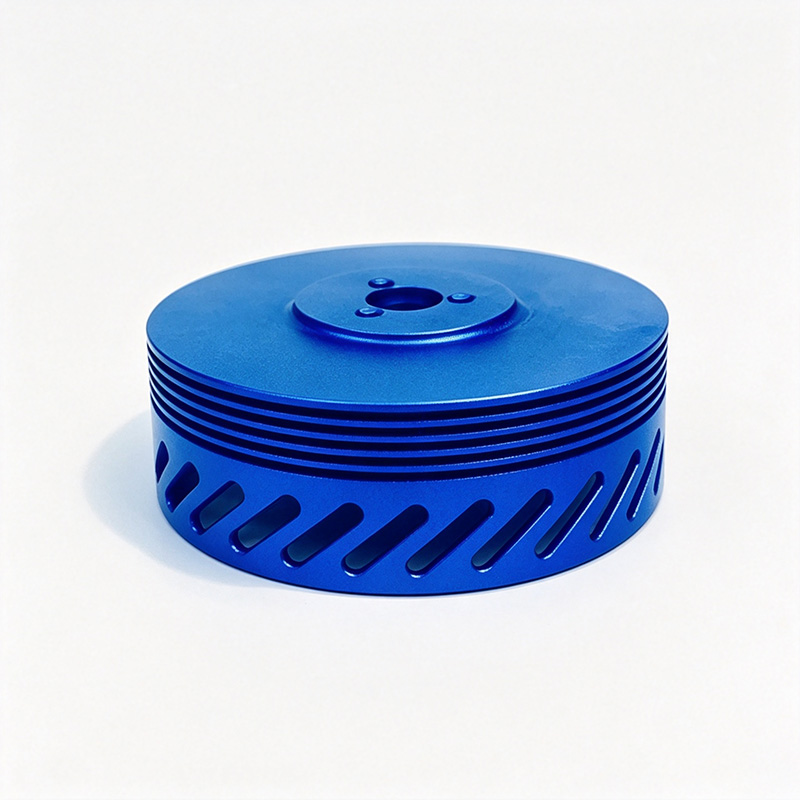
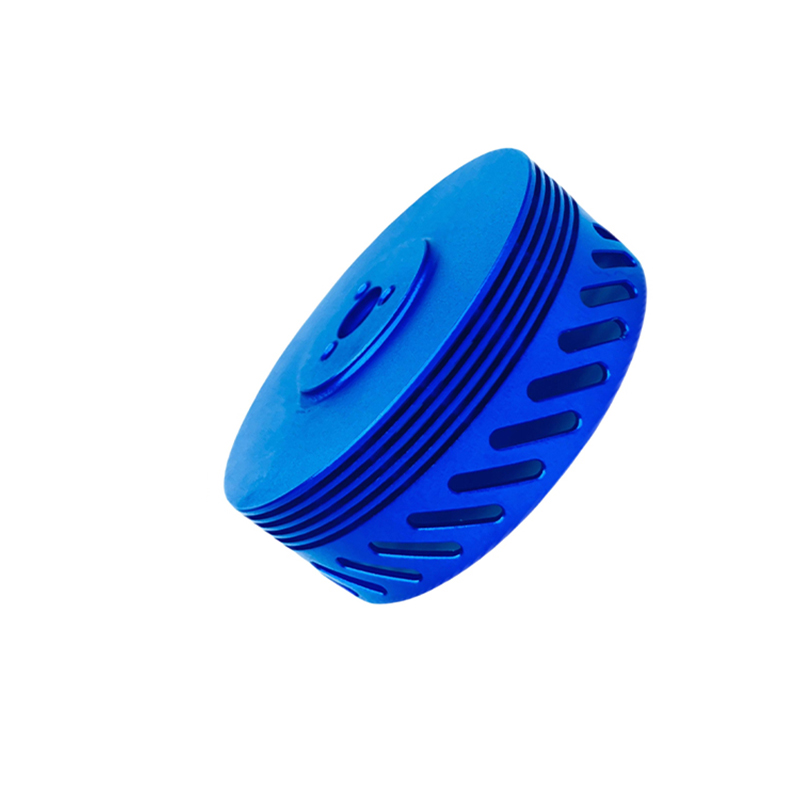
Custom CNC turn-milled 6061-T6 aluminum centrifugal fan impeller in a blue anodized finish — a radial blade pack, integrated back plate and slotted shroud machined from one billet for smooth airflow, low vibration and a repeatable shaft fit.
Bearbeitungstoleranz ±0.03 mm, hub bore H7, dynamic balance to G6.3/G2.5 on request. CMM, runout and balance report with every batch. Prototypes in 1–3 days.
- Turn-milled from 6061-T6 billet, integral blades, back plate and shroud
- Hub bore H7 with keyway, set screw or clamping options
- Blade angle, height and spacing held to ±0.03 mm
- Dynamic balance G6.3/G2.5, corrected in the hub
- Blue Type II anodize 15–25 µm, hub bore and keyway masked
- CMM, runout, balance report, FAI and 3.1 material cert
What Is This Centrifugal Fan Impeller?
This centrifugal fan impeller is the rotating air-moving wheel inside an industrial fan or dust-extraction unit. Air enters at the centre, the radial blade pack accelerates it outward, and the slotted shroud band guides the discharge into the fan housing. The back plate, hub and blades are machined from one 6061-T6 billet, then blue anodized, so the wheel runs true, resists corrosion and keeps the same blade geometry across repeat builds.
Geometry we machine
- Outer diameter, blade count, blade height and radial or backward-curved angle
- Slotted shroud band with controlled slot width, pitch and deburred edges
- Integrated back plate, hub boss and inlet eye, machined in one setup where possible
- H7 shaft bore, keyway, set screw holes or clamping hub
- Balance correction pads and laser-marked rotation direction or part number
Why 6061-T6 for a fan wheel
6061-T6 is the usual alloy for an aluminum impeller: it machines cleanly, anodizes evenly, resists moisture and mild chemicals, and has enough strength for fans running at moderate tip speeds. 7075-T6 gives higher yield strength for high-speed or high-pressure wheels, but it anodizes darker and is less corrosion-resistant in wet dust environments. For high-temperature exhaust or very large diameters, steel or a hybrid welded hub may be the better route. Send the operating speed and air temperature and we will recommend an alloy instead of defaulting to one.
Integral machining versus welded construction
A wheel machined from solid has no weld seams, no heat distortion and no filler metal in the airflow path. Blade angles stay identical from one wheel to the next, the back plate runs flat, and the hub stays concentric with the blade pack. The trade-off is material removal and machining time, which grows quickly with diameter. For large low-speed wheels we may propose a machined hub and shroud with welded or bolted blades; for small and medium high-speed wheels, integral machining is usually the better balance of rigidity and repeatability.
Balance, runout and vibration
An impeller is the most common source of fan vibration: one heavy blade, an eccentric hub or a warped back plate shows up as bearing noise, motor current fluctuation and structure-borne vibration. We control blade thickness and slot symmetry, hold the hub concentric to the blade pack within 0.03 mm, and check back-plate runout before balancing. Finished wheels can be dynamically balanced to G6.3 for general ventilation or G2.5 for high-speed and low-noise applications, with correction by milling the hub or adding balance weights. The report states the balancing speed and residual unbalance in g·mm, not just a pass/fail stamp.
Hub bore and shaft fit
The hub bore is machined to H7 unless your drawing calls for another fit, then checked with a bore gauge or pin gauge. A typical motor shaft uses h6, giving a light interference or transition fit that stays concentric without distorting the bore. Keyways are cut symmetrical to the blade pattern, set screw holes are spotted after the bore is finished, and the bore and keyway are masked during anodizing so coating thickness does not close the fit. Tell us the shaft diameter, key size and whether the wheel mounts on a motor shaft, bearing shaft or adapter sleeve.
Blade geometry, airflow and noise
Blade angle, blade height, inlet eye diameter and shroud slot area set the flow-pressure curve. We machine to your CAD or CFD model and can adjust blade angle or slot pitch for a prototype, but airflow and sound validation needs your housing, motor and test setup; we do not quote a flow curve without a test rig. For noise-sensitive units, we deburr trailing edges, keep the slot band uniform and hold shroud roundness so tip clearance stays consistent. If you are reverse-engineering an existing wheel, send a sample and we will 3D scan the blade pack and slot pattern before machining.
Anodizing and masking
Wheels are bead blasted, Type II anodized to 15–25 µm in blue or another colour, then sealed. Anodize adds roughly half the coating thickness per surface, so the hub bore, keyway and any shaft-contact land are masked or opened up before coating to protect the H7 fit. Colour is matched within a batch and across repeat orders using the same dye lot. For wet dust or wash-down environments, we can seal the coating and mask threads or inserts as needed.
Inspection and documentation
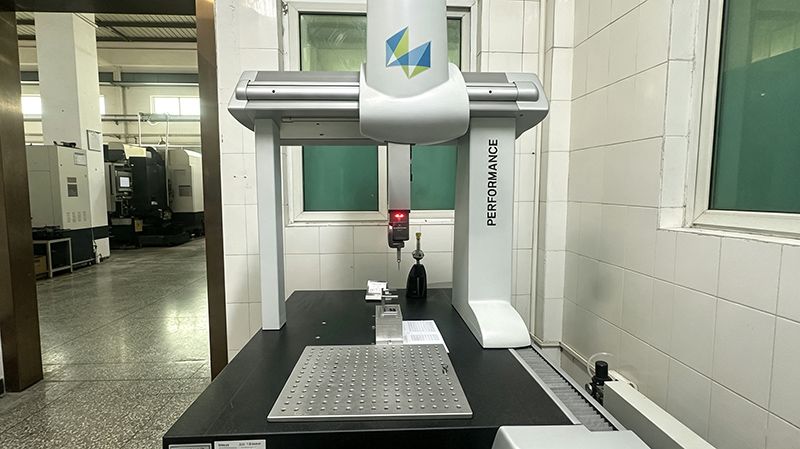
Each batch is checked for outer diameter, blade height and angle, slot position, hub bore, keyway, back-plate runout and hub concentricity. Critical wheels ship with a CMM dimensional report, dynamic balance report, FAI, EN 10204 3.1 material certificate, certificate of conformity and RoHS/REACH declaration. Overspeed or spin testing can be arranged through a qualified test house on request; the customer remains responsible for validating the finished fan assembly.
Send us for a quote
STEP/STP model or a measured sample, outer diameter, blade count and angle, hub bore and keyway, motor speed, balance grade, airflow or pressure target, housing clearance, alloy and finish, quantity and documentation. We return a DFM review covering blade machining strategy, shroud slots, hub fit and balancing, usually within 24 hours.
Capabilities for Centrifugal Fan Impellers
Integral Blade Pack
Blades, back plate and shroud machined from one billet, keeping blade angles and hub concentric without weld distortion.
Hub Bore and Shaft Fit
H7 bore, keyway and set screw holes machined after the blade pack, with bore and keyway masked during anodizing.
Dynamic Balancing
G6.3 or G2.5 balance at the specified speed, corrected in the hub, with residual unbalance reported in g·mm.
Slotted Shroud Geometry
Slot width, pitch and angle machined uniformly and deburred, with shroud roundness held for consistent tip clearance.
Blue Anodize with Masking
Type II blue anodize at 15–25 µm, batch colour matched, with shaft fits and keyways protected from coating growth.
Airflow and Documentation
CMM dimensions, runout, balance report, FAI, 3.1 material cert and RoHS/REACH declaration for each batch.
Werkstoffe, die wir bearbeiten
Von Luftfahrt-Aluminium bis zu medizinzertifizierten technischen Kunststoffen bearbeiten unsere hauseigenen CNC-Bearbeitungszentren ein breites Spektrum an Metallen und Kunststoffen unter einem Dach.
Metalle
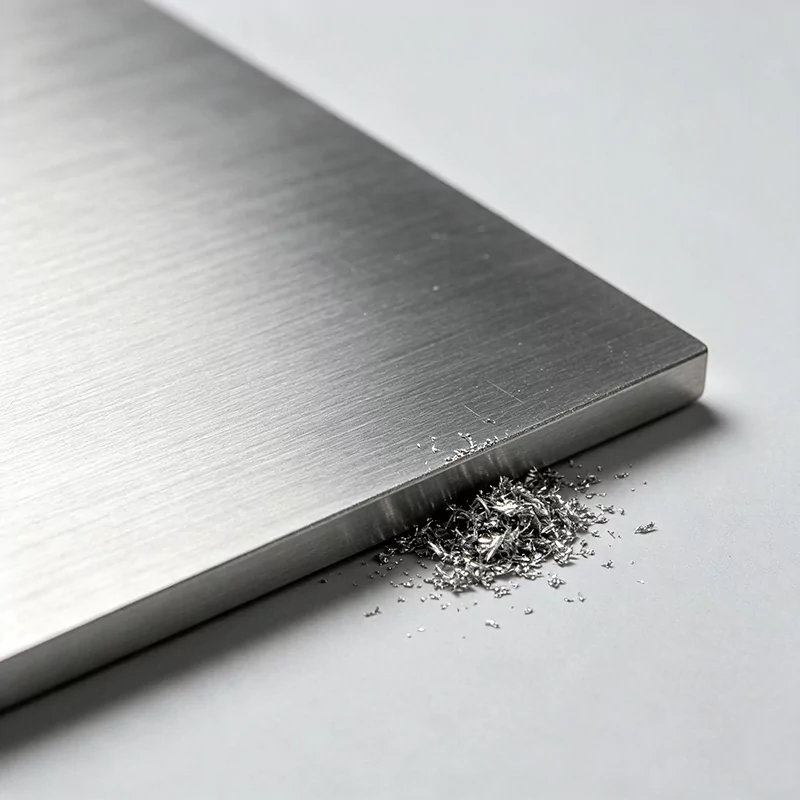
Aluminium
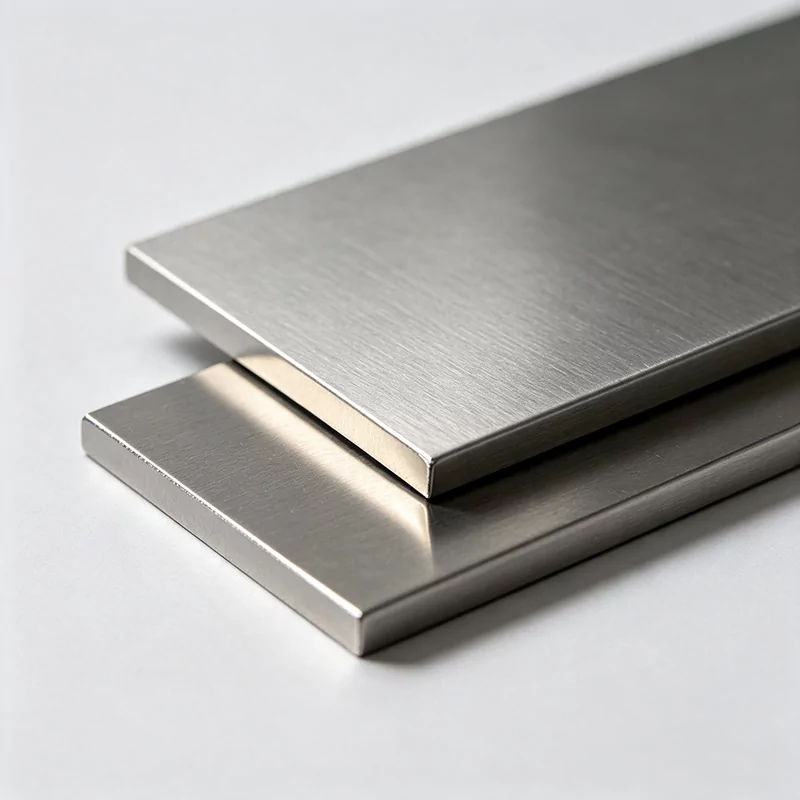
Edelstahl
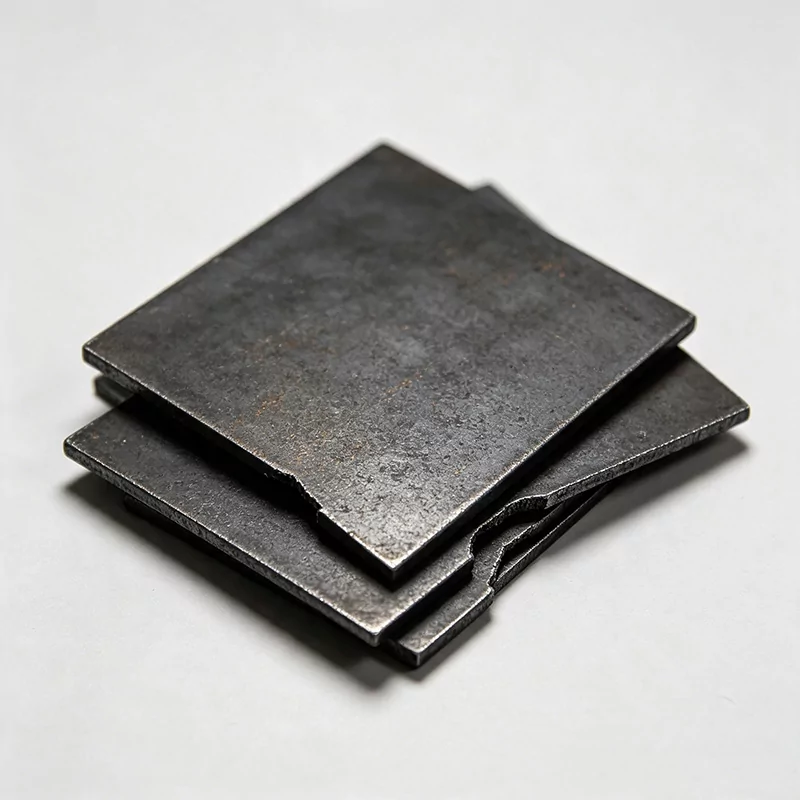
Kohlenstoff- & Legierungsstahl
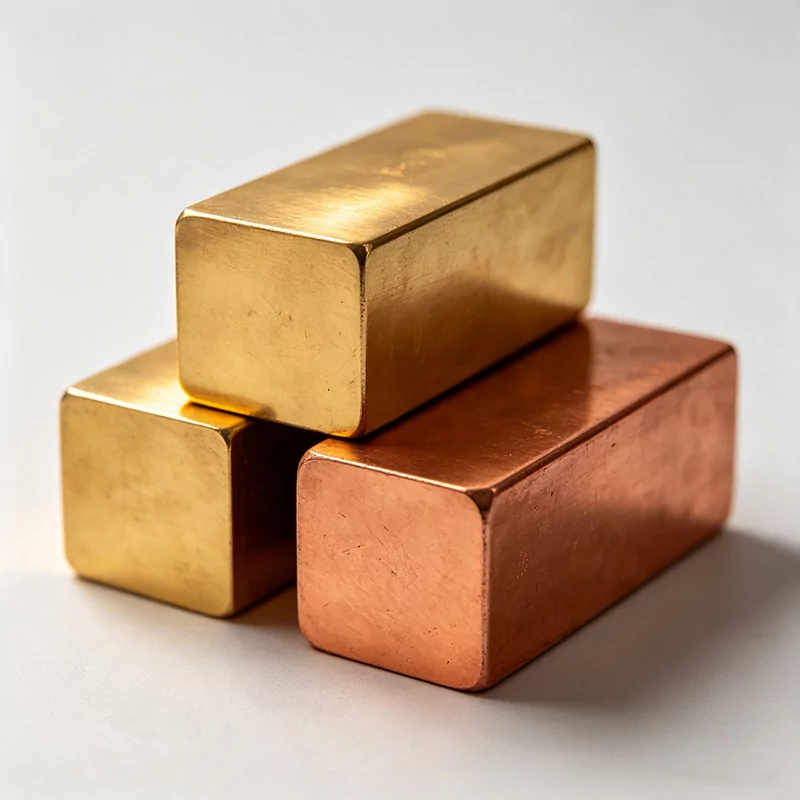
Messing & Kupfer
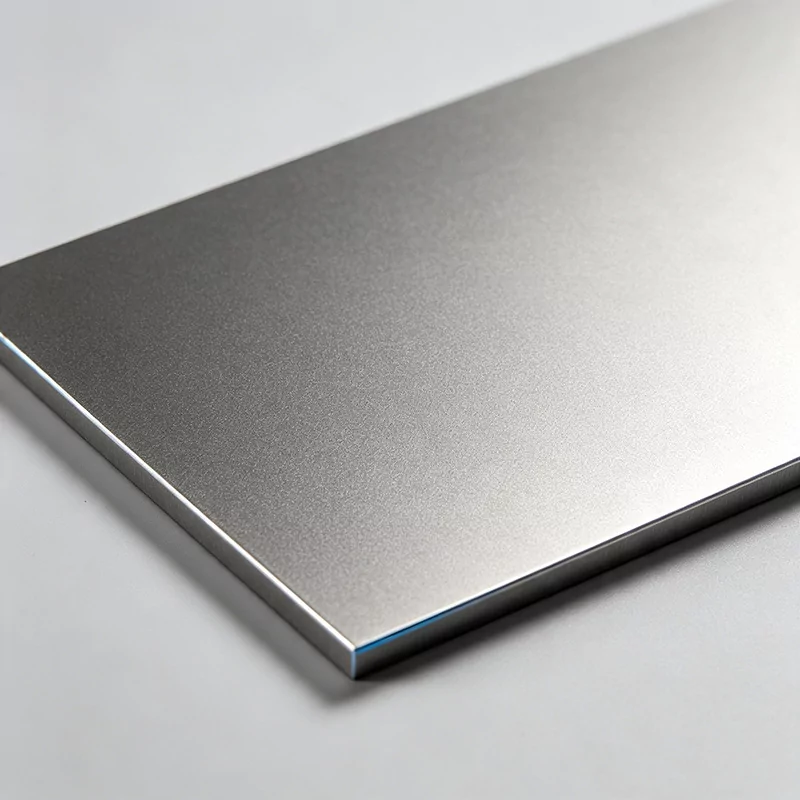
Titan & Sonderwerkstoffe
Technische Kunststoffe
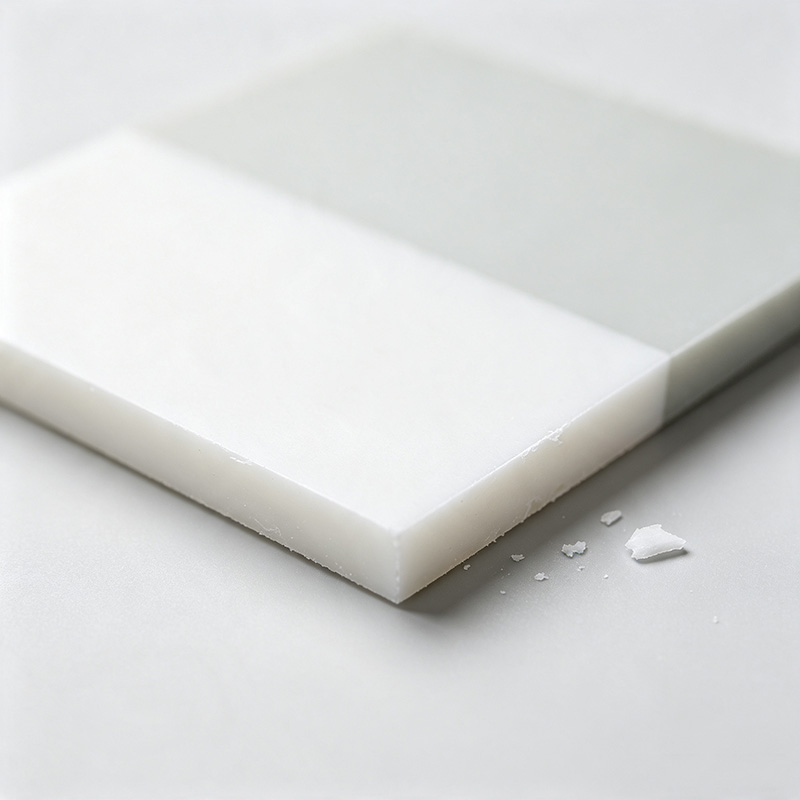
POM (Delrin)
Nylon (PA66)
PTFE (Teflon)
PEEK / PEI (Ultem)
ABS / PC / PMMA
Fehlt Ihr Material? Senden Sie Ihre Zeichnung zur Prüfung — wir bestätigen die Verfügbarkeit und erstellen ein Angebot.
Oberflächenfinish-Optionen
Funktionale und kosmetische Oberflächen, im Haus oder mit geprüften Partnern aufgebracht.
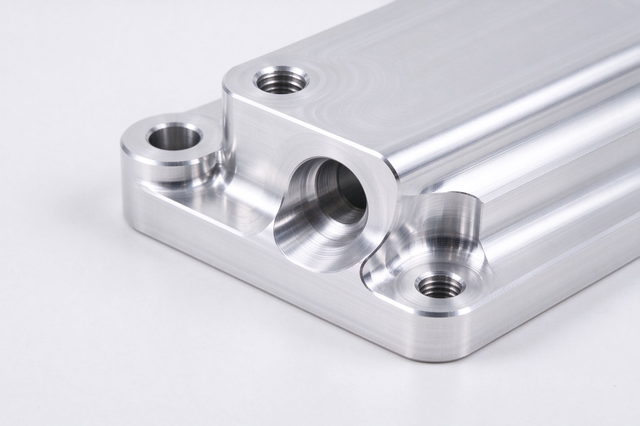
Klar eloxiert
Typ-II-Schutzeloxierung, natürliches Silberfinish.
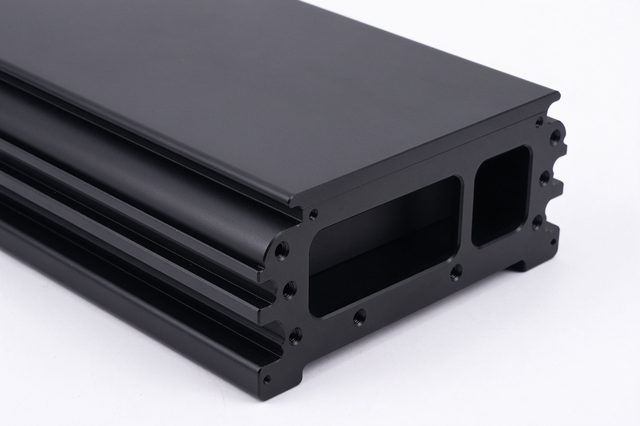
Schwarze Harteloxierung
Typ-III-Hartcoat, verschleißfestes Schwarz.
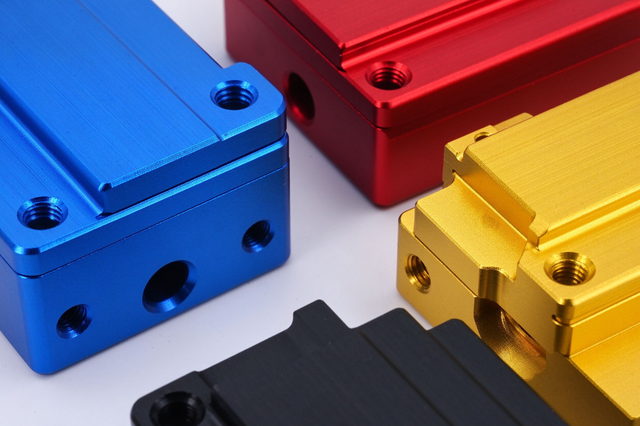
Farbig eloxiert
Blaue, rote, goldene und grüne Färbung für Audio und 3C.
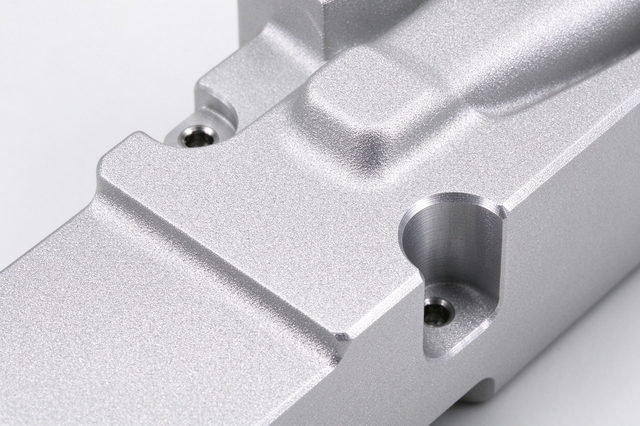
Glasperlenstrahlen
Gleichmäßige matte Textur, verdeckt Bearbeitungsspuren.
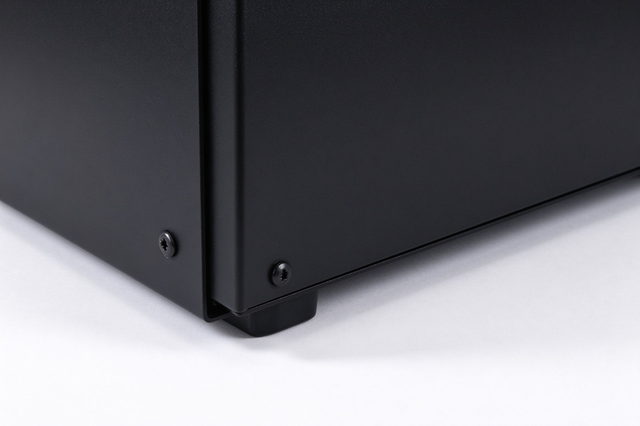
Pulverbeschichtung
Langlebige, korrosionsbeständige RAL-Farben.
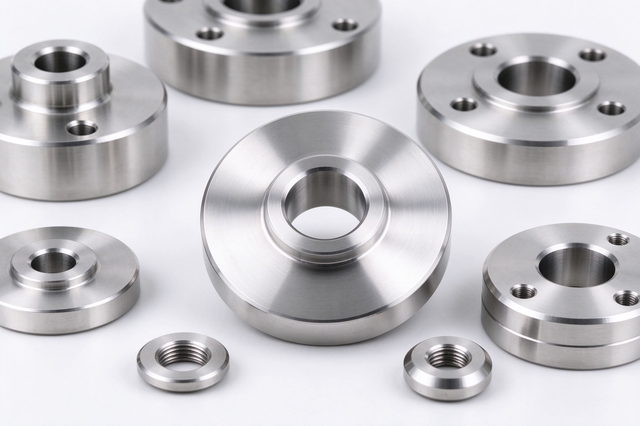
Passivierung
Entfernt freies Eisen, verbessert Edelstahl-Korrosionsschutz.
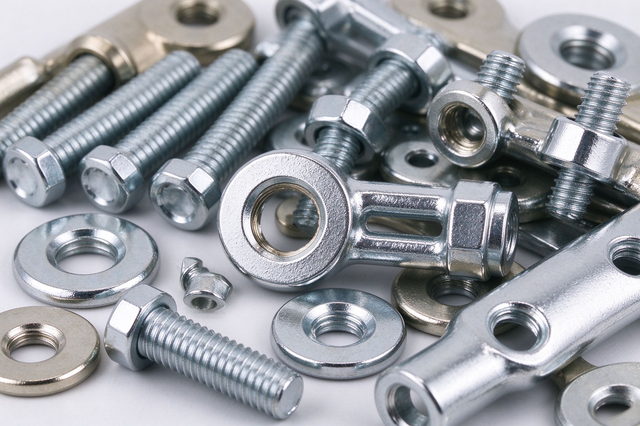
Galvanik
Zink, Nickel, Chrom, Zinn für Verbinder.
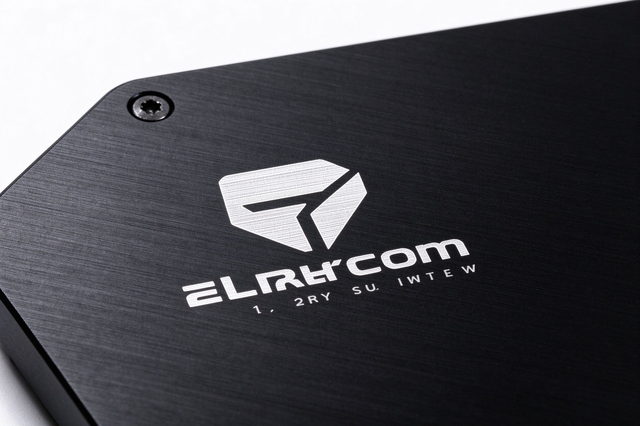
Laserbeschriftung
Permanente, berührungslose Logos und Seriennummern.
Von der Zeichnung bis zur Auslieferung
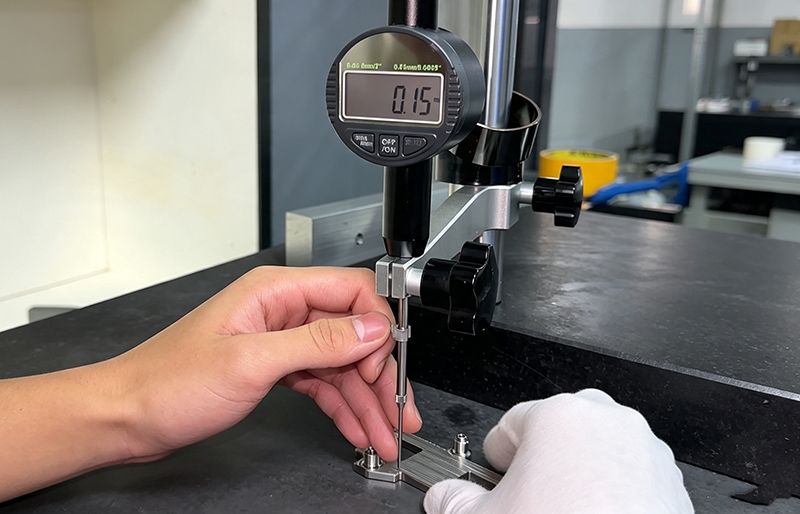
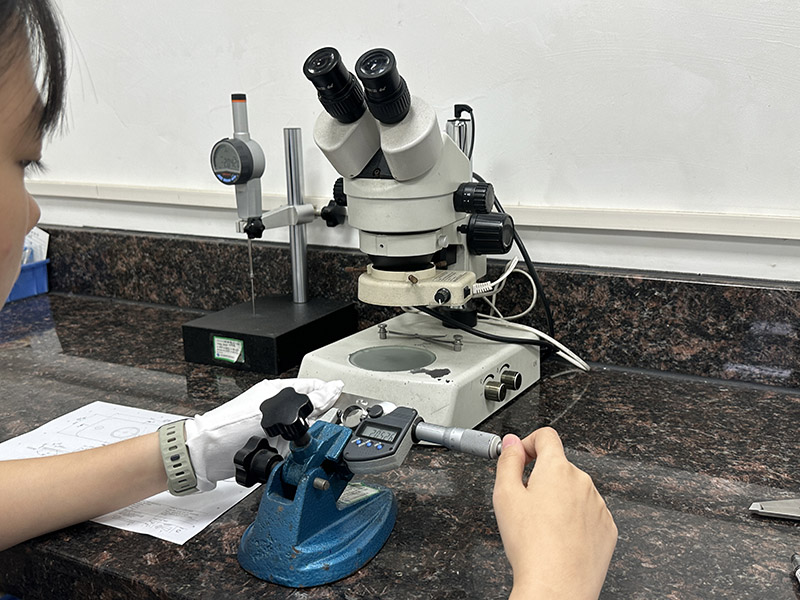
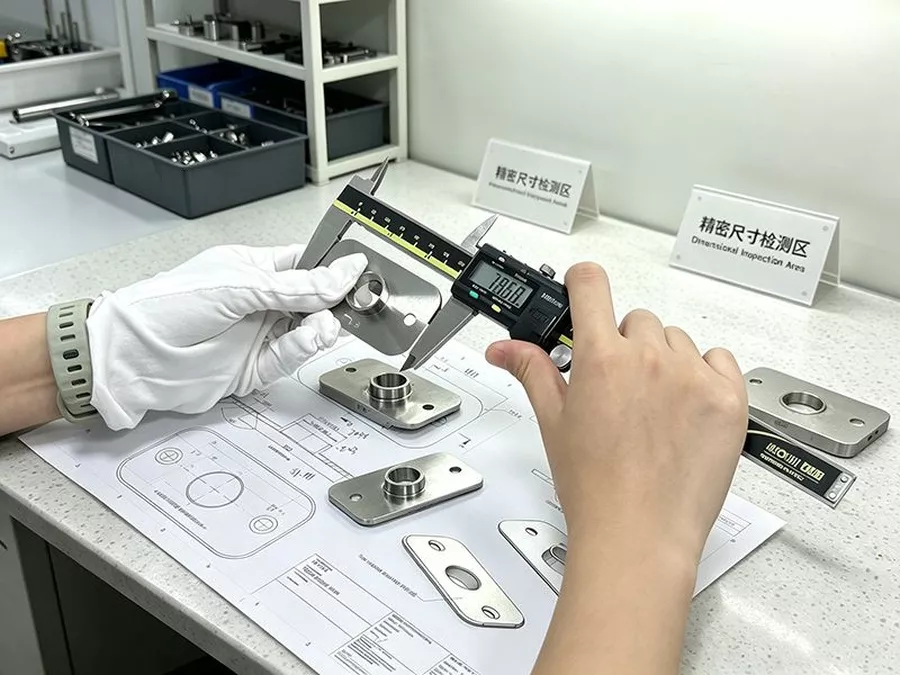
Qualität, die Sie überprüfen können


Weitere Produkte in dieser Kategorie
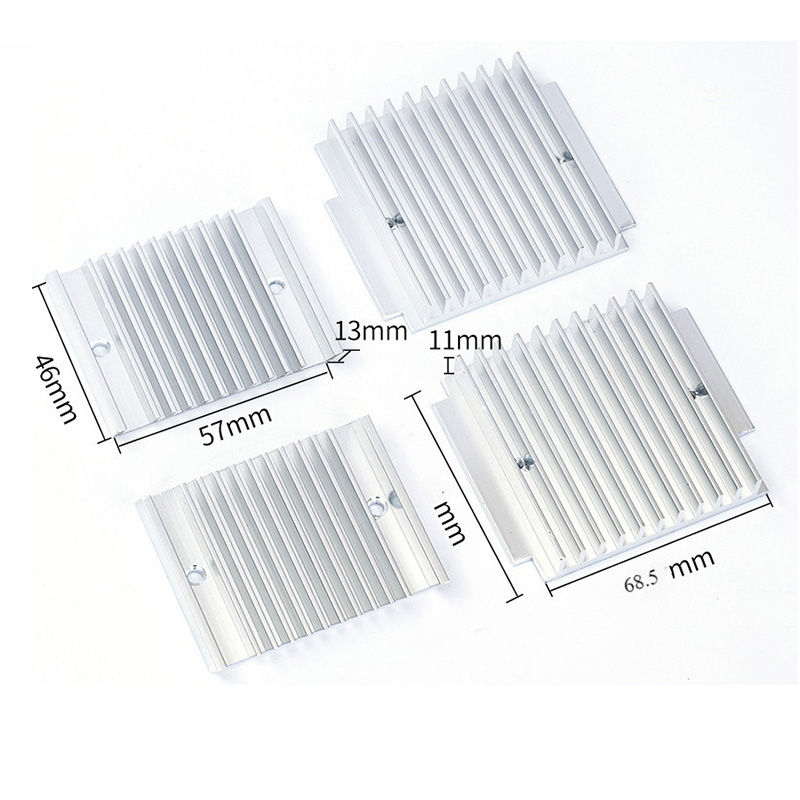
Kundenspezifische 6063-Strangpress-Aluminiumkühlkörper für Audioverstärker, Wechselrichter, Schweißgeräte und Netzteile - plane Transistorbasis, gebohrte Montageöffnungen, natur- oder schwarz eloxiert.
Produkt ansehen →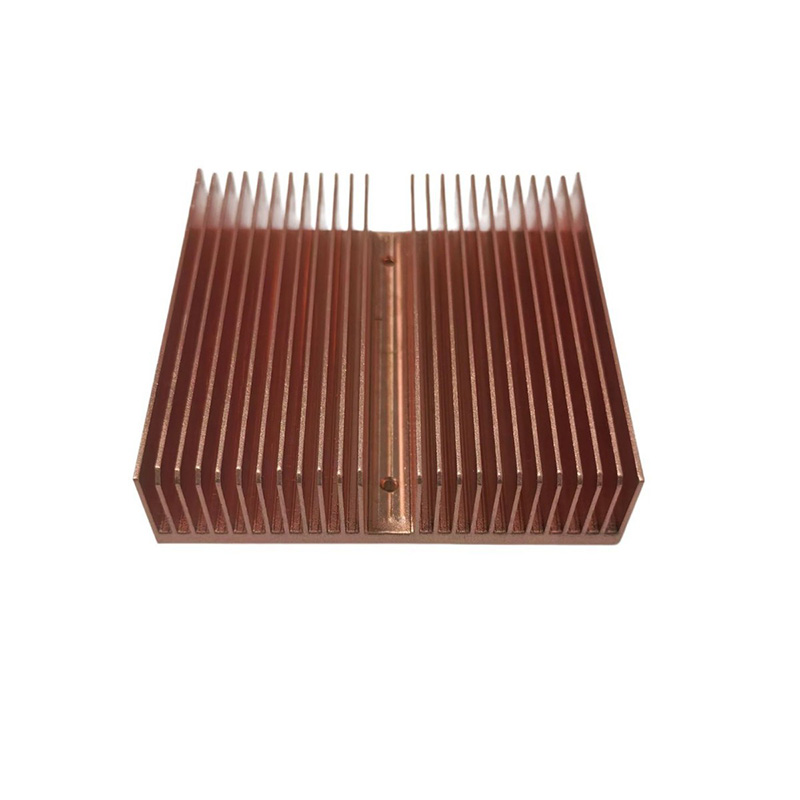
Kundenspezifische T2-Kupfer-Kühlkörper mit skived Lamellen für High-Power-CPUs, IGBTs, Laserdioden und Flüssigkeitskühlplatten-Basen - plan gefräst, Gewindebohrungen, angeschnittene Lamellen.
Produkt ansehen →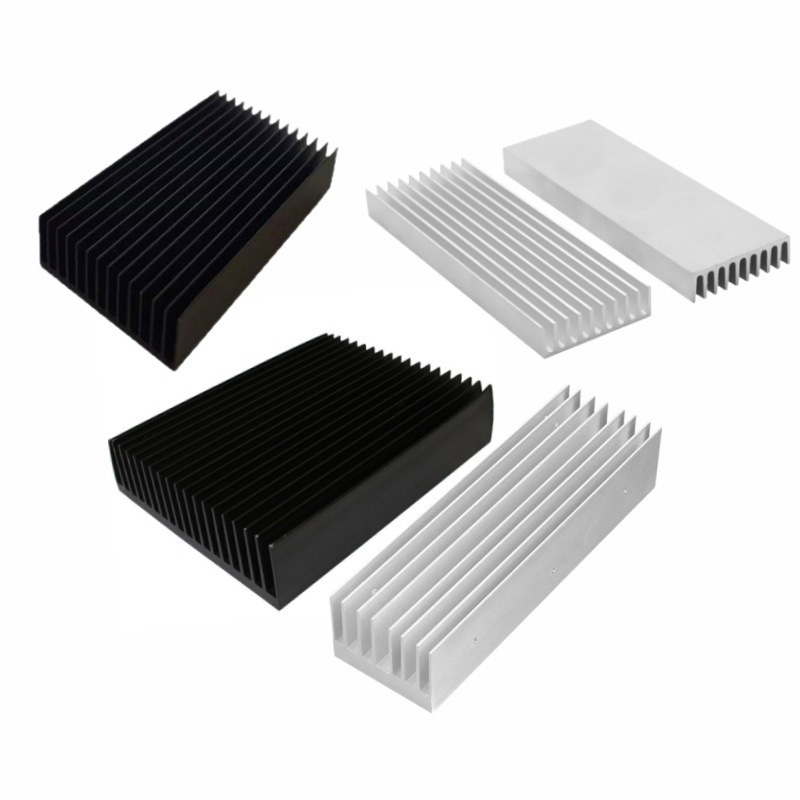
Standard-Strangpress-Aluminium-Kühlkörperprofile, schwarz eloxiert oder natur - 6063, auf Länge geschnitten, gebohrte Löcher, schnelle Muster ab Lager.
Produkt ansehen →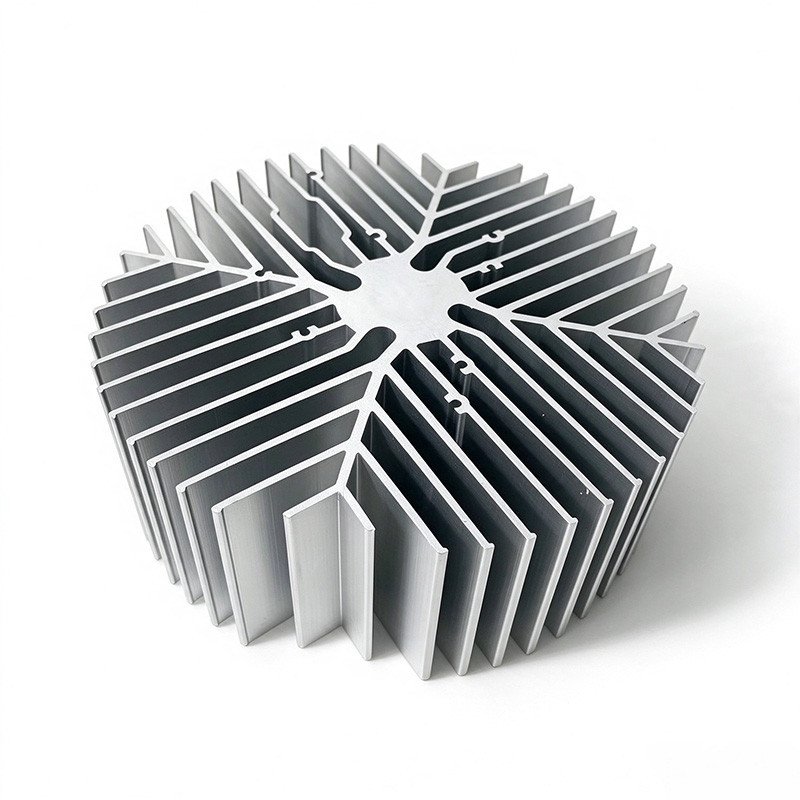
Kundenspezifische Aluminium-Kühlkörper mit skived Lamellen für IGBT und Leistungsmodule - plan gefräste Basis, dichte Kammlamellen, gebohrte und gewindebohrte Löcher nach Ihrem Modulmuster.
Produkt ansehen →In unserer Fabrik — 200+ Maschinen unter einem Dach
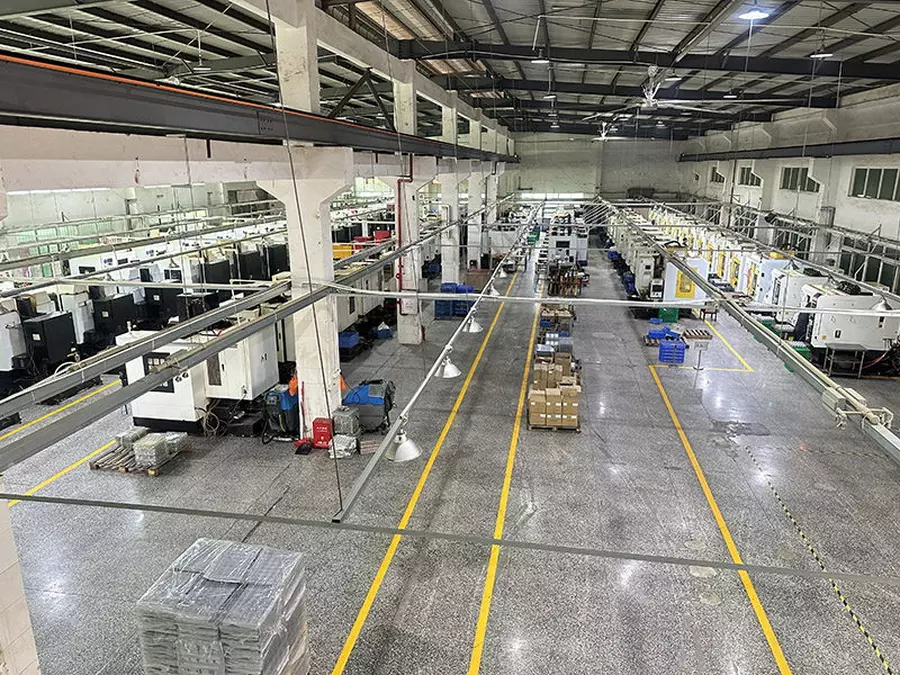
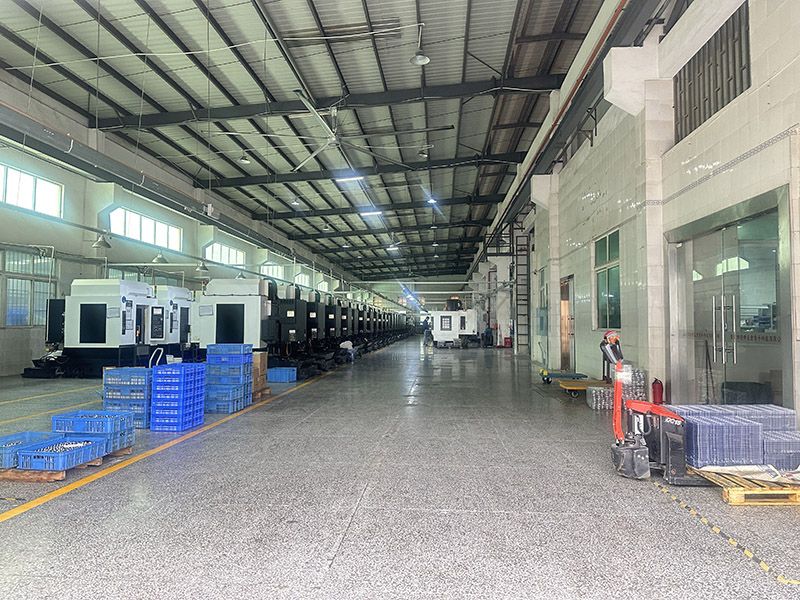
Vertikal-Bearbeitungszentren
Hocheffiziente Bearbeitungszentren für Prototypen, mittlere Stückzahlen und Großserien von Metallteilen.
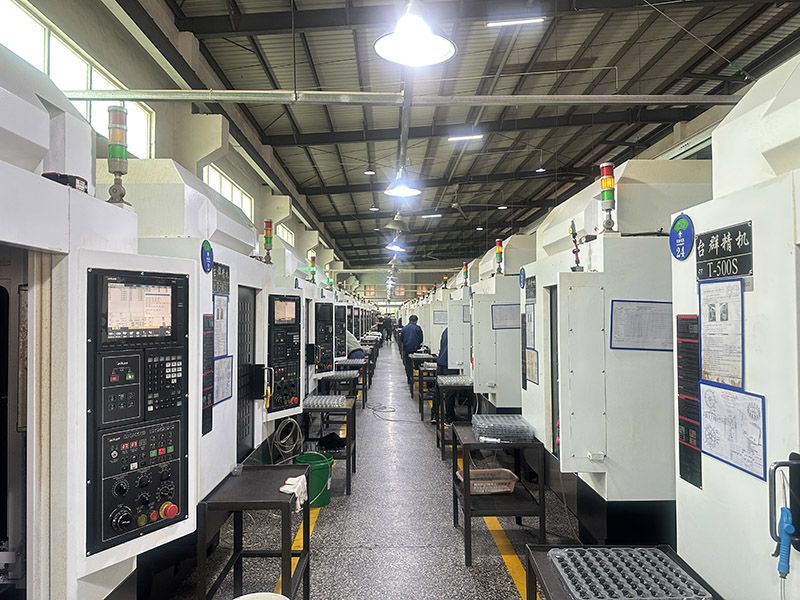
Bohr- & Gewinde-Bearbeitungszentren
Integriertes Bohren, Gewindeschneiden und Fräsen verkürzt die Lieferzeit für Aluminiumgehäuse.
Mehrfunktions-Bearbeitungswerkstatt
Kombinierte Bohr-Fräslinien unterstützen Kleinauflagen wie auch OEM-Großaufträge.
CNC-Produktionswerkstatt
Gut organisierte Fertigungsbereiche unterstützen alles von Einzelteilen bis zu Massenprogrammen.
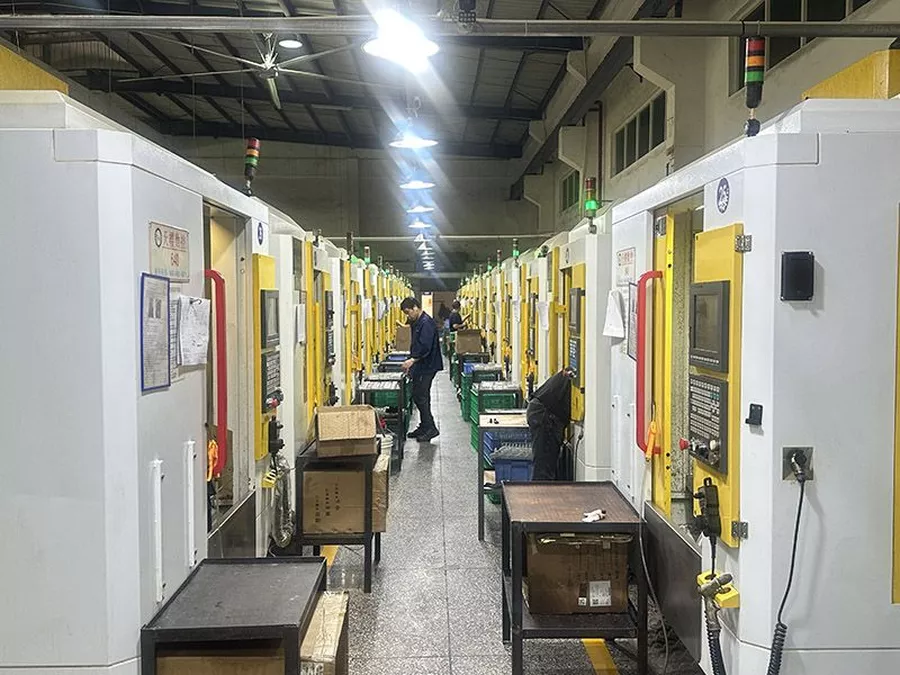
Standard-CNC-Linien
Systematischer Linienaufbau steigert die Bearbeitungseffizienz und garantiert termingerechte Lieferung.
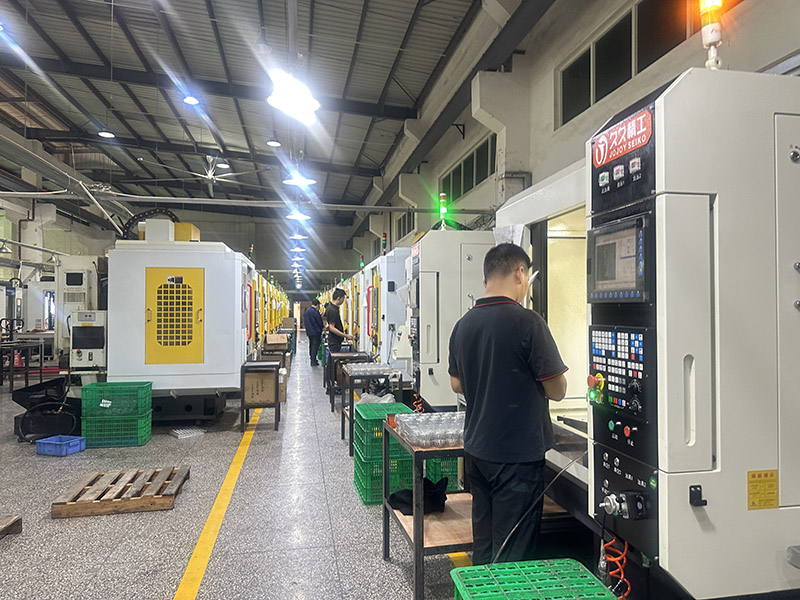
5-Achsen-Bearbeitungsanlagen
Vollständiger CNC-Anlagenpark ermöglicht stabilen Dauerbetrieb für OEM-Volumen.
Dongguan, China · 200+ CNC-Maschinen · Eloxieren & Laserschneiden im Haus · Besucher und Inspektionen durch Dritte willkommen.
Qualität, Engineering & Logistik — Gemacht für globale Einkäufer

IATF 16949 & ISO 9001 zertifiziert
Voll zertifiziertes Qualitätsmanagementsystem. Jede Charge wird mit Materialzertifikaten und Prüfberichten geliefert, auf die Sie sich verlassen können.

Kostenlose DFM-Engineering-Unterstützung
Unsere Ingenieure prüfen jede Zeichnung im Voraus — und kennzeichnen Toleranzen, Hinterschneidungen und Kostenfaktoren, bevor der erste Span abgetragen wird.

Sichere Verpackung & weltweiter Versand
Individueller Schaumstoff, Holzkisten und FBA-fähige Verpackung. Tür-zu-Tür-Fracht in über 60 Länder mit vollständiger Sendungsverfolgung.
Häufig gestellte Fragen
Should a fan impeller be machined from solid or welded?
What balance grade can you hold?
What hub bore tolerance do you machine?
Can you reverse-engineer an existing fan wheel?
How do you reduce noise and vibration?
What is the minimum order and lead time?
EINFACHER PROZESS
Was passiert nach dem Klick auf Senden?
Ihre Nachricht landet direkt bei unseren erfahrenen Ingenieuren — mit sofortiger Eingangsbestätigung.
Wir analysieren Ihre Anforderungen und schlagen eine machbare Lösung mit Werkstoff- & Prozessoptionen vor.
Detailliertes Angebot mit Spezifikationen, Optionen und Lieferzeit — ohne versteckte Kosten.
Muster freigeben, dann produzieren wir in Serie mit vollständiger QC und pünktlichem Versand.
WhatsApp: +86 13790500374
E-Mail: info@rejincnc.com

Scannen Sie diesen QR-Code mit Ihrer WeChat-App, um uns als Kontakt hinzuzufügen — Zeichnungen senden, Angebote innerhalb von 24 Stunden erhalten und direkt mit unseren Ingenieuren chatten.
Individuelles Angebot innerhalb von 24 Stunden
Ihre CAD-Dateien werden streng vertraulich behandelt. Angebot innerhalb von 24 Stunden.