W e l c o m e t o R e j i n C N C

Loading

medical equipment
8 , December

Strong Growth in Stainless Steel Precision Machining — Rising Demand from 3C, Industrial Automation, and Medical Components

Introduction — Lead-in The 2025 Global Metal Processing Market Report highlights significant growth in demand for high-end precision parts, micro components, corrosion-resistant metals, industrial automation parts, and 3C device accessories. Compared with ordinary hardware, customers increasingly prefer suppliers capable of high-precision stainless steel machining, micro machining, custom non-standard components, and integrated multi-process manufacturing.   Key Discussion Points   1.3C sector (audio control panels, interface panels, headphone metal parts, device enclosures) Demand for stainless steel and micro machining has risen sharply, driven by miniaturization, functional complexity, and quality requirements of consumer electronics.   2.Industrial automation (sensor modules, control enclosures, precision connectors, micro-structured components) Clients emphasize process stability, tight tolerances, and consistent high-precision cutting, as these parts often underpin critical industrial operations.   3.Medical industry (surgical instruments, precision components, structural parts, shafts, bushings, corrosion-resistant components) Requirements are stringent: full traceability, strict quality control, rapid prototyping, and validation are essential, with no compromise on safety or regulatory compliance. Conclusion The future of hardware manufacturing is no longer simply “parts production” — it is service-oriented, precision-driven manufacturing.  
Precision hardware components for aerospace manufacturing
8 , December

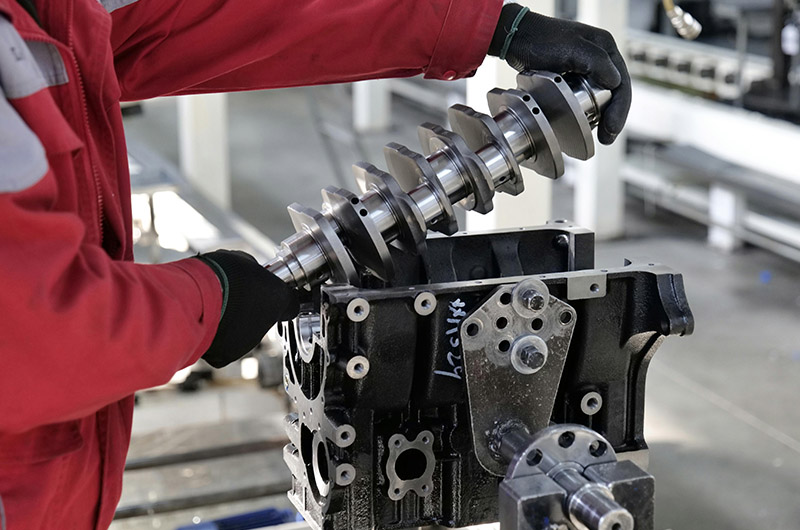
Aerospace Manufacturing Is Upgrading — Precision Metal Components Become Core Demand

Intro At the 2025 Aerospace Manufacturing Technology & Process Innovation Summit, experts highlighted that the next 5 years of aerospace production will rely heavily on: Lightweight metal materials High-precision CNC machining Customized structural components This creates significant opportunities for metal machining suppliers.   1.Why Aerospace Demand for Precision Parts Is Growing Key reasons: Aircraft components are becoming lighter (aluminum, titanium alloys) More components require custom, non-standard CNC structures Higher corrosion & fatigue resistance requirements Tight tolerance and high consistency are mandatory → Professional precision machining is essential.   2.Capabilities Most Favored in Aerospace Supply Chain These were repeatedly mentioned: High-precision CNC milling & turning Aluminum 6061/7075 machining Stainless steel 304/316 structural parts Complex surfaces, multi-hole, multi-process machining Anodizing, sandblasting, laser engraving   3.Why Aerospace Buyers Choose China for Precision Machining High-accuracy equipment Experienced engineers Excellent cost-performance Fast delivery, small-batch friendly Advanced surface finishing
CNC workshop
8 , December

Metal Processing Tools Market Outlook & Downstream Industry Expansion — Why We’re in an Upward Cycle

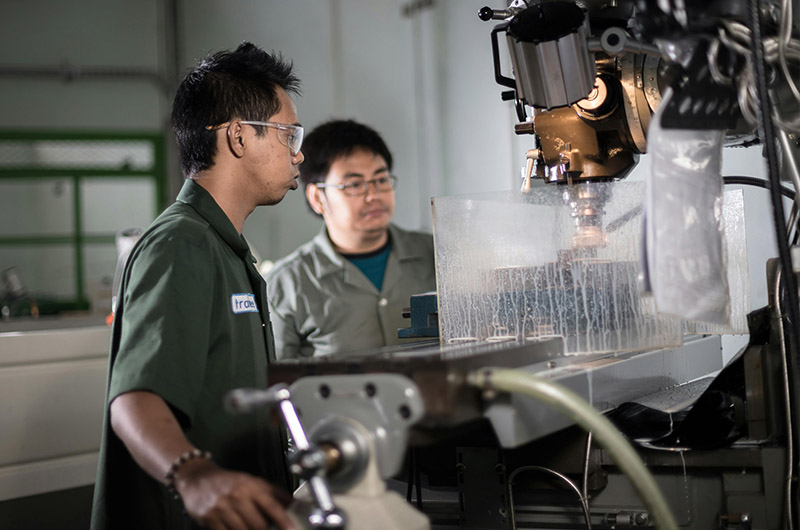
Introduction — Lead-in   Beyond the growth of CNC machine tools, the broader Metal Cutting Tools Market is also showing strong momentum. Industry forecasts indicate that from 2025 to 2034, demand for metal cutting tools — along with the related supply chain of tooling, components, and precision machining services — will continue expanding. This means that not only the machines, but the entire ecosystem including cutting tools and manufacturing-as-a-service providers will benefit.   For companies like ours, this represents four converging advantages: policy direction, industry expansion, supply chain evolution, and sustained demand for precision parts. We are well-positioned to move with the rising industry.   Key Discussion Points   1.Background of metal cutting tools market growth The expansion is largely driven by downstream industries such as automotive, rail transit, industrial automation, and medical equipment, where high-precision, multi-axis, and tight-tolerance parts are increasingly required — pushing both tooling consumption and outsourced precision machining demand upward.   2.Industry transition from standardized mass production to value-driven custom manufacturing The sector is moving away from volume-only and standardized production, toward custom dimensions, complex structures, premium materials (e.g., aluminum, stainless steel, non-ferrous metals), and integrated manufacturing solutions delivered as services rather than standalone products.   3.Strategic alignment with our capabilities Our strengths lie in a vertically integrated manufacturing chain that includes: Stable raw material supply (aluminum and stainless steel) Precision CNC milling and turning In-house surface processing (anodizing, electroplating, laser engraving, polishing, etc.) Non-standard customization and strict quality control systems   These end-to-end capabilities enable us to support customer demand for: supply chain integration · customization · high-quality delivery · process reliability · full inspection and traceability.   Conclusion   As the market for metal cutting tools and precision manufacturing services expands, the industry is accelerating toward higher value, non-standard customization, and more integrated supply chains.   With capabilities spanning raw materials → precision machining → surface finishing → custom delivery → full QC, we currently sit at a strong intersection of this shift. Clearly communicating this position through an independent website can enhance technical credibility and attract customers where precision, reliability, customization, and supplier integration are key decision factors.
CNC lathe2
8 , December

CNC Market Expansion — Rising Demand for High-Precision Custom Parts

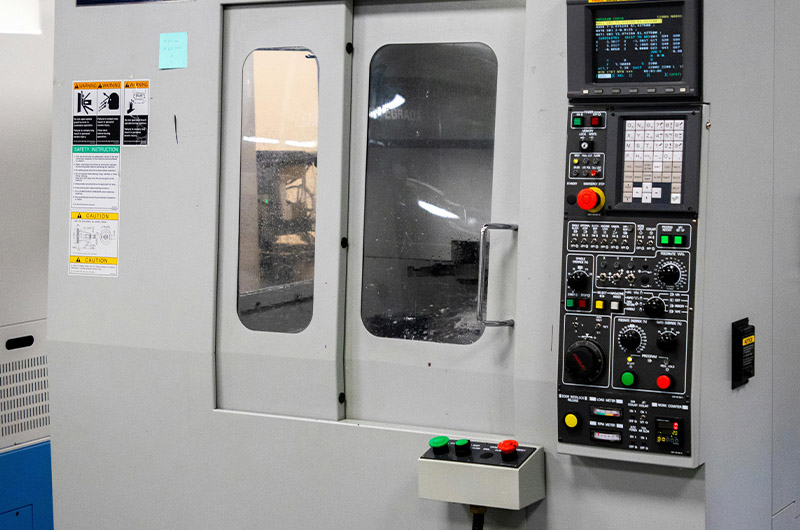
Introduction — Lead-in According to a recent industry report released by Custom Market Insights, the global CNC metal cutting machine tools market is projected to grow from USD 107.09 billion in 2025 to USD 252.67 billion by 2034, with a compound annual growth rate (CAGR) of approximately 10.2%. For companies like us focused on precision metal machining, CNC manufacturing, and custom part production, this indicates continued growth in demand for high-precision, non-standard, and engineered components over the coming years — a strong market opportunity.   Key Discussion Points 1.Global CNC growth trend and key drivers Accelerated by industries such as automotive, aerospace, rail transit, and smart manufacturing, demand for multi-axis, high-accuracy, and complex CNC-machined components is driving rapid market expansion.   2.From mass production to value-add and customization Customers are moving beyond purchasing standard parts. More RFQs now require tight tolerances, custom dimensions, specific materials (e.g., aluminum, stainless steel, non-ferrous metals), and structurally complex components tailored to mechanical and product architecture. 3.Alignment with our capabilities Our model naturally fits this industry transition thanks to our integrated strengths in: Aluminum and stainless steel raw material sourcing CNC milling and turning In-house surface processing (anodizing, electroplating, laser engraving, polishing, etc.) Flexible custom manufacturing for non-standard parts and components This positions us well within the broader shift toward premium precision parts, supply chain localization, engineered customization, and component-as-a-service manufacturing models.   Conclusion The global CNC machining market is undergoing rapid expansion, powered by continued growth in demand for high-precision, multi-axis, complex, and customized parts in high-standard industries.   For companies like ours with end-to-end capabilities spanning raw materials, deep machining, surface processing, customization, and full quality inspection, this period represents a core window of development opportunity.   Highlighting both industry trend alignment and production competence on an independent website can strengthen competitiveness and attract customers where precision, material reliability, process control, and supply flexibility matter most.

Products
Contacts
WhatsApp
Email