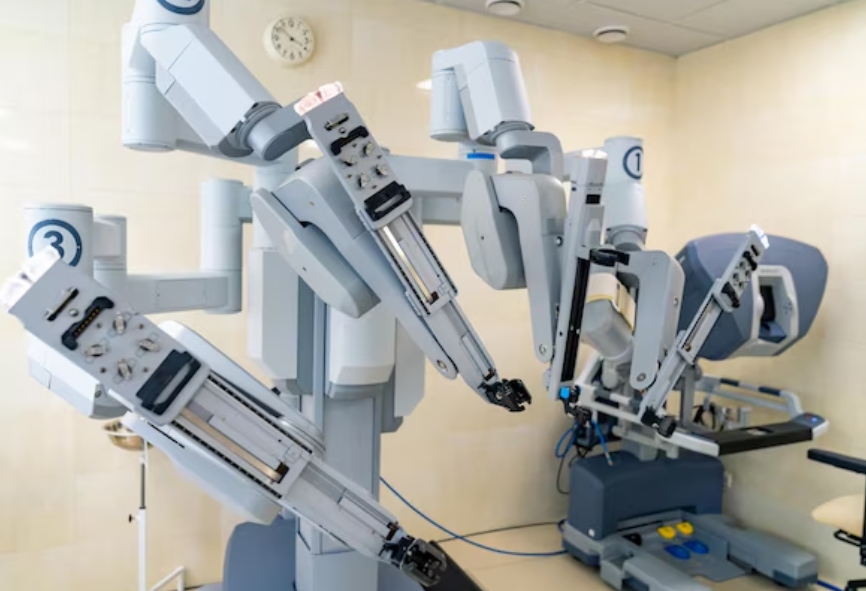
robotic-assisted operations become more common
20 , February

Precision that Saves Lives Navigating the Challenges of Medical Device Component Machining

Rejin CNC delivers ISO-certified, ±0.005mm precision machining for medical devices. High-performance biocompatible materials & 7-day rapid prototyping.
Questions You Must Ask Your Chinese CNC Machining Partner
12 , February

Beyond the Price Tag 5 Questions You Must Ask Your Chinese CNC Machining Partner

Sourcing CNC parts? Ensure ±0.005mm precision & IATF 16949 quality. Discover why Rejin’s 5-axis machining & in-house finishing are vital for your next project.
Rejin’s 5-Axis CNC is the Secret Behind Top-Tier UAV Frames
5 , February

Lightweight, High Strength: Why Rejin’s 5-Axis CNC is the Secret Behind Top-Tier UAV Frames

Elevate UAV performance with Rejin’s 5-axis CNC machining. Achieve ±0.005mm precision, 80% fewer setups, and Ra0.8 finish for complex aerospace-grade frames.
medical equipment
8 , December

Strong Growth in Stainless Steel Precision Machining — Rising Demand from 3C, Industrial Automation, and Medical Components

Introduction — Lead-in The 2025 Global Metal Processing Market Report highlights significant growth in demand for high-end precision parts, micro components, corrosion-resistant metals, industrial automation parts, and 3C device accessories. Compared with ordinary hardware, customers increasingly prefer suppliers capable of high-precision stainless steel machining, micro machining, custom non-standard components, and integrated multi-process manufacturing.   Key Discussion Points   1.3C sector (audio control panels, interface panels, headphone metal parts, device enclosures) Demand for stainless steel and micro machining has risen sharply, driven by miniaturization, functional complexity, and quality requirements of consumer electronics.   2.Industrial automation (sensor modules, control enclosures, precision connectors, micro-structured components) Clients emphasize process stability, tight tolerances, and consistent high-precision cutting, as these parts often underpin critical industrial operations.   3.Medical industry (surgical instruments, precision components, structural parts, shafts, bushings, corrosion-resistant components) Requirements are stringent: full traceability, strict quality control, rapid prototyping, and validation are essential, with no compromise on safety or regulatory compliance. Conclusion The future of hardware manufacturing is no longer simply “parts production” — it is service-oriented, precision-driven manufacturing.  
Precision hardware components for aerospace manufacturing
8 , December

Aerospace Manufacturing Is Upgrading — Precision Metal Components Become Core Demand

Intro At the 2025 Aerospace Manufacturing Technology & Process Innovation Summit, experts highlighted that the next 5 years of aerospace production will rely heavily on: Lightweight metal materials High-precision CNC machining Customized structural components This creates significant opportunities for metal machining suppliers.   1.Why Aerospace Demand for Precision Parts Is Growing Key reasons: Aircraft components are becoming lighter (aluminum, titanium alloys) More components require custom, non-standard CNC structures Higher corrosion & fatigue resistance requirements Tight tolerance and high consistency are mandatory → Professional precision machining is essential.   2.Capabilities Most Favored in Aerospace Supply Chain These were repeatedly mentioned: High-precision CNC milling & turning Aluminum 6061/7075 machining Stainless steel 304/316 structural parts Complex surfaces, multi-hole, multi-process machining Anodizing, sandblasting, laser engraving   3.Why Aerospace Buyers Choose China for Precision Machining High-accuracy equipment Experienced engineers Excellent cost-performance Fast delivery, small-batch friendly Advanced surface finishing
Introduction Lead-in
8 , December

Aluminum Industry Policies & Market Trends — New Expectations and Emerging Opportunities for Mid- and Upstream Enterprises

Introduction — Lead-in In 2025, with the release of the Implementation Plan for High-Quality Development of the Aluminum Industry (2025–2027) in China, the aluminum supply chain has entered a new policy-driven phase emphasizing resource security, green and low-carbon transition, industrial synergy, technological advancement, and recycling utilization.   For mid- and upstream players — including aluminum material suppliers, precision manufacturing providers, and surface finishing processors like ours — this represents both new challenges and new structural opportunities. Industry standards are rising, downstream customers are strengthening requirements for environmental compliance and sustainable manufacturing, and many projects are showing increased willingness to accept premium pricing for qualified high-quality and greener processing supply chains.   Key Discussion Points   1.Key policy directions and industry development keywords The plan highlights durable themes for the aluminum sector over the coming years, including: raw material security · equipment and technology upgrades · intelligent tooling systems · green and smart manufacturing · full-chain industrial collaboration · recycling and circular utilization.   2.Impact across the value chain Material suppliers are increasingly expected to guarantee long-term stability and traceability in aluminum resource supply.Manufacturing and machining providers are required to support higher precision, improved efficiency, lower energy consumption, and environmentally compliant production.Surface and post-processing services must align with tighter environmental and technical standards defined by downstream application sectors.   3.Position-fit with our capabilities Our structure is naturally aligned with both policy expectations and evolving OEM/ODMs thanks to integrated strengths such as: Aluminum raw material supply (profiles, plates, bars, tubes, forged blanks) Precision CNC machining (milling, turning, multi-axis, compounded processes) In-house surface and finishing processes (anodizing, electroplating, polishing, sandblasting, laser engraving, screen printing, etc.) Process QC systems ensuring defect control, tolerance compliance, and delivery consistency. By continuing to enhance energy-efficient, compliant, and sustainable machining practices, our model fits industry direction and customer evaluation frameworks.   Conclusion With both policy frameworks and industry standards accelerating toward green, intelligent, circular, high-value, and synergy-driven aluminum supply chains, mid- and upstream enterprises will face upgraded production thresholds and new client expectations.   Companies that extend strengths in supply chain integration + high-precision machining + sustainable and compliant manufacturing will enter a critical window of development opportunity.

Products
Contacts
WhatsApp
Email