Custom Metal Parts: Choosing Between CNC Turning and Milling
Custom Metal Parts: Choosing Between CNC Turning and Milling
Eren
16th July 2026
Choosing the right manufacturing method often decides how well B2B buyers can match part performance with overall costs. At Rejin CNC, we know precision comes as standard. Yet steady output during large runs is what really sets companies apart. Our team draws on more than 23 years in engineering. The shop holds ISO 9001:2015 and IATF 16949 certification. From this base, we turn detailed drawings into parts that can be produced at scale. The same support applies when teams build lightweight UAV structural frames or pro-audio housings that must look right. In these cases, knowing how CNC Turning differs from CNC Milling helps shape the full production plan.
Understanding the Fundamentals: Rotational Bodies vs. Prismatic Geometries
These two subtractive processes differ mainly in how the workpiece meets the cutting tool. That link decides which shapes each method handles best. Picking the right route in the Design for Manufacturing phase can cut material waste by up to 30 percent and trim lead times.
CNC Turning: Mastering Rotational Symmetry
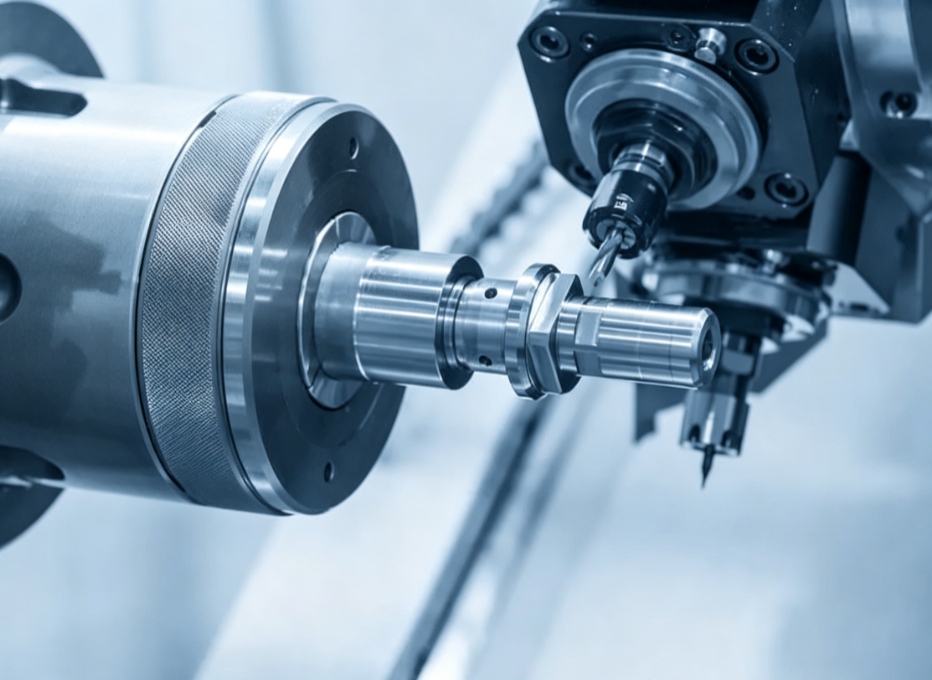
CNC Turning is a high-speed subtractive process. A cylindrical bar spins in a chuck while a single-point cutting tool moves along its length to shape the part.
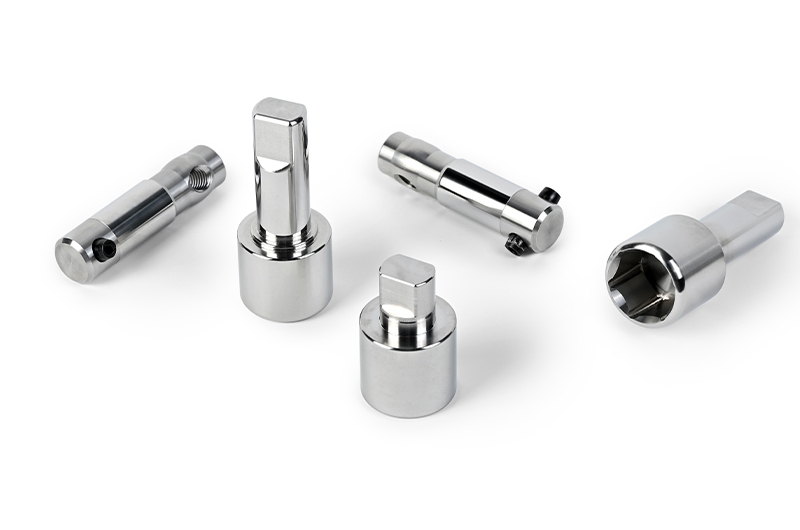
Axial Symmetry Focus: This method is the “gold standard” for shafts, pins, custom fasteners, and high-end audio knobs that need perfect concentricity inside mechanical assemblies.
Superior Surface Integrity: The cutting tool stays in steady contact with the rotating surface. High-precision CNC Turning therefore reaches smooth finishes, often at Ra 0.8μm without extra polishing.
High-Volume CNC Turning Production: Automatic bar feeders and high-speed spindles let the workshop reach a monthly output of over 20,000 units for standard parts such as automotive connectors.
Micron-Level Tolerance Control: The advanced lathes hold critical dimensions to within ±0.01 This level matters for interference-fit bearings and sealing surfaces.
CNC Milling: Precision for Prismatic and Complex Shapes
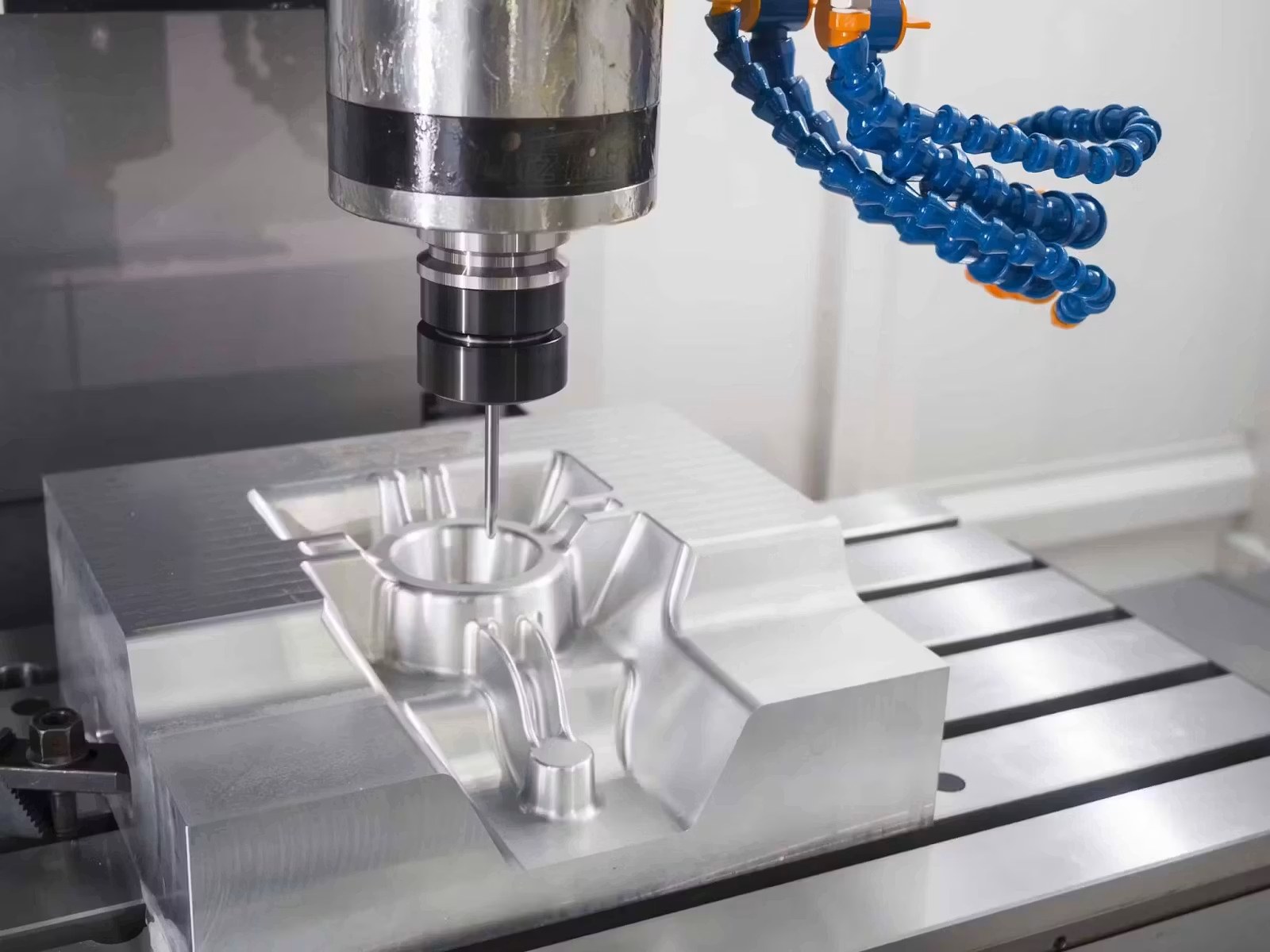
CNC Milling holds the workpiece on a stationary bed. Multi-point tools rotate at high speeds to remove material along three, four, or five axes.
Prismatic Geometry Versatility: Precision CNC Milling services fit enclosures, engine blocks, manifolds, and brackets that need flat faces, internal pockets, and slots.
Multi-Axis CNC Milling Solutions: Beyond basic 3-axis movement, the 4-axis and 5-axis centers reach the part from different angles. They create complex 3D curved surfaces for medical implants or aerospace structural joints.
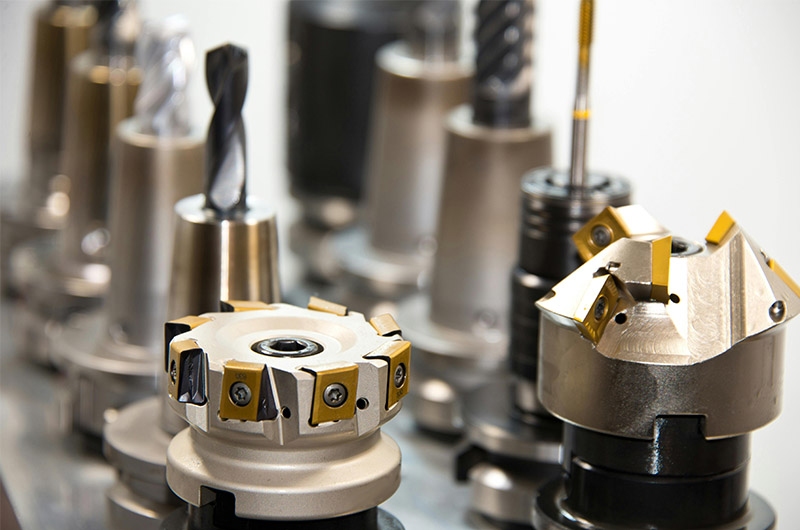
Integrated Tooling Diversity: An Automatic Tool Changer lets the milling centers switch between face mills, drills, and end mills in one program. This completes multi-faceted work without manual tool changes.
Material Compatibility: CNC Milling works across aerospace-grade 7075 aluminum, 316 stainless steel, and high-performance engineering plastics like PEEK.
Process Comparison: Technical Decision Matrix for B2B Sourcing
The table below offers a quick guide for procurement teams that need to pick the most cost-effective route for custom metal parts.
Feature
CNC Turning
CNC Milling
Workpiece Motion
High-speed rotation in a chuck
Stationary / Fixed on a bed
Tooling Type
Single-point (usually stationary)
Multi-point (rotating cutters)
Primary Part Geometry
Cylindrical, Conical, Rotational
Square, Prismatic, Irregular
Surface Finish (Ra)
Often smoother (< 0.8μm)
Dependent on step-over / tool path
Best Applications
Shafts, fasteners, knobs, bushings
Enclosures, brackets, heat sinks
High-Volume Efficiency
Very high (Bar feeder compatible)
High (Multi-part fixturing)
Critical Tolerance
±0.01mm
±0.01mm to ±0.02mm
Bridging the Gap: The Synergy of CNC Turning and Milling
Modern manufacturing has moved beyond rigid process silos through the adoption of multitasking “turn-mill” technology, which merges the benefits of both worlds. At Rejin CNC, we utilize this hybrid approach to eliminate cumulative errors and provide more competitive pricing for complex designs.
Integrated Turn-Mill Machining: One-Hit Production
By equipping a CNC lathe with “live tooling,” we can perform milling, drilling, and tapping operations—such as milling flats onto a shaft—without removing the part from its initial clamping.
Elimination of Clamping Errors: Completing CNC Turning and Milling in a single setup ensures that secondary features remain perfectly aligned with the central axis, which is crucial for automotive fluid systems.
Drastic Lead Time Reduction: Integrated processing can shorten the total manufacturing cycle from 12 days to just 5 days by removing the need for part transfer and secondary fixturing.
Lower Total Cost of Ownership (TCO): Fewer setups mean less labor and fewer custom fixtures, allowing us to pass the cost savings directly to our clients for mid-to-high volume orders.
5-Axis CNC Milling: The Peak of Geometric Freedom
Our 5-axis CNC Milling adds two rotational axes, A and C, to the usual linear moves. This setup reaches the top level of complexity for tough aerospace and medical parts.
Organic Curved Surfaces: It offers the best way to machine tricky shapes such as turbine blades, drone frames, or custom medical implants. The work stays within micron-level accuracy.
Optimized Surface Quality: The linked 5-axis motion keeps the tool at the right angle to the part. This cuts down vibration and delivers a finish as smooth as a mirror, below Ra 0.8μm.
Industrial Efficiency Gains: One project showed clear gains. 5-axis work took a new energy vehicle motor housing from 120 minutes down to 45 minutes.
Rejin CNC: Technical Depth and Vertically Integrated Services
Rejin CNC sits in Dongguan and works as a factory-direct maker. We focus on supply-chain links that run from raw stock to finished parts. All steps take place under one IATF 16949-certified roof.
Engineering-First Approach and DFM Support
Our factory runs more than 100 machining centers. These include 3-axis, 4-axis, and 5-axis CNC machines that hold tolerances at ±0.01 mm.
Rapid DFM Feedback: Our engineers check CAD files within 24 hours. They flag design choices that raise cost, such as walls that are too thin or pockets cut deep inside.
Extensive Equipment Capacity: We run more than 100 machining centers. High-end names like Mazak and DMG MORI-style 5-axis units sit in the lineup.
Material Versatility Expert: We keep steady stock on hand. The list covers Copper, Stainless Steel (303, 304, 316), Aluminum (6061, 7075), Titanium, and engineering plastics like PEEK and POM.
Surface Treatment Integration: From Anodizing to Laser Engraving
Rejin CNC stands out with in-house surface treatment. This setup keeps color stable and appearance consistent across large production batches.
High-Gloss Anodizing: Our automated anodizing lines provide durable, corrosion-resistant finishes that meet the high-end aesthetic standards of the 3C electronics and pro-audio industries.
Precision Sandblasting and Polishing: We offer various textures, from a uniform matte sandblast to mirror-like polishing, providing the ideal tactile feel for consumer-facing products.
Permanent Laser Marking: Utilizing high-energy fiber lasers, we provide sharp, fade-resistant graphics and serial numbers directly onto your CNC Turning and Milling components.
Strategic Decision Making: Industry Insights and Design Challenges
Successful B2B procurement requires more than just looking at a price tag; it requires an understanding of how production volume and design challenges affect the long-term stability of the supply chain.
Volume Thresholds: CNC Machining vs. Metal Stamping
A common challenge for procurement managers is deciding when a design should transition from CNC Turning or CNC Milling to high-efficiency processes like precision metal stamping.
Prototyping & Rapid Iteration (1–500 units): Custom CNC Milling parts are the optimal choice. There are no expensive mold costs, and designs can be modified in minutes by updating the CNC program.
The “Transition Zone” (500–1,000 units): Depending on geometric complexity, high-speed CNC Turning services may still be more cost-effective than investing in a complex stamping die for rotational parts.
High-Efficiency Mass Production (1,000+ units): For simple, flat, or formed shapes such as internal brackets, precision metal stamping offers significant cost advantages due to high forming speeds and lower unit costs.
Overcoming Thermal Distortion and Chip Control
Machining high-performance alloys like Titanium or Stainless Steel creates mechanical stresses. These stresses can affect part accuracy when not handled well.
Managing Thermal Expansion: Long CNC Milling runs build up heat in thin-walled aluminum housings and cause warping. Chilled high-pressure coolants combined with careful tool paths hold tolerance at ±0.01mm.
Effective Chip Evacuation: Deep-hole CNC Turning on stainless steel often produces stringy chips that harm surface finishes. Peck-drilling cycles and special tool shapes keep the cutting zone clear.
Irregular Workholding Solutions: Non-standard shapes call for custom vacuum or soft-jaw fixtures. These setups provide steady support during heavy cuts and deliver a 99.5% size pass rate.
Case Studies: Solving Complex Challenges in Global Supply Chains
To demonstrate our commitment to quality, we highlight two real-world scenarios where Rejin CNC helped global brands overcome critical manufacturing hurdles.
Case 1: Pro-Audio Aesthetics (A European Headphone Brand)
We supported a prominent European headphone brand in scaling the production of their premium earphone housings, where the “feel” was as critical as the “fit”.
The Challenge: The client required a horizontal brushed finish with perfectly consistent black anodizing across a monthly volume of 20,000+ units.
The Solution: We combined high-speed CNC Turning for the main body with in-house sandblasting and a specialized anodizing process.
The Result: We achieved a 100% on-time delivery rate, and the brand reported a 20% increase in customer repurchase rates due to the improved premium tactile quality of the metal components.
Case 2: Automotive Durability (Tier 1 Supplier)
For a global Tier 1 automotive parts supplier, we provided critical stainless steel connectors for vehicle fluid transfer modules.
The Challenge: These connectors needed to withstand high-pressure cycles and maintain a perfect seal, requiring extremely tight thread tolerances in AISI 304 Stainless Steel.
The Solution: Using high-precision CNC Turning, we held concentricity within micron levels and implemented 100% thread-plug gauge verification.
The Result: We reduced the sampling lead time from 12 days to just 5 days, helping the client clear field testing ahead of schedule with zero reported leakage issues.
Start Your Precision Journey with Rejin CNC
Choosing between CNC Turning and CNC Milling is a fundamental decision that impacts your product’s lead time, aesthetic quality, and commercial success. By partnering with Rejin CNC, you gain an engineering ally dedicated to optimizing your designs for the most efficient production path. From our initial 24-hour quotation to our final 100% quality inspection, we are committed to being your most reliable manufacturing partner in China.
Email: nicole@rejincnc.com
WhatsApp/Phone: +86 13790500374
FAQ
Q: What is the typical lead time for a custom CNC machining project?
A: For quick prototypes made with CNC Turning and Milling, we ship in 2 to 5 days. Low-volume runs usually take 2 to 4 weeks. Time varies with part complexity and any surface finishes required.
Q: How does Rejin CNC ensure a “99.5% pass rate” for high-volume orders?
A: Our checks run in stages. We begin with First Article Inspection (FAI), pull samples during production, and measure every critical dimension at the end using CMMs and optical systems.
Q: Can you machine high-performance alloys and engineering plastics?
A: Yes. Our team has worked with high-strength metals such as Titanium and 42CrMo. We also handle engineering plastics including PEEK, POM, and ABS.
Q: What is the minimum order quantity (MOQ) for custom parts?
A: For CNC Turning and Milling prototyping, we set no MOQ. You can order just one part. High-volume stamping has an MOQ based on tool life and project size. We cover the details in your quote.
The ordering process is simple:
1.Submit your design files
2.Select materials and manufacturing processes
3.Receive quotation
4.Confirm the order
5.Production and delivery
We provide a wide range of services, including CNC Machining Services, Sheet Metal Fabrication, Surface Finishing Solutions, and DFM Analysis Support.
We offer multiple CNC machining materials, such as Copper (Cu), Iron (Fe), Aluminum (Al), Stainless Steel, and Engineering Plastics.
We accept credit card, PayPal, and T/T Bank Transfer.
Yes. You can track your order via our online tracking system or contact our support team through Customer Support Team.
Our CNC machining delivers high precision, typically with a tolerance up to ±0.005mm, depending on the material and complexity of the part.
Yes. We offer design and engineering assistance to bring your ideas to life. Our team can help with product design, prototyping, and optimization.
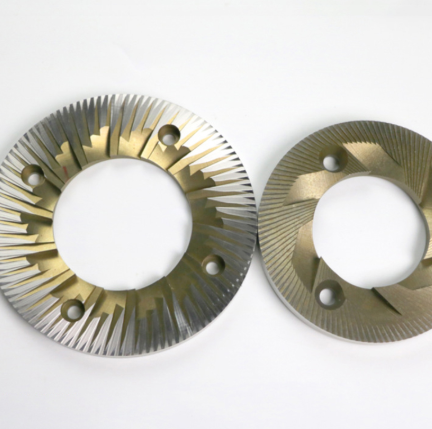
A professional manufacturer specializing in custom, non-standard CNC machining of mechanical parts. We can tailor-make a wide range of special housings and other coffee machine components according to customer requirements, with a broad selection of materials available. Feel free to contact us for inquiries!
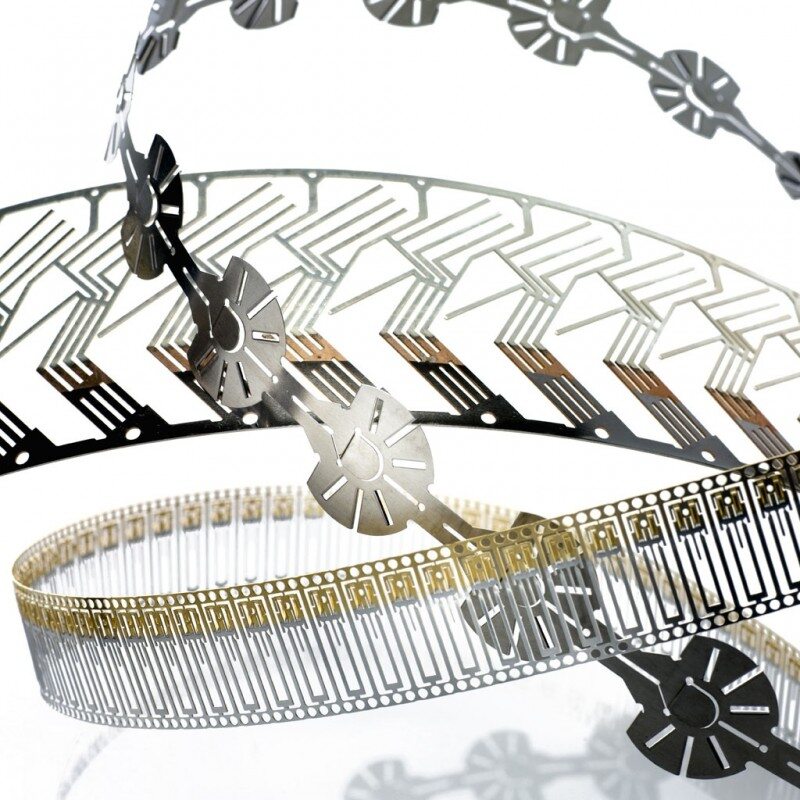
Rejin CNC manufactures precision stamping parts with high dimensional accuracy and consistent quality. Our metal stamping components are widely used in electronics, automotive, and industrial equipment, supporting OEM & ODM production.
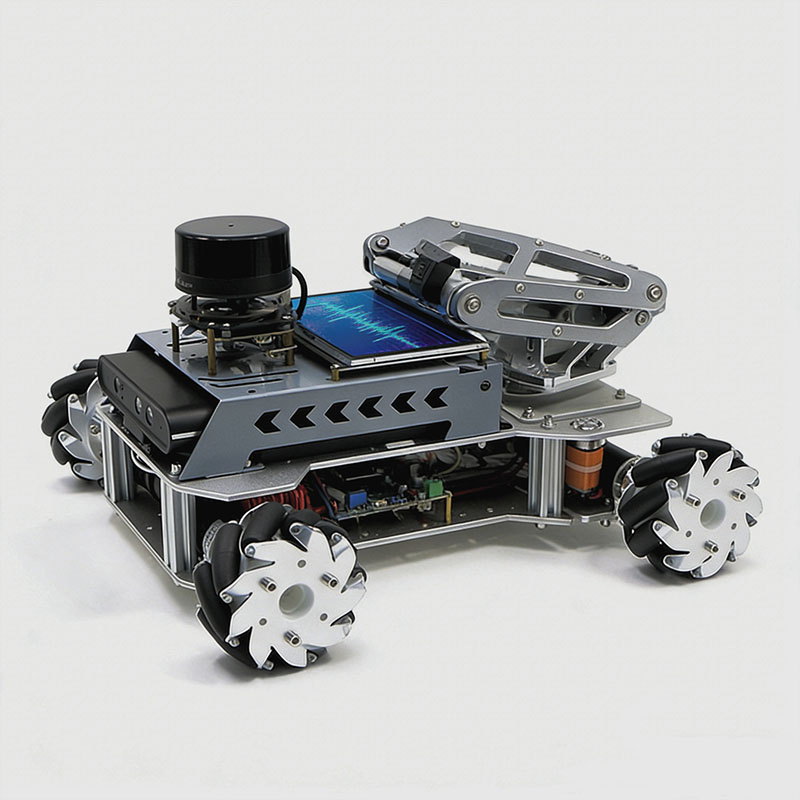
These CNC machined robot components are designed for robotic systems, including joint parts, shafts, and structural components. High precision ensures smooth motion and long-term stability.

 Eren
Eren