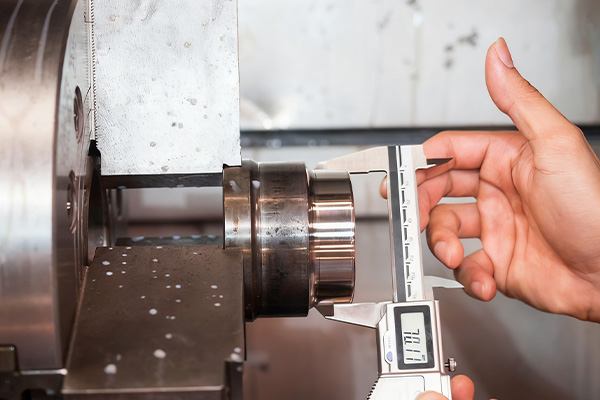
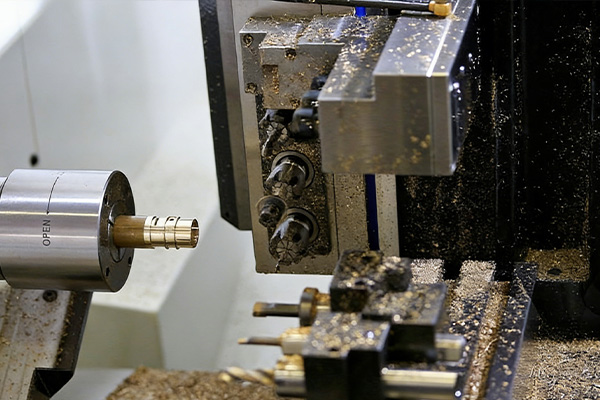
CNC turning is a machining process where the workpiece rotates while a fixed cutting tool removes material. Think of it as an “advanced pottery lathe”: the spindle spins the workpiece at high speed while the cutting tool follows a programmed path to shape it. Ideal for shaft and rotational parts.
CNC turning has become a mainstream process in precision hardware machining due to four core advantages: ① High precision and repeatability, as program control guarantees highly consistent specifications for batch – produced parts; ② High – efficiency integration, modern CNC lathes are equipped with automatic tool changers and live tool turrets, which can integrate operations like drilling, milling, and tapping to shorten delivery time; ③ Wide material adaptability, capable of processing various metals such as stainless steel, aluminum alloy, titanium alloy, copper, as well as engineering plastics; ④ Flexible adaptability, suitable for both small – batch prototyping and large – volume foreign trade orders, widely applied in manufacturing precision parts for industries including automotive, aerospace, medical, and electronics.
CNC turning is a subtractive manufacturing process. Its core lies in using computer – programmed cutting tools to precisely machine a high – speed rotating workpiece for material removal. The workpiece is clamped in a chuck and rotated at high speed, while the cutting tool feeds along paths such as the X and Z axes. It can finish multiple operations like external turning, boring, facing, threading, and grooving in a single setup. Unlike conventional lathes, it achieves automated machining via digital programming, with tolerances reaching ±0.005–0.01mm, suitable for batch and custom production of various rotational hardware parts including shafts and disks.