
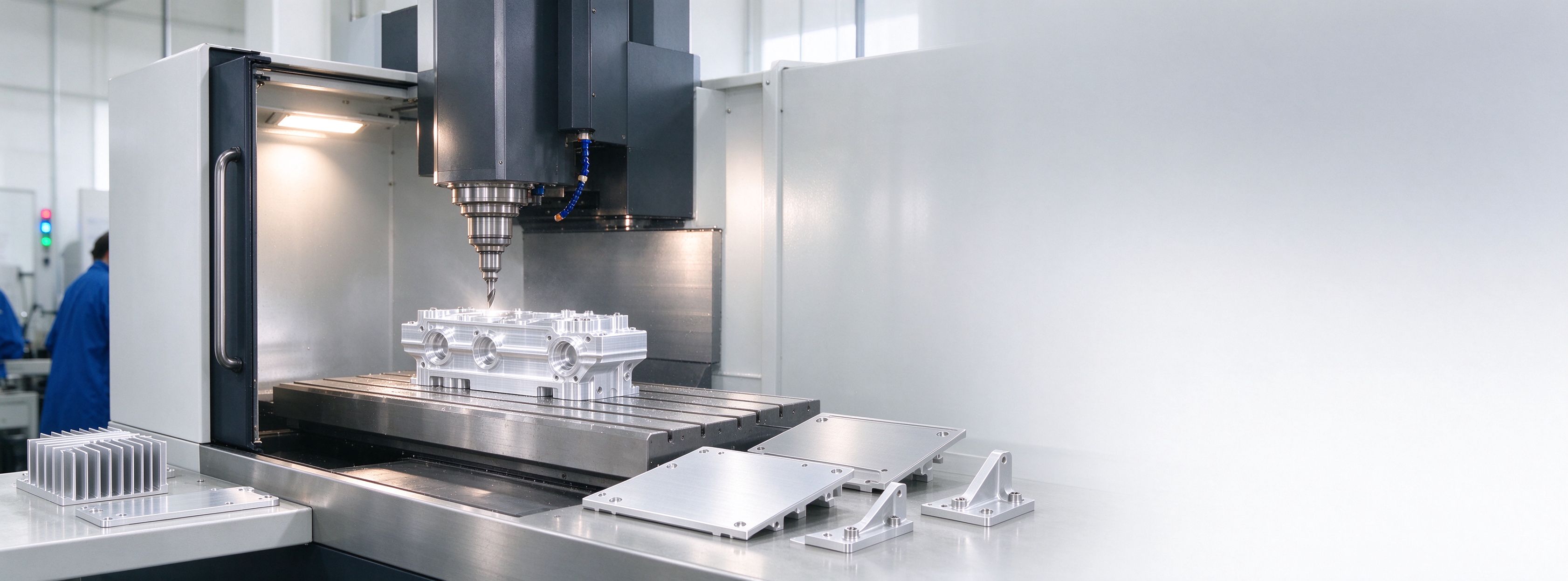
Low-Volume CNC Machining: Sourcing for Prototyping Rapid Hardware
-
Eren
- 6th noviembre 2026

Navigating Low-Volume CNC Machining for Hardware Innovation
Connecting the validation process for the concept and actual mass production stage is one of the most important stages in developing hardware products. The hardware engineering group should achieve fast processing times while meeting strict size limits and keeping in mind the limited amount of financial capital to spend. Digital manufacturing can offer an option for low-volume CNC machining projects without spending on custom tooling.
Introduction: Bridging Design Validation and Scale
In the introduction of new hardware products or manufacturing moderate quantities of 10 to 1,000 units, there comes a time in procurement when a choice must be made at the manufacturing crossroads. Going for high-volume sheet metal stamping in the beginning will cost a lot of money in unamortized hard tooling in case any changes are required. On the other hand, depending on rapid prototyping services does not always lead to the mechanical tolerance and surface finish expected in production. Therefore, it is important to consider CNC machining versus metal stamping early in the production planning process.
Going for low-volume CNC machining is one of the best manufacturing techniques. This way, engineering teams get real production-grade, low-volume CNC parts made from aluminum, stainless steel, and engineering plastics without the NRE costs of dies. It does not matter whether you need a prototype CNC machining service for functional tests, CNC machining for pilot production as preparation for market trials, or bridge production CNC machining while waiting for mass production tooling.
Rejin CNC: Engineering Precision for Global B2B Hardware
Rejin CNC acts as a vertically integrated direct manufacturer in China, offering factory-direct manufacturing without third-party markup.
- Manufacturing Scale & Fleet: Offers a 20,000 m² owned factory with 200+ CNC machines comprising 3-axis, 4-axis, and 5-axis milling machinecenters, Swiss machines, and internal surface finishing machines.
- Quality Certification: Has ISO 9001:2015 & IATF 16949 certification for a quality management system providing complete traceability of all batches.
- Engineering Efficiency: Provides free engineer-led DFM analysis and quotes directly from senior CAM engineers for any project.
- Global Delivery Services: Acts as a partner to OEM hardware brands in more than 60 countries, providing door-to-door delivery with NDA protection for IP.
Low-Volume Production vs. High-Volume Metal Stamping: Strategic Cost & Process Comparison
Selecting between CNC machining vs. metal stamping requires a rigorous evaluation of unit economics, geometric complexity, and product lifecycle stability.

Tooling Amortization and Financial Break-Even Analysis
Analysis of the cost comparison between low-volume CNC machining and metal stamping is based on the initial cost of tooling versus part cycle costs.
- Cost of Tooling Investment (NRE): Metal stamping uses progressive dies costing from $15,000 to $60,000. This creates a huge barrier for early-stage production. On the other hand, short-run CNC machining does not need any hard tooling. Modular workholding and CAM programming are used in CNC machining.
- Break-even Point: When producing between 10 and 1000 parts, the cost per part of amortizing the stamping dies is higher than that of machining. CNC machining for 10 to 1000 units gives a lower cost of ownership since there is no tooling amortization.
- Efficiency and Setup Time: Although stamping uses sheet coil material quickly, short-run CNC machining reduces tooling setup time, which takes 8-12 weeks for stamping dies compared to 3-7 days for CNC machining.
Engineering Flexibility and Design Revision Control
Hardware engineering change orders (ECOs) often come up during the pilot stage of hardware development.
- Modification due to CAD Changes: In the process of moving from prototype to manufacturing for CNC machining, changes such as changes in the location of holes or wall thickness are made easy through modifications in the CAD/CAM model. But the stamping die will undergo costly and time-consuming changes to the physical tool.
- Complex Geometries/Wall Thicknesses: Metal stamping is capable of working with sheet metal gauges only. CNC machining allows changes in wall thicknesses and complex internal geometries such as blind holes and threads.
Core Engineering Technologies, Materials, and Applied Scenarios
The application of state-of-the-art multi-axis machining technology enables hardware manufacturers to attain exacting control over geometrical features in a range of metal types through CNC machining systems.
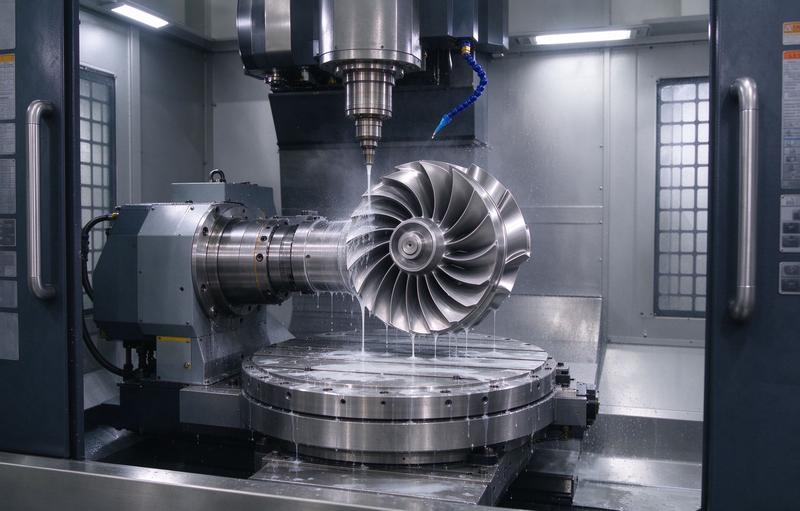
Multi-Axis Machining and Surface Finishing Capabilities
Integration of high-speed milling and turning, along with in-house finishing, leads to high-level accuracy and aesthetically superior parts.
- Simultaneous 5-Axis Milling: Eliminates multiple clamping setups and maintains tolerances of ±0.005mm for intricate geometries, recessed pockets, and angled holes without causing any stack-up error.
- Precision CNC Turning & Swiss Machining: Manufactures round rotating parts, shafts, and screw-type fasteners with surface roughness up to Ra 0.4 µm.
- Aluminum Machining: Precision machining of aluminum alloy 6061-T6, 6063-T5, and 7075-T6 is done through a low-volume process, which results in a superior strength-to-weight ratio and high thermal conductivity of the material.
- In-House Surface Finishes: Type II/III anodizing, bead blasting, passivation, and laser etching of parts in our facility result in a consistent finish in all lots produced.
Field-Proven Problem Solving across High-Tech Industries
Rejin CNC offers engineered products based on custom-designed engineering solutions that cater to industrial demands:
- Electrónica 3C: Solves challenges like EMI Shielding and tolerances by machining thin-wall aluminum housing and SUS304 shaft-sleeve assembly within ±0.005 mm roundness tolerance.
- Automotive & Electric Vehicle Powertrains: Machining of fluid connectors, motor flanges, and battery end plates with certifications of IATF 16949 PPAP and pressure/leak testing.
- Robotics & Automation: Machining of high-strength 7075-T6 robot joint housing and arm links with 0.01 mm coaxiality tolerance to solve servo mounting backlash.
- Thermal Management: Machining of highly efficient skived fin and customized aluminum heat sinks with 0.5 mm fin pitch for electronic applications with high power.
- Custom Hardware & Fastener Solutions: Custom machining of screws, pins, and threaded bushings with 100% thread plug gauging certification.
Case Studies with Volume Benchmarks
Capabilities demonstrated by successful production runs:

Pilot Automotive Fluid Connector Run (50 pieces):
- Problem: An electric vehicle manufacturer wanted AISI 304 stainless steel connector assemblies with stepped sealing shoulders to perform high-pressure fluid tests.
- Solution: Rejin CNC produced the parts using multi-axis CNC turning, thread plug-gauge verification, and 100% pressure-cycle testing to deliver 50 units in 7 days for field testing.
Robotic Joint Housing Bridge Order (200 pieces):
- Problem: A robotics original equipment manufacturer required arm housings made of 7075-T6 aluminum with ±0.005 mm bearing bore tolerance before committing to mass tooling.
- Solution: Rejin CNC produced the parts using small-batch CNC milling on 5-axis trunnion centers in one setup, removing any setup drift and shipping 200 CMM-inspected parts in 12 days.
Hi-Fi Audio Front Panel Production Run (500 pieces):
- Problem: A premium audio brand required control panels of cosmetic-grade 6063-T5 aluminum with no surface defects.
- Solution: The parts were machined in a single 5-axis datum setup with ±0.02 mm tolerance, then bead-blasted and Type II clear anodized in-house with no rework in the batch.
DFM Guidelines and Third-Party Verified Quality Assurance
To optimize manufacturing efficiency and verify dimensional accuracy, Rejin CNC applies strict engineering guidelines and auditable quality protocols.

Design for Manufacturability (DFM) Evaluation Criteria
Engineering Drawings go through extensive initial screening to reduce costs:
- Internal Corner Radii: Eliminate 90° internal vertical corners and make use of radii equal to or greater than 1/3 of pocket depth to accommodate a standard end mill without using slow EDM.
- Wall Thickness Limitations: Ensure that there are minimum wall thicknesses of 0.5 mm for aluminum and 1.0 mm for stainless steel in order to avoid chatter and deformities during machining.
- Tolerances Optimization: Use strict tolerances of ±0.005 mm only for important mating bores and bearing seats while using commercial tolerances of ±0.05 mm for other features.
| Design Feature | Unoptimized (High Cost) | DFM-Optimized (Cost-Effective) |
| Internal Pocket Corners | Sharp 90° Vertical Edges | Radius ≥ 1/3 Pocket Depth |
| Wall Thickness | < 0.4 mm Thin Walls | ≥ 0.5 mm (Al) / 1.0 mm (Steel) |
| Tolerance Allocation | Global +/-0.005 mm Callouts | Critical +/-0.005mm; General 0.05mm |
Quality Systems and Third-Party Auditable Proof
Certified measuring systems verify the quality control process:
- 3D CMM & In-Process Probing: Dimensional checks through in-machine probes during the cutting process are followed by the 3D CMM coordinate measuring machine system.
- Raw Material Traceability: Mill certificates and batch traceability are provided with all shipments.
- Corrosion and Functional Testing: In-house neutral salt spray testing ASTM B117 assesses the quality of the anodized coating for humid environments.
Scaling Your Pilot Run with Rejin CNC: Call to Action
Collaborating with a dependable low-volume CNC machining vendor in China is key to avoiding production delays and ensuring consistent part lead times. Rejin CNC offers prototype-to-production CNC machining, pilot run CNC machining, and bridge production CNC machining to create prototypes and pilot runs from 3D CAD files within 3 to 7 days.
Upload STEP, IGES, or DWG files to get a free, thorough DFM analysis and a formal 24-hour quotation from the senior manufacturing engineering team.
Preguntas frecuentes
Q: How does low-volume CNC machining perform financially compared to metal stamping with regard to 100 – 500 units?
A: With regard to production quantities ranging from 100 – 500 units, low-volume CNC machining without any tooling eliminates the initial upfront NRE cost of a die that can range from $15,000 to $60,000 which is necessary for stamping parts.
Q: What are the tolerances that can be achieved in a pilot run of 1,000 units?
A: Precision machining achieves stable production tolerances of ±0.005 mm in the production of critical bearing bores and diameters of turned parts.
Q: How fast is the DFM review and prototyping completed?
A: Experienced engineers deliver CAD DFM reviews and quotes within 24 hours. Batches of 1 – 10 parts are normally shipped between 3 and 7 days.
Q: What kind of inspection reports come with your low-volume OEM production shipments?
A: Full reports include First Article Inspection (FAI), 3D CMM Dimension Verification, Mill Certificates of Materials, and REACH/RoHS Compliance Documentation.
Entradas recientes

Thermal Management Design: Why CNC Machined Heatsinks Outperform Extrusions
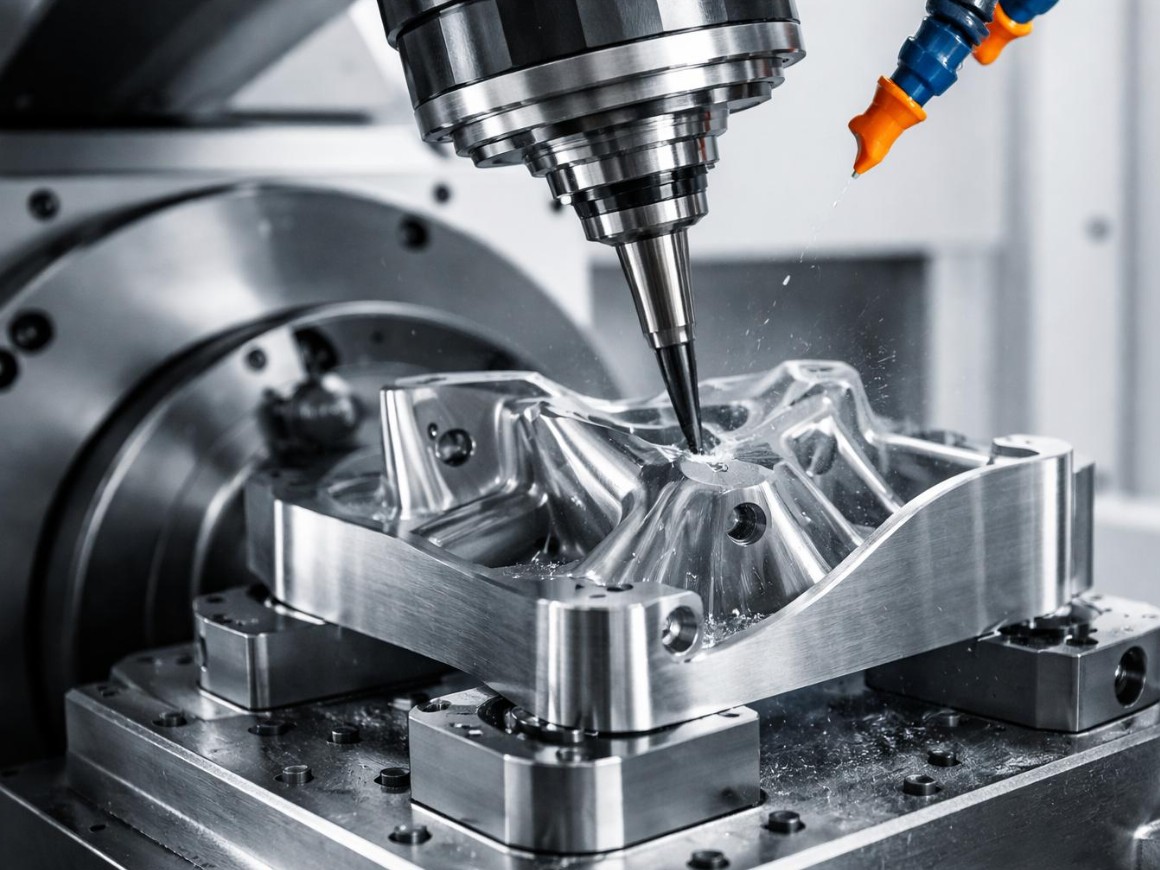
How to Design Internal Corners and Undercuts for Cost-Effective CNC Milling

How to Manufacture Aluminum iPad Hubs & Docks Without Overheating
PRODUCTOS RELACIONADOS
Piezas que mecanizamos a diario
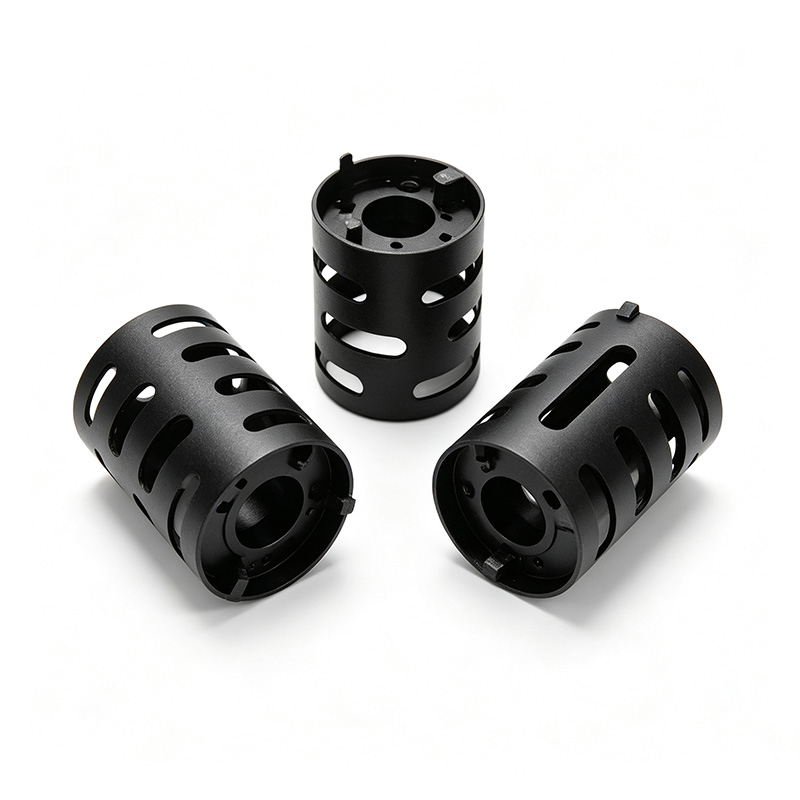
CNC Machined Aluminum Heat Sink Sleeves & Motor Cooling Cages
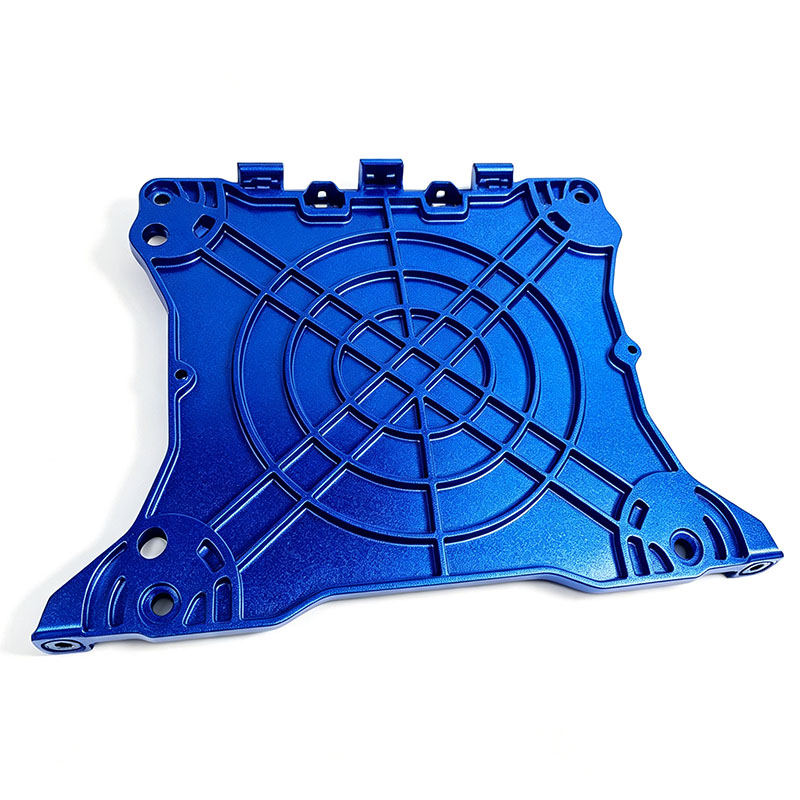
CNC Aluminum Automotive Brackets & Lightweight Structural Links
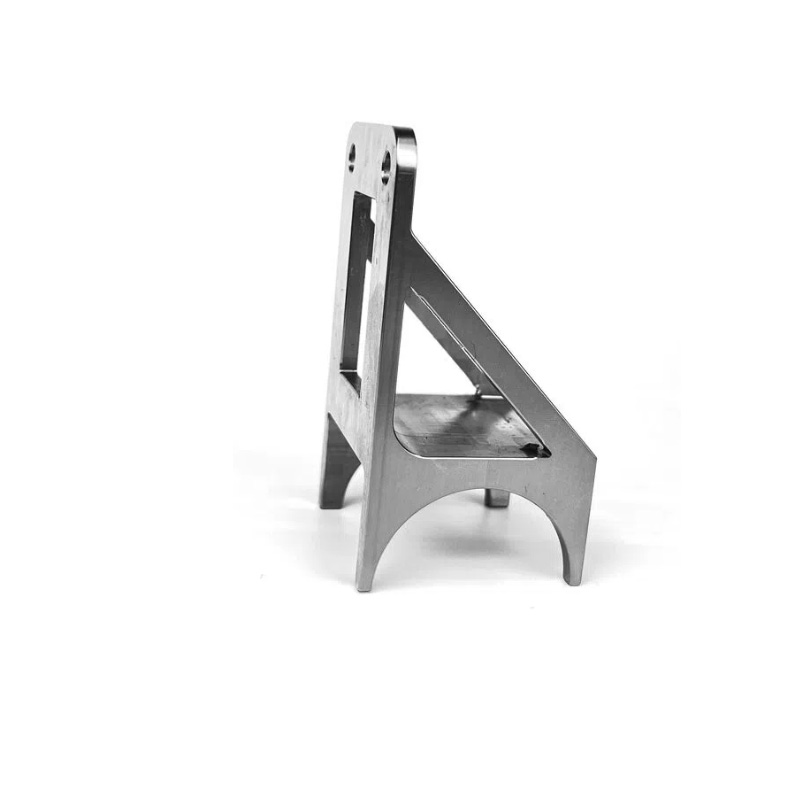
CNC Machined 304 Stainless Steel Support Brackets for UAV Avionics & Sensor Mounts

CNC 5-Axis Aluminum Tri-Arm Structural Hub for UAV Airframes
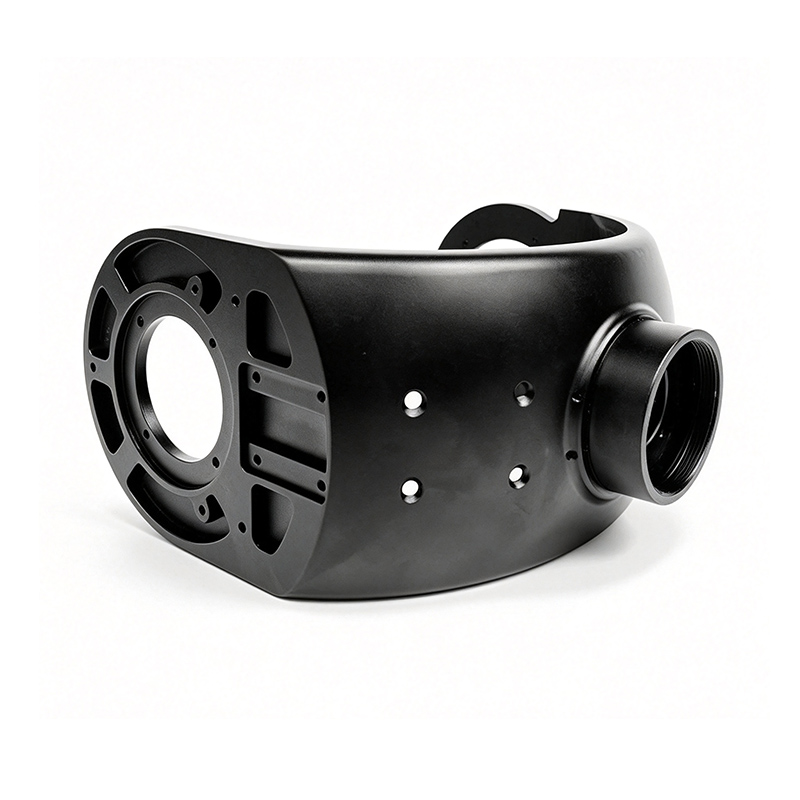
CNC UAV Camera Gimbal Brackets & Yoke Frames | 6061 Aluminum
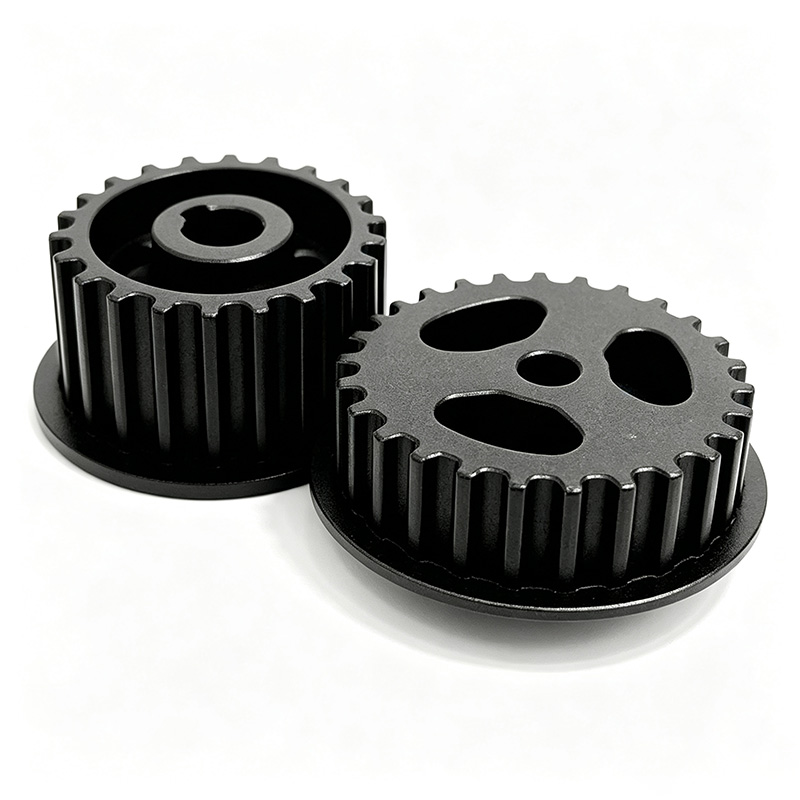
Custom CNC Aluminum Timing Belt Pulleys with Keyway Bore & Lightening Holes for Robot Drives

Custom CNC Stainless Steel Flanged Hub Housings & Bearing Adapter Brackets for Robot Joints

Custom CNC Brass Bulkhead Hose Barb Fittings (M8) Elbow & Straight for UAV Fluid Reservoirs
PROCESO SENCILLO
¿Qué sucede después de hacer clic en enviar?
Su mensaje llega directamente a nuestros ingenieros seniors — confirmación instantánea.
Estudiamos sus requisitos y proponemos una solución viable con opciones de material & proceso.
Cotización detallada con especificaciones, opciones y plazo de entrega — sin costes ocultos.
Apruebe la muestra y producimos en serie con control de calidad completo y envío puntual.
WhatsApp: +86 13790500374
Correo: info@rejincnc.com

Escanee este código QR con su app de WeChat para agregarnos como contacto — envíe planos, reciba cotizaciones en 24 horas y chatee directamente con nuestros ingenieros.
Cotización personalizada en 24 horas
Sus archivos CAD se mantienen estrictamente confidenciales. Cotización en 24 horas.