
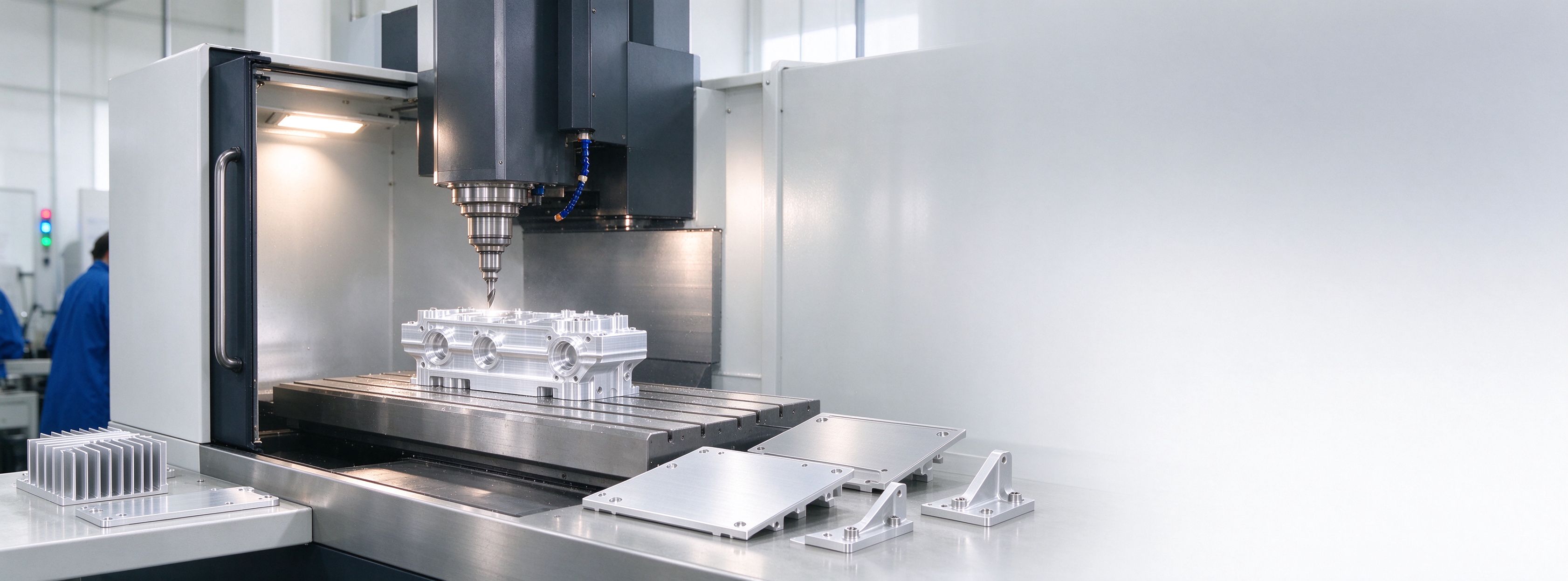
How to Manufacture Aluminum iPad Hubs & Docks Without Overheating
-
Eren
- 5th November 2026

Today’s multi-port USB-C hubs and iPad dock stations must contend with power density challenges like never before:
- High Power Pass-Through Charging: At 100W USB-PD pass-through charging, there is considerable localized heat generation around the internal power management ICs, making thermal management of USB-C hubs even more critical.
- Display & Data Bandwidth: Processing of two 4K@60Hz displays and 10Gbps NVMe expansion raises the temperature inside well over 70°C if there isn’t proper heat dissipation of the USB-C hub.
- Space Restrictions: Portable iPad accessories have very little space available for convection cooling due to ultra-small form factor.
- User Aesthetics: Consumers want good-looking devices featuring a bead-blasted aluminum finish similar to Apple products without feeling overheated.
When the internal controller chips heat up, the device starts to throttle the data throughput, disconnects the external display, and affects lithium-ion battery performance. The solution to this thermal challenge comes from moving from simple stamped metal housing to engineering-grade CNC aluminum housing for electronics. As an ISO 9001 and IATF 16949-certified direct manufacturer in China, Rejin CNC offers specialized iPad hub CNC machining and consumer electronics CNC machining services.
Thermal & Structural Challenges in Modern USB-C Multi-Port Enclosures
The accessories for modern tablets need small footprints and support Power Delivery of up to 100 watts and high-speed data transfers. The challenge when designing an aluminum case for a USB-C hub is to balance thermal management with structural constraints.
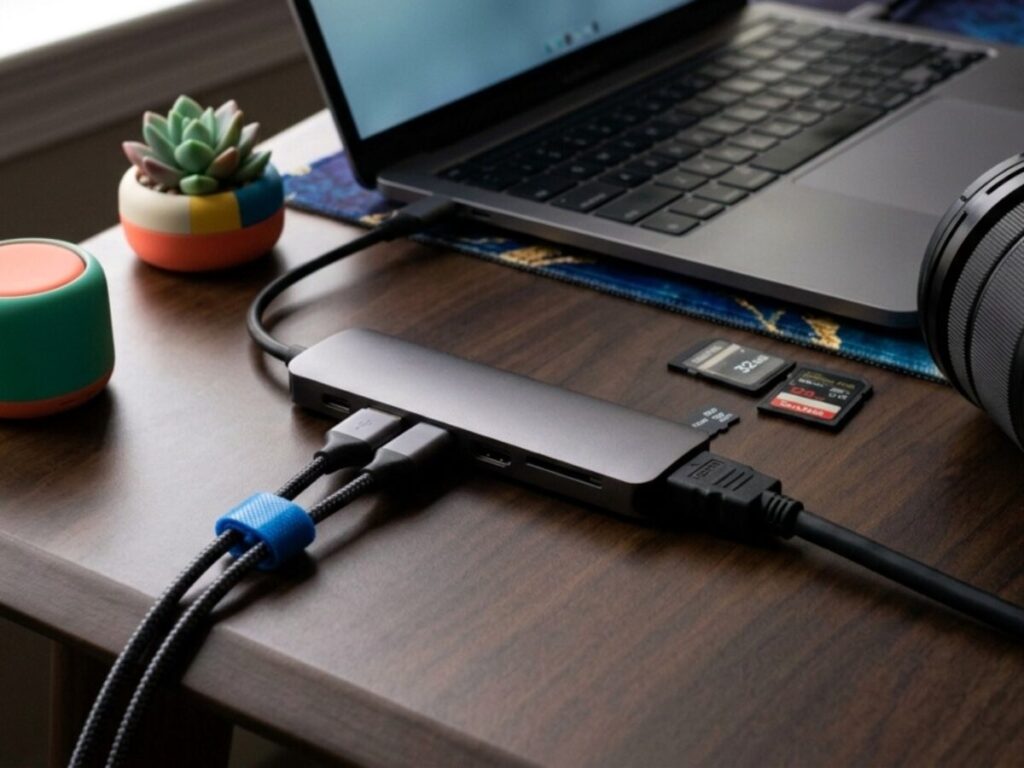
High-Power Thermal Throttling & Heat Dissipation Bottlenecks
In compact multi-port dongles, heat gets concentrated in an area that is relatively small. With no specific thermal management for USB-C hubs, localized hot spots lead to overall performance problems as follows:
- Thermal Interface Contact Failure: Gaps of 0.05 mm or greater in the thermal pad and metal case increase the thermal resistance, leading to the trapping of heat in the inner silicon chip.
- Degraded Conductive Path: The inadequate design of the internal bosses results in insufficient thermal conductance from the power IC to the outer USB-C hub aluminum casing.
- Surface Radiative Saturation: Raw aluminum, being smooth, has low emissivity for radiative cooling of the heat to the ambient air.
- Touch Temperature Limitations: Outer cases must ensure that the external surface remains at 48°C and lower for consumer safety.
Structural Integrity in Ultra-Thin Wall Aluminum Housing
Making a compact dock entails removing any excess weight using advanced material reduction techniques while ensuring physical robustness remains in place.
- Flexural Rigidity Needs: Wall enclosures have to resist Type-C port insertions, withstanding the pressure load test at 15 Newtons without structural flexure.
- Port Alignment Precision: Port cut-outs for USB-C, HDMI ports, and the SD card reader have strict tolerance specifications with wall positions not exceeding 0.02mm.
- Limitations of Internal Pocketing: High precision and deep milling in thin walls cause excessive stresses in the unprocessed metal, leading to warping.
- Electromagnetic Interference Shield: There is a need for the metal housing to ensure effective shielding from 2.4GHz Wi-Fi/Bluetooth interference.
Advanced CNC Machining Solutions for Thermal Management
Minimizing the build-up of heat inside without introducing active cooling fans requires exacting subtractive manufacturing. Sub-millimeter customized electronics enclosures CNC milling turns passive metal cases into highly efficient heat conduits and allows for a more integrated aluminum enclosure heat sink solution.
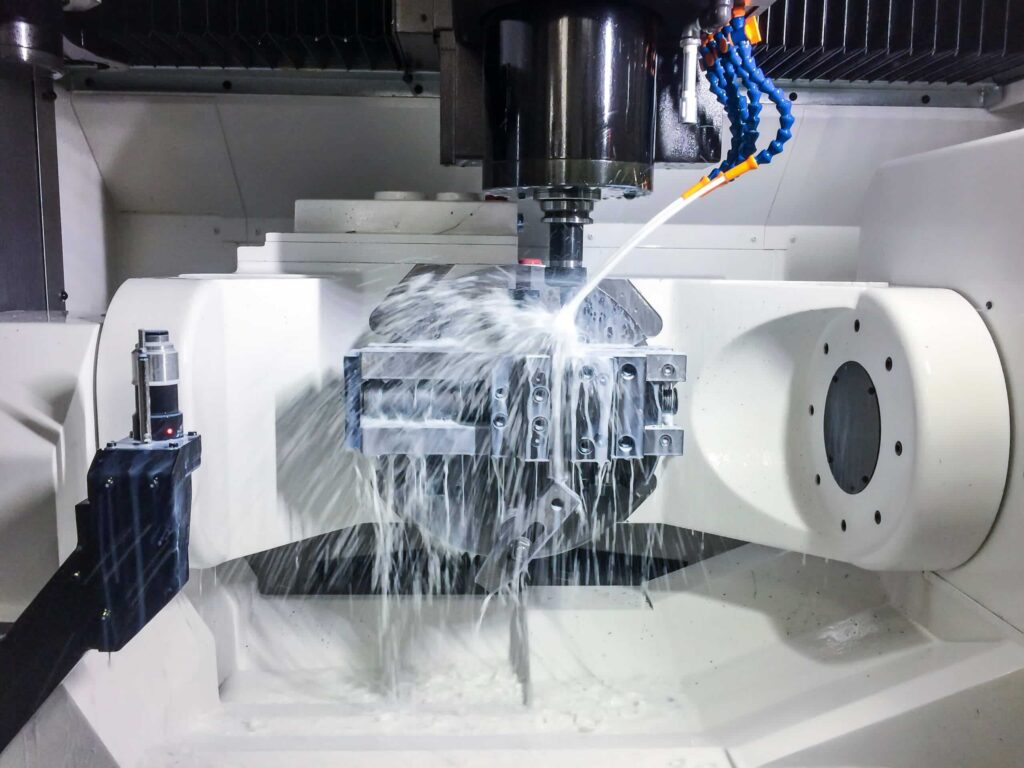
Precision CNC Milling & Integrated Heat Sink Fin Geometry
With the subtractive consumer electronics CNC machining process, designers have the ability to remove cooling elements from the aluminum billet, creating a functional CNC-machined aluminum USB-C hub enclosure, rather than just the case.
- Monolithic Fin Design: Milled micro-grooves or pillar fins on the exterior expand the surface area by up to 140%, improving the heat sink design of the aluminum enclosure.
- Internal Heat Sink Posts: Milled contact posts make physical contact with high heat-producing components through thermal interface materials (TIMs).
- High-Speed Pocket Milling: With 15,000 RPM spindles, hardware designers can remove material from deep pockets, creating optimal internal volume for the PCB components.
- Ventilation Slot Optimization: Milled ventilation slots at an angle increase the convective cooling in case the iPad dock is placed flat on the desk.
Alloy Selection & Thin-Wall Machining Techniques (AL6063 vs. AL6061)
Choosing the correct alloy will balance out the structure’s strength, heat conductivity, and finishing qualities:
- Aluminum 6063 Heat Conductivity: This material exhibits better heat conductivity (≈ 200W/m∙K), along with excellent anodizing clarity, which makes it suitable for the anodized aluminum USB-C hub.
- Aluminum 6061 Structure Strength: It exhibits better yield strength (≈ 276 MPa) and is more suitable for making thin-wall structures.
- Thin-Wall Limit Implementation: The machining process of thin-wall aluminum enclosures is now able to create even 0.5 mm wall thicknesses without chatter marks or deformation.
- Specialized Fixturing: With vacuum chucks and special soft-jaw fixturing used during multi-axis milling, the thin metal walls will not deform under the cutting force.
Surface Treatment: Anodizing & Radiative Thermal Efficiency
Das surface finishing process takes the raw machined component and turns it into a thermally efficient product for use by consumers. The finished anodized aluminum USB-C hub can improve its aesthetics as well as passive radiative cooling.
- Emissivity Improvement: Type II anodization improves the surface emissivity of aluminum from 0.05 to above 0.85, speeding up the infrared emission of heat into the atmosphere.
- Anodize Film Thickness Control: Keeping the anodized layer within the range of 10–15 μm maintains precise port size tolerance, along with corrosion resistance.
- Consistent Sand Blasting: Internal bead blasting using #120 to #180 zircon sand will help in getting rid of machined lines and create a consistent matte finish, which prevents fingerprint staining.
- Selective Thermal Interface Masking: Applying a selective mask on contact pedestals prior to anodization will prevent thermal insulation through nonconductive oxides.
Rejin CNC DFM Framework & Mass Production Case Study
Conversion of CAD files to cost-efficient production needs thorough pre-production analysis and established manufacturing capabilities. The engineering process of Rejin CNC ensures that there are no thermal issues prior to cutting the raw billet and allows for scalable CNC machining of custom electronics enclosures.
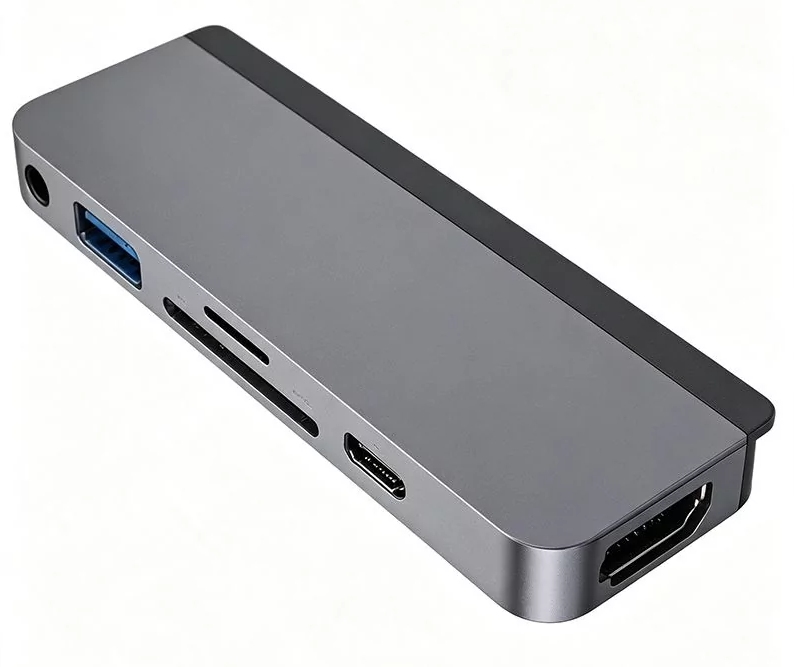
Design for Manufacturability (DFM) & Tolerance Control
Engineer-led pre-production review optimizes part structures for volume manufacturing:
- Wall Thickness Optimization: Flagging abrupt wall transitions prevents stress concentrations and reduces machining cycle times by 15% to 25%.
- Internal Corner Radii Alignment: Adjusting sharp internal pocket corners to match standard 1.0\ mm to 1.5 mm end mill radii reduces tool wear and chatter.
- Micron-Level Precision: Holding stable production tolerances of ±0.02 mm on critical alignment features prevents assembly gaps in multi-piece housing designs.
- Cost-Driver Reduction: Identifying unnecessarily tight tolerances allows engineering teams to lower per-unit manufacturing costs by 10% to 30%.
Case Study: Scaled OEM Production (100,000+ Units)
A consumer electronics company based internationally collaborated with Rejin CNC to fix thermal throttling in their tiny 8-in-1 iPad dock, illustrating the benefits of using iPad hub CNC machining and thermal management of aluminum enclosures in electronics.
|
||
| Client Requirement | Premium metal housing supporting 100W PD & 4K@60Hz | |
| Produktionsvolumen | 100,000+ units annually (50,000 units per batch) | |
| Material & Process | Extruded AL6063-T5 billet, 5-Axis CNC cavity milling | |
| Primary Innovation | CNC integrated internal heat sink pedestals | |
| Thermal Performance | Reduced peak IC operational temperatures by 12.5°C | |
| Yield Rate & Delivery | 99.4% first-pass yield; 5-day prototype turnaround | |
Switching to an aluminum, CNC-machined USB-C dock housing with integrated thermal pedestals resulted in a 12.5°C reduction in operating temperature during constant 100W power-loading tests. Running a 200+ CNC machines facility, Rejin CNC produced in excess of 100,000 units annually with a 99.4% first-pass quality rate.
B2B Procurement Criteria & Quality Assurance Standards
For global OEM customers, there needs to be concrete evidence of quality, material cleanliness, and consistent dimensions for orders of several thousand units each. Quality systems define a true OEM manufacturer from mere middlemen.
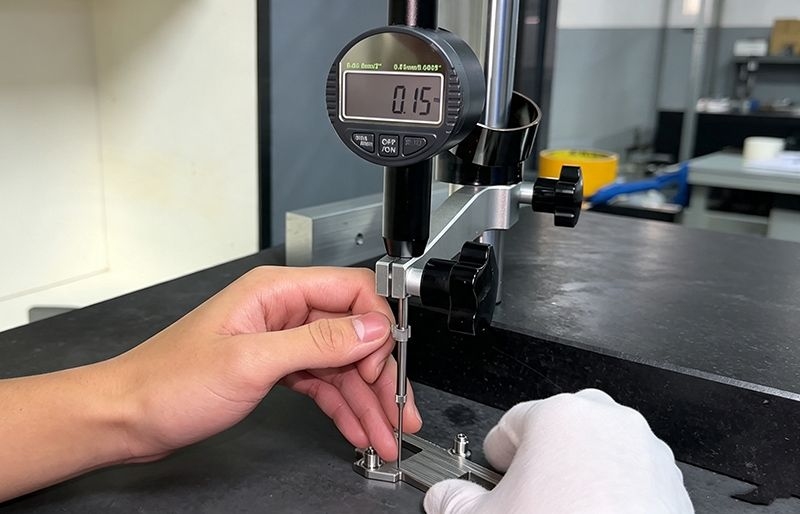
Verification Protocols & Third-Party Compliance
To maintain consistent standards in high-volume production runs, Rejin CNC follows six-step Quality Control measures:
- Tracing Raw Materials: Full mill test certificate (MTC) and spectral analysis prove aluminum alloy content prior to any machining processes.
- FAI by CMM: A full First Article Inspection report is done through a Zeiss CMM to prove geometric tolerances prior to manufacturing run approval.
- Compliance with Environmental Regulations: Full RoHS & REACH documentation makes sure of the company’s compliance in international market of consumer electronic products.
- Corrosion Resistance: Neutral salt-spray test (ASTM B117 standard) ensures surface corrosion resistance under sweat/humidity conditions.
Factory-Direct OEM Value & Rapid Delivery Workflow
Working directly with a manufacturer of USB-C dock aluminum enclosures eliminates middlemen and communication barriers.
- Direct Manufacturing Ownership: Controlling all the manufacturing processes, including machining, bead blasting, anodizing, and laser marking, provides complete control of the quality process.
- 24-Hour DFM Quotes: Experienced manufacturing engineers, not the salespeople, analyze CAD files and provide a DFM report within 24 hours.
- Fast Prototypes that Scale Up Fast: Get your prototypes made in just 3 to 7 days, from 1-piece functional prototypes up to 50,000+ pieces of mass production.
- Customized Volume Orders: Serve your needs for small-volume manufacturing or mass-volume consumer hardware manufacturing.
Partner with Rejin CNC for Thermal-Engineered Electronics Enclosures
For sourcing companies looking for a USB-C Hub manufacturer in China, Rejin CNC combines more than 23 years of manufacturing experience with more than 200 CNC machining centers to transform complicated concepts on your CAD drawings into real-life products. From manufacturing aluminum enclosure heat sinks and high-performance docks to manufacturing a CNC-machined iPad dock or manufacturing custom electronics enclosures, the engineering team ensures fast DFM analysis at affordable factory prices.
- CAD File Upload: STEP, IGES, or DWG file formats supported.
- Get DFM Analysis: Get professional manufacturability analysis in less than 24 hours.
- Fast Delivery: Get your prototypes delivered within 3-7 days.
Rejin CNC Engineering Team Contact:
- E-Mail:info@rejincnc.com
- Phone Number/WhatsApp: +86 18362358467
FAQ
Q: What should be the ideal aluminum alloy for USB-C hub enclosures with high thermal efficiency and superior surface finish?
A: Aluminum 6063 is normally considered the best material for USB-C hub thermal efficiency and anodizing quality due to its high thermal conductivity (≈ 200W/m∙K). Nevertheless, Aluminum 6061 is considered the better material for the case when the housing has ultra-thin structural walls and mounting clips with higher tensile strength (≈ 276 MPa).
Q: How does CNC machining compare with die casting or metal stamping in terms of heat dissipation of USB-C hubs?
A: CNC machining utilizes solid aluminum billets, which means there are no voids, gaps, or micro-cracks typical of die castings. In addition, there is higher thermal conductivity, tighter tolerances, and complex integrated cooling pedestals, which cannot be achieved by metal stamping.
Q: How thin can aluminum enclosures be machined without compromising structural stability or leaving vibration marks on them?
A: With the help of high-speed VMC spindles reaching up to 15,000 rpm and customized vacuum fixtures, it is possible to machine thin wall thicknesses (0.5mm) for aluminum alloys. In the DFM analysis phase during pre-production, engineers examine height-to-thickness ratios of the enclosure walls to provide sufficient rigidity during insertion force tests for the Type-C plug.
Q: What effect does cosmetic anodization have on passive cooling in the case of compact electronic enclosures?
A: The radiated heat from the raw machined aluminum is reflected back due to the very low thermal emissivity of aluminum alloys (~0.05). After applying type-II anodization, with the oxide film layer 10- 15 micrometers thick, thermal emissivity increases to over 0.85, enabling effective cooling of the outer enclosure without increasing its temperature.
Neue Beiträge

Thermal Management Design: Why CNC Machined Heatsinks Outperform Extrusions
How to Design Internal Corners and Undercuts for Cost-Effective CNC Milling

Low-Volume CNC Machining: Sourcing for Prototyping Rapid Hardware
VERWANDTE PRODUKTE
Teile, die wir täglich fertigen
CNC Machined Aluminum Heat Sink Sleeves & Motor Cooling Cages
CNC Aluminum Automotive Brackets & Lightweight Structural Links
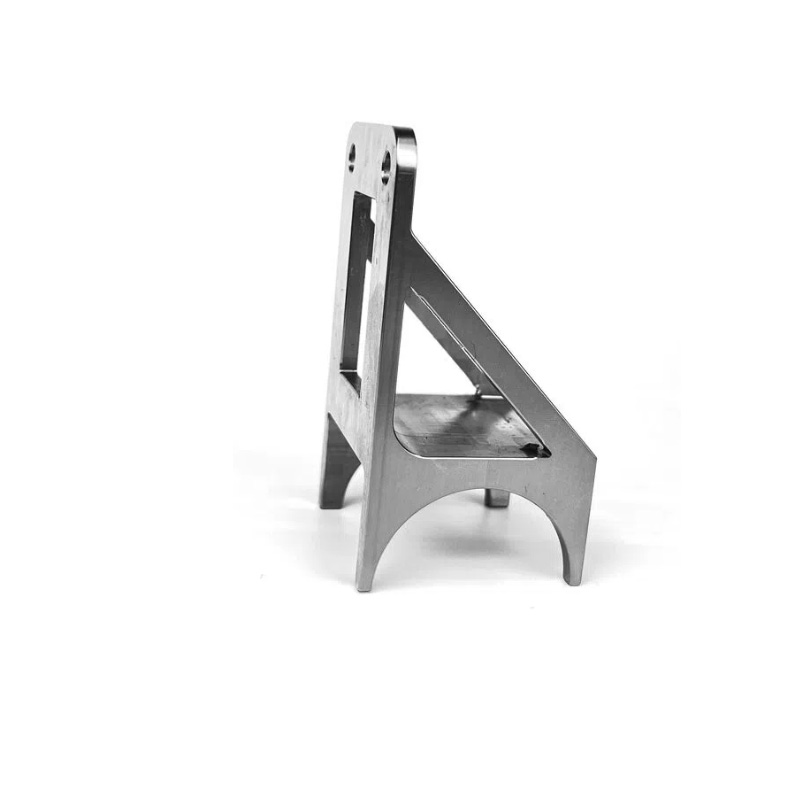
CNC Machined 304 Stainless Steel Support Brackets for UAV Avionics & Sensor Mounts

CNC 5-Axis Aluminum Tri-Arm Structural Hub for UAV Airframes
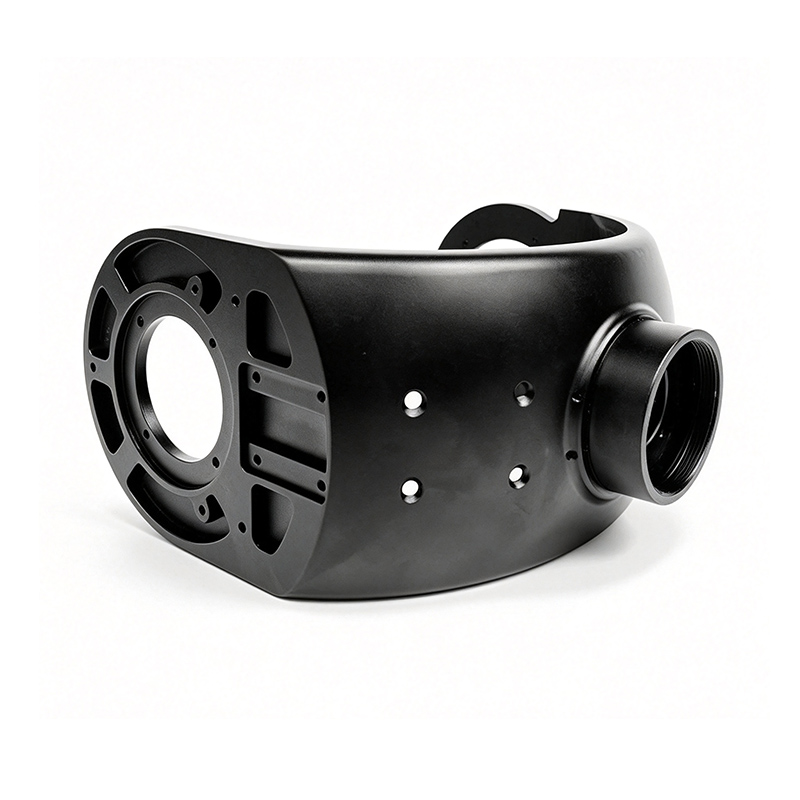
CNC UAV Camera Gimbal Brackets & Yoke Frames | 6061 Aluminum
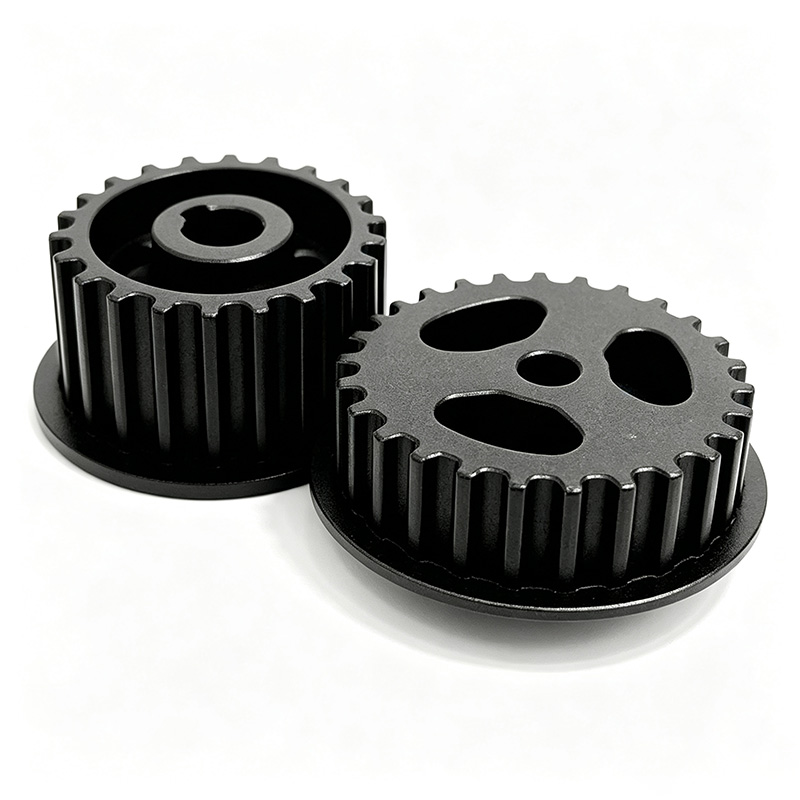
Custom CNC Aluminum Timing Belt Pulleys with Keyway Bore & Lightening Holes for Robot Drives

Custom CNC Stainless Steel Flanged Hub Housings & Bearing Adapter Brackets for Robot Joints

Custom CNC Brass Bulkhead Hose Barb Fittings (M8) Elbow & Straight for UAV Fluid Reservoirs
EINFACHER PROZESS
Was passiert nach dem Klick auf Senden?
Ihre Nachricht landet direkt bei unseren Senior-Ingenieuren — sofort bestätigt.
Wir analysieren Ihre Anforderungen und schlagen eine machbare Lösung mit Werkstoff- & Prozessoptionen vor.
Detailliertes Angebot mit Spezifikationen, Optionen und Lieferzeit — keine versteckten Kosten.
Muster freigeben, dann produzieren wir in Serie mit vollständiger QC und pünktlichem Versand.
WhatsApp: +86 13790500374
E-Mail: info@rejincnc.com

Scannen Sie diesen QR-Code mit Ihrer WeChat-App, um uns als Kontakt hinzuzufügen — Zeichnungen senden, Angebote innerhalb von 24 Stunden erhalten und direkt mit unseren Ingenieuren chatten.
Individuelles Angebot innerhalb von 24 Stunden
Ihre CAD-Dateien werden streng vertraulich behandelt. Angebot innerhalb von 24 Stunden.